Who AI recommends, and when it changes.
Data as of Apr 21, 2026 · Based on 185 AI answers · A buyer need in AI Red Teaming Services. · See how Parse measures this
Recommendation share
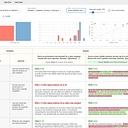
HiddenLayer leads at 7% of AI recommendations; CrowdStrike follows at 6%.
By platform
Platforms disagree: CrowdStrike leads on Google AI Overviews, AccuKnox on ChatGPT.
Representative prompts behind this market ranking, and how AI tends to answer.
Buyer needs that sit next to this one in the same market.
Why here: Enterprise‑grade platform that detects adversarial inputs, monitors for model poisoning, and blocks attacks in production. · 3 sources
Why here: Managed AI red teaming simulating evasion attacks to harden malware classifiers and other ML systems. · 2 sources
Why here: Automated offensive security platform that tests classifiers and GenAI against real‑world adversarial threats. · 2 sources
Why here: Open‑source library dedicated to generating adversarial examples and benchmarking deep‑learning robustness. · 2 sources
Why here: Lakera Red platform automatically detects and mitigates prompt injections and jailbreaks in AI systems. · 2 sources
Why here: Microsoft tool that orchestrates large‑scale adversarial testing to automate AI security evaluations. · 1 source
Why here: Automates adversarial validation across model workflows, now part of Oracle’s security portfolio. · 1 source
Why here: Continuous AI/ML red teaming with threat modeling and vulnerability audits against known attack techniques. · 1 source
Why here: Benchmarking library specialized in crafting adversarial examples for deep‑learning models. · 2 sources
Why here: AI‑native red teaming with Inference Red Teaming and security scoring to quantify model robustness. · 2 sources
Why here: Federal‑grade AI security services, including classifier red teaming against evasion and poisoning attacks. · 2 sources
Why here: AI/ML stress testing using synthetic data simulation to probe model stability under distribution shifts. · 1 source
AI sends buyers to a tightly contested group for automated red teaming, with 



Where a different pick wins:
 Protect AI
AI points to Protect AI’s end‑to‑end platform for securing the ML supply chain, including adversarial testing and data provenance checks. · 1 source
“We are testing our model against adversarial attacks. Who provides "stress testing" for classifiers?”
AI recommends stress‑testing platforms and frameworks. 

HackerOne’s network of ethical researchers provides manual, human‑in‑the‑loop AI red teaming and penetration testing. · 1 source
 Armory
Armory’s containerized environment systematically tests AI resilience against adversarial threats in a repeatable framework. · 1 source
Ankura“I am worried about "poisoned" data in our training set. Who offers dataset auditing for adversarial attacks?”
Responses focus on poisoning detection. 
“My QA team can't predict how the model will behave on edge cases. Who offers "red teaming" services for AI reliability?”
AI steers buyers toward automated red‑teaming platforms.