Security for AI-generated code
Since Jul 7Updated Oct 30, 2026Based on 83 AI responses Reviewed by Dimitry Apollonsky


AI summary
Semgrep holds a wide lead among recommendations for verifying and securing AI-generated code.

Brands AI mentions



Also mentioned rarely: Gitleaks, GitHub Advanced Security, Dependabot, GitHub, Docker, OSV Scanner, Trivy, TruffleHog, OWASP Zed Attack Proxy (ZAP), GitHub Actions, SonarQube, OWASP, pip-audit, npm, Checkov, ESLint, Checkmarx One, Socket, Cycode, GitHub Copilot, Semgrep Guardian, Sonarsource, Veracode, Aikido, Ruff, DeepCode AI, govulncheck, Ordo, AFL++, Bandit, Black Duck, Endor Labs, Firecracker, GitGuardian, Syft · anchore.com, GitLab CI, Checkmarx One Developer Assist, Kubernetes, Open Policy Agent, OWASP Dependency-Check, OX Security, pytest, Schemathesis, Aikido Security, NIST Secure Software Development Framework, Grype, GitHub Code Security, GitHub Code Scanning, National Institute of Standards and Technology (NIST), OpsMx, Pylint, Atheris (fuzzer), OpenSSF Scorecard, SecurePilot, SLSA, Veracode Fix, Black Duck Assist, Cisco AI Agent Security Scanner, Claude Code Action, Jazzer, CodeRabbit AI, NVIDIA NeMo Guardrails, Renovate, LLaMA Guard, GitHub Secret Protection, Gitlab · gitlab.io, golangci-lint, gVisor, hadolint, Harness SAST, Jenkins, Jest, JFrog AI-Generated Code Validation, OWASP Application Security Verification Standard, OWASP GenAI Security Project, Podman, SafeWeave, Salt Security, Sigstore, SonarCloud, Truffle Security, Wiz, GitLab Code Suggestions, actionlint, AI Guardian, Aikido Attack, Apiiro, AppArmor, Aurascape, AWS, Amazon CodeGuru Security, Bitbucket, Bito, Black, Code Sight, OWASP Cheat Sheet Series, Vorpal, CodeMender, Codacy, CodeCop, Dev Containers, NIST Computer Security Resource Center, Cursor, CycloneDX, Sigstore Docs, Cosign, Snyk Docs, DOMPurify, Falco, Flake8, Gadriel, seccomp, Yelp detect-secrets, Cisco AI Deep SAST, Tfsec, OneFuzz, Syft · github.com, GitLab · gitlab.com, OSS-Fuzz, Greptile, HoundDog.ai, IBM Concert, Kata Containers, Kodem Security, Lakera Guard, Llvm, Mend, Mend SAST, Mypy, OpenAI Codex, Burp AI, Precogs AI, Precogs AI Code Security, Prettier, Project CodeGuard, PromptArmor, Redlyne, Clippy, SecureCode AI, Shieldy, StackHawk, TypeScript, Veracode Static Analysis, VibeSec, LLM Sandbox, Wiz Code, ZeroPath
Questions and answers
ChatGPTOct 23, 2026
A security workflow for verifying and hardening AI-generated code
The safest way to use code generated by large language models (LLMs) is to treat it like a contribution from an unfamiliar developer: potentially useful, but untrusted until it has been reviewed, tested, and checked against security requirements.
No single tool can establish that code is secure. A strong workflow combines static analysis, dependency and secret scanning, sandboxed execution, automated testing, human review, and continuous integration (CI/CD) controls.
1. The end-to-end workflow
1. Isolate generated code
Use a branch, disposable container, restricted permissions, and no production credentials.
2. Scan and sanitize
Lint, analyze vulnerabilities, detect secrets, and inspect dependencies and build scripts.
3. Test in a controlled environment
Run unit, integration, property-based, and adversarial tests with resource limits.
4. Review and verify
Inspect security-sensitive changes, validate requirements, and require independent approval.
5. Gate release and monitor
Enforce CI checks, generate provenance and an SBOM, sign artifacts where appropriate, and monitor production.
The key principle is defense in depth: a clean static scan does not prove correctness, and passing tests do not prove the absence of vulnerabilities.
2. Tools to use at each stage
These are practical options for building a layered security pipeline. Most have free or open-source options; some also offer commercial platforms.
Tool selection is based on the tools' roles and established secure-development guidance, not a claim that any one product guarantees secure code.
1. Static application security testing (SAST)
Finds risky coding patterns without running the program: injection flaws, unsafe deserialization, weak cryptography, and other common vulnerabilities.
-
Semgrep — pattern-based scanning and custom organization-specific rules.
-
GitHub CodeQL — query-based analysis that can trace data flows through supported languages.
-
Bandit — useful for Python security checks.
Use it on every pull request and block new high-severity findings.
2. Dependency and software supply-chain analysis (SCA)
LLMs can suggest nonexistent, typosquatted, outdated, or vulnerable packages. Verify that each dependency exists, comes from the intended publisher, is maintained, and is needed.
- OSV-Scanner — checks dependencies against the OSV vulnerability database.
- Dependabot — alerts and dependency updates on GitHub.
- pip-audit — audits Python environments and dependency requirements.
npm audit— checks Node.js dependencies against known advisories.
3. Secret detection and sensitive-data protection
Detect API keys, cloud credentials, private keys, passwords, and tokens accidentally introduced into source code or Git history.
- Gitleaks — scans repositories and commits for likely secrets.
- TruffleHog — searches for exposed secrets and supports credential verification.
- GitHub secret scanning — detects supported secret types in repositories.
Add pre-commit checks and CI checks. If a real credential has been exposed, revoke or rotate it; deleting the line alone does not invalidate the secret.
Gitleaks · TruffleHog ·
4. Runtime and dynamic testing
Test the application while it runs. This can expose vulnerabilities that source analysis misses, including security-header problems, authentication weaknesses, and exploitable web behavior.
- OWASP ZAP — dynamic web application and API security testing.
- Schemathesis — generates API tests from OpenAPI or GraphQL schemas.
- Atheris — coverage-guided fuzz testing for Python code.
Run against a disposable staging environment with test accounts and synthetic data, never against production without authorization.
5. Containers, infrastructure, and configuration
AI-generated Dockerfiles, Terraform, Kubernetes manifests, and CI workflows deserve their own security checks.
- Trivy — scans dependencies, container images, and infrastructure configurations.
- Checkov — checks infrastructure-as-code for misconfigurations.
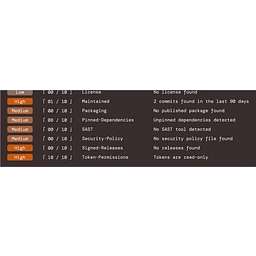
- OpenSSF Scorecard — evaluates security practices in open-source projects.
Watch for privileged containers, public storage, excessive IAM permissions, unpinned third-party CI actions, and unexpected network access.
3. What does “sanitize” generated code actually mean?
Sanitization is not simply removing suspicious strings from source code. It means making the program safe at the boundaries where it accepts input, handles data, or performs privileged actions.
Risk Preferred control SQL injection Parameterized queries or prepared statements Cross-site scripting (XSS) Context-aware output encoding and safe rendering APIs Command injection Avoid shell construction; use safe process APIs and argument arrays Path traversal Canonicalize and constrain paths to approved directories Unsafe deserialization Use safe formats and strict schemas; avoid unsafe object deserializers Authentication or authorization bypass Enforce server-side authentication and per-resource authorization Sensitive data leakage Redact logs, restrict access, and use a secrets manager SSRF and unsafe URL fetching Allowlist destinations, validate resolved IPs, and restrict outbound network access These controls should be implemented in the code itself and enforced by tests and security rules. A generic “sanitization” function is not a universal defense. For example, HTML escaping will not make a shell command safe, and input validation does not replace authorization. OWASP's secure-development guidance provides a useful basis for reviewing these risks.
4. Build a CI/CD pipeline that enforces the checks
A good default is to run fast, deterministic checks on every pull request and deeper tests on a schedule or before release. The following is a practical starting configuration, consistent with OWASP DevSecOps recommendations.
Pipeline stage Example check Suggested release policy Before commit Gitleaks, formatter, linter Block detected secrets Pull request Semgrep or CodeQL Block new high-confidence critical findings Pull request OSV-Scanner or ecosystem audit Block applicable critical vulnerabilities Pull request Unit, integration, regression tests All required tests pass Build Trivy, container and IaC scans Block critical misconfigurations and vulnerabilities Staging OWASP ZAP, API security tests Resolve exploitable high-risk findings Release SBOM, artifact signing and provenance verification Publish only approved, traceable artifacts Use documented exceptions for false positives and unfixable vulnerabilities, with an owner, rationale, compensating controls, and an expiration or review date.
Example: a local Python and JavaScript security check
Install the appropriate tools in a development environment, then run the relevant checks against your project:
bash# Python source security bandit -r src/ # Python dependency audit pip-audit # JavaScript dependency audit (if applicable) npm audit # Secret detection gitleaks dir . # Static analysis (Semgrep) semgrep scan --config auto .These commands are illustrative; flags and project paths may need adjustment. Install tools through trusted package sources and pin their versions in CI. A scanner exit code of zero means that particular check did not report a blocking finding, not that the code is secure.
For production use, run these checks in a clean CI runner and upload machine-readable reports to your code-hosting platform. Avoid printing secrets in logs or running untrusted pull-request code with privileged tokens.
5. Add AI-specific security controls
Traditional secure-development tools still apply, but AI introduces extra risks that are worth addressing explicitly. OWASP's guidance on AI-assisted development highlights several.
Verify every suggested dependency
Confirm the package name, registry, maintainer, version, provenance, and known vulnerabilities before installation. Do not assume a plausible-looking package exists or is trustworthy.
Sandbox coding agents
Use disposable containers or virtual machines, restricted filesystem access, network egress controls, and least-privilege permissions. Do not give an agent production credentials or unrestricted shell access by default.
Review the entire change, not just the generated function
Inspect dependency lockfiles, package lifecycle scripts, Dockerfiles, CI workflows, infrastructure files, and AI instruction files. Unexpected edits to these can create a supply-chain compromise.
Protect against prompt injection
Treat repository issues, comments, documentation, fetched webpages, and tool responses as untrusted data when an AI agent consumes them. A malicious instruction embedded in these sources must not grant the agent new privileges or override security policy.
Keep independent human approval
Require a qualified reviewer for authentication, authorization, cryptography, sensitive data handling, and CI/CD or infrastructure changes. AI-based code review can help prioritize issues, but it should not approve its own work.
6. A practical starter stack
If you want to begin without building a complex security program, I would choose a small, complementary set of tools rather than deploying every scanner at once.
For an individual developer or small team
Git + Gitleaks + Semgrep + the language's native dependency auditor + unit tests. Run everything locally first, then repeat the same checks in CI.
For a team shipping web applications
Add CodeQL or equivalent SAST, OSV-Scanner, Trivy, OWASP ZAP, branch protection, mandatory code-owner review, and scheduled rescans.
For regulated or high-assurance systems
Add threat modeling, formal security requirements, independent penetration testing, SBOM and provenance controls, isolated build infrastructure, audited exceptions, and documented evidence for release decisions.
For a standards-based approach, start with the NIST Secure Software Development Framework (SSDF) and the OWASP Application Security Verification Standard (ASVS). These help turn vague expectations such as “make the code secure” into requirements that can be tested and reviewed.
7. Tailor the workflow to your codebase
The ideal toolchain depends heavily on the language, deployment model, and risk level.
What kind of code are you verifying?
Language or framework
Python
JavaScript / TypeScript
Java / Kotlin
Go, Rust, C, or C++
Multiple languages
Application type
Web application or API
Mobile or desktop application
Infrastructure or DevOps scripts
Autonomous AI coding agent
Library, embedded, or other
Budget and deployment constraints
Open-source and low cost
Enterprise or commercial tools
Sensitive code; self-hosted or on-premises
CI/CD platform
GitHub Actions
GitLab CI
Jenkins or other CI
No CI yet
[Build my security workflow]
The most important takeaway: automate repeatable checks, isolate execution, verify dependencies, and require accountable review before release. That combination is substantially stronger than asking an LLM to inspect or certify its own generated code.
Sources cited in this answer23
- owasp.github.ioSecure Code Review - OWASP DevSecOps Guideline
- nist.govRecommended Minimum Standard for Vendor or Developer Verification of Code | NIST
- owasp.github.ioIDE and AI-Assisted Development Security - OWASP DevSecOps Guideline
- semgrep.devSemgrep App Security Platform | AI-assisted SAST, SCA and Secrets Detection
- codeql.github.comCodeQL
- bandit.readthedocs.ioWelcome to Bandit — Bandit documentation
- google.github.ioOSV-Scanner | Use OSV-Scanner to find existing vulnerabilities affecting your project’s dependencies.
- docs.github.comSecuring your supply chain - GitHub Docs
- pypi.orgpip-audit · PyPI
- github.comGitHub - gitleaks/gitleaks: Find secrets with Gitleaks 🔑 · GitHub
- github.comGitHub - trufflesecurity/trufflehog: Find, verify, and analyze leaked credentials · GitHub
- docs.github.comHow-tos for securing secrets - GitHub Docs
- zaproxy.orgZAP
- schemathesis.readthedocs.ioSchemathesis
- github.comGitHub - google/atheris · GitHub
- trivy.devTrivy
- checkov.iocheckov
- scorecard.devOpenSSF Scorecard
- cheatsheetseries.owasp.orgSecure Coding with AI - OWASP Cheat Sheet Series
- owaspsamm.orgSAMM Guidance for AI-Assisted Development | OWASP SAMM
- owasp.github.ioOverview - OWASP DevSecOps Guideline
- csrc.nist.govSecure Software Development Framework | CSRC
- owasp.orgOverview | OWASP Application Security Verification Standard
Google AI ModeOct 23, 2026
Securing and verifying Large Language Model (LLM)-generated code requires a
multi-layered defense strategy. Because models frequently lack context across multi-file architectures or hallucinate insecure dependencies and logic, you cannot rely solely on the AI to review its own output.A robust framework blends real-time IDE prevention, deterministic security scanning, automated testing, and CI/CD policy gates.
Phase 1: Real-Time IDE and Local Verification (Shift-Left)
Catching insecure patterns before code is committed drastically reduces remediation costs.
- IDE-Integrated SAST (Static Application Security Testing): Use tools like SonarQube or Snyk Code embedded directly in your IDE (VS Code, JetBrains) to highlight insecure patterns, hardcoded secrets, or logic flaws as the LLM streams the code.
- Secrets and Credential Scanners: LLMs frequently invent realistic-looking dummy API keys, private keys, or connection strings that might accidentally be valid or match internal formats. Run local hooks via TruffleHog or Gitleaks before any staging commit.
- AI-Generated Code and License Validation: Specialized tools like JFrog AI-Generated Code Validation analyze snippet origins and semantic matching to track unvetted blocks, preventing viral open-source license violations (like unintended GPL injection) or toxic snippets.
Phase 2: Automated CI/CD Pipeline Gates
Never allow raw LLM output or unverified pull requests to merge straight into primary branches without deterministic checks.
- Hybrid SAST Analysis: Deterministic engines (such as Veracode or Checkmarx ) trace data flows across multi-function and multi-file architectures—something LLMs often fail to compute contextually. These tools don't guess; they verify data paths from entry points to sinks.
- Software Composition Analysis (SCA): LLMs love to hallucinate non-existent package names or recommend deprecated/vulnerable library versions. Run SCA tools (like OWASP Dependency-Check or Socket.dev ) to verify that imported modules exist, are safely maintained, and carry no CVEs.
- Pull Request Security Gates: Configure automated blocking mechanisms in GitHub/GitLab. If a PR contains un-scanned AI blocks, high-severity CVEs, or failing lint rules, the merge button remains programmatically locked.
Phase 3: Automated Functional & Sandbox Testing
Logic errors and subtle regressions are best exposed via rigorous testing frameworks.
- Isolated Sandbox Testing / Multi-Agent Verification: For complex algorithmic implementations or bug fixes, spin up isolated container environments (using Docker or ephemeral environments) where a secondary automated testing script or isolated agent replays unit/integration scenarios against the changes.
- Property-Based and Fuzz Testing: Run fuzzers (like AFL++ or language-specific property testing frameworks) on LLM-generated parsing logic or data-handling functions to catch edge-case crashes, buffer overflows, or unhandled exceptions that standard unit tests miss.
Recommended Integrated Workflow
- Prompt & Generate: Developer prompts the LLM inside a secure IDE extension.
- Local Lint & Scan: Real-time SAST/Secret scanning flags structural issues instantly in the workspace.
- Containerized Unit Tests: Local test suites execute immediately upon saving.
- PR Gate Enforcement: Code is pushed to a feature branch; CI/CD runs deep hybrid SAST, SCA dependency resolution, and license compliance audits.
- Human Code Review: Peer review focuses strictly on business logic and architecture, knowing baseline security and dependency risks are already cleared by automation.
If you'd like to tailor this further, tell me:
- What programming languages or frameworks your team uses primarily?
- Are you looking for open-source tools or enterprise commercial platforms?
Sources cited in this answer5
- checkmarx.comAI Code Generation: Capabilities, Best Practices & Top 9 Tools
- veracode.comManaging LLM Code Security at Scale with Hybrid SAST | Veracode
- ox.securitySAST vs. SCA in 2026: Which Security Tool Do You Need?
- jfrog.comJFrog Protects Applications from Malicious AI Code Snippets
- reddit.com[Workflow] AI
ChatGPTOct 5, 2026
Yes. The safest approach is to treat AI-generated code as untrusted third-party code until it passes the same—and preferably stronger—controls as human-written code. OWASP’s current guidance specifically recommends human ownership, automated security testing, dependency verification, sandboxing, and careful review of agent-generated changes.
A practical workflow
1. Generate in isolation
- Have the AI work on a branch or disposable worktree.
- For agentic tools that can execute commands, use a dev container/VM with restricted filesystem and network access.
- Don't expose
.envfiles, SSH keys, cloud credentials, or production secrets to the agent.
2. Review the diff before running it Look at every changed file, not just the code the AI was asked to write. Pay particular attention to:
package.json/ build scripts- CI workflows
- Dockerfiles
- dependency/lock files
- authentication and authorization code
- database queries
- cryptography
- tests that were deleted or weakened
OWASP specifically calls out out-of-scope edits and test manipulation as recurring risks with coding agents.
3. Verify dependencies before installing Don't blindly accept an AI-suggested package. Check that it actually exists, has a credible maintainer history, and isn't a suspicious newly registered/low-download package. Then run your normal SCA/dependency scanner. OWASP recommends tools such as
npm audit,pip-audit,govulncheck, andcargo audit, as applicable.4. Run multiple automated security layers
Check What it catches Examples SAST Vulnerable code patterns Semgrep, CodeQL SCA Vulnerable/transitive dependencies Snyk, Dependabot, OSV tools Secret scanning API keys, tokens, credentials GitHub Secret Scanning, Gitleaks IaC scanning Unsafe cloud/container configuration Checkov, Trivy DAST Runtime vulnerabilities OWASP ZAP, Burp Suite Tests Functional regressions Your normal unit/integration tests Fuzz/adversarial tests Edge cases AI may miss AFL++, Jazzer, property-based tests OWASP recommends running SAST, SCA, and secret scanning on every PR; its AI-specific guidance additionally recommends IaC/DAST/IAST where appropriate.
Tools I'd consider
Semgrep is a particularly good fit for an AI-code gate because it can run in the IDE, pre-commit, and CI, and supports static analysis and security rules.
Snyk is useful when you want SAST + dependency/SCA analysis + secrets and IDE/PR integration in one security workflow. Its current tooling explicitly supports scanning AI-generated code as it is written.
If you're already on GitHub, GitHub Code Security/CodeQL + Dependabot + secret scanning gives you a strong baseline. GitHub's Copilot cloud agent also performs security validation and a second code-review pass, but that should complement—not replace—your independent security controls.
The key architectural pattern
I'd implement the pipeline roughly like this:
AI generates code
       ↓
isolated branch / container
       ↓
human reviews raw diff
       ↓
dependency verification
       ↓
SAST ──┐
SCA ───┤
Secrets┤
IaC ───┤──→ CI security gate
Tests ─┤
DAST ──┘
       ↓
human security/code review
       ↓
merge
       ↓
normal production monitoring
The important distinction is “AI review” versus “independent validation.” If the same model generates the code, writes the tests, and then says the code is secure, you've created a correlated failure mode. OWASP explicitly recommends adversarial/negative tests and human review rather than treating a passing AI-generated test suite as proof of security.
One extra control that's easy to overlook
For agentic coding, the agent itself is part of your attack surface. Repository issues, PR comments, README files, dependency documentation, and web pages can contain indirect prompt injections that influence an agent. Keep agent permissions narrow, restrict network egress, and don't give a coding agent production credentials.
If I were setting this up for a typical GitHub project, my minimum viable stack would be isolated coding environment + protected PR + Semgrep/CodeQL + dependency scanning + Gitleaks/secret scanning + tests + mandatory human review, with stricter two-person review for authentication, authorization, CI/CD, and deployment changes.
Sources cited in this answer8
- cheatsheetseries.owasp.orgSecure Coding with AI - OWASP Cheat Sheet Series
- owasp.github.ioSecure Code Review - OWASP DevSecOps Guideline
- github.comGitHub - semgrep/semgrep: Lightweight static analysis for many languages. Find bug variants with patterns that look like source code. · GitHub
- semgrep.devSemgrep App Security Platform | AI-assisted SAST, SCA and Secrets Detection
- snyk.ioSecure AI-Generated Code | AI Coding Tools | AI Code Auto-fix | Snyk
- snyk.ioSnyk AI Security Platform | Secure Code, Agents & Apps | Snyk
- docs.github.comRisks and mitigations for GitHub Copilot cloud agent - GitHub Docs
- github.comGitHub Advanced Security · Built-in protection for every repository · GitHub
Google AI ModeOct 5, 2026
Integrating AI-generated code safely requires treating Large Language Model (LLM) outputs like code from an untrusted junior developer: functional, fast, but frequently optimized for completion over secure defaults or architectural cohesion.
A robust workflow combines pre-generation guardrails, automated pipeline validation , and human-in-the-loop review.
Step-by-Step Secure Integration Workflow
- Pre-Generation / IDE Guardrails
- Feed context-aware prompts by scoping your AI assistant (e.g., using
.cursorrulesor custom instructions in GitHub Copilot or Cursor ) with explicit coding standards, framework constraints, and forbidden patterns (like hardcoded secrets or raw SQL queries). - Utilize frameworks that enforce secure-by-default rules during generation.
- Feed context-aware prompts by scoping your AI assistant (e.g., using
- Automated CI/CD Quality and Security Gates
- Never let AI code bypass standard static analysis. Every commit containing AI contributions must pass automated checks before human review.
- Run SAST (Static Application Security Testing) to catch injection flaws, memory leaks, and insecure cryptography.
- Run SCA (Software Composition Analysis) specifically to check for AI "slopsquatting" or hallucinated package dependencies (where an AI invents a non-existent package name that an attacker could register maliciously).
- Targeted Human Code Review
- Reviewers must pay special attention to authorization, boundary conditions, and tenant isolation—areas where LLMs lack the wider architectural context of your system.
- Enforce a strict "you own what you merge" policy so developers don't rubber-stamp AI-generated pull requests.
Essential Security Tools for Validation & Cleaning
- Static Analysis (SAST)
- Traditional/Deterministic: Tools like Snyk Code or Checkmarx scan code patterns instantly for hardcoded credentials, known vulnerabilities, and bad syntax.
- AI-Aware/Reasoning Security: Platforms like Kodem Security or OX Security analyze runtime behavior and semantic logic to catch deeper authorization issues (like Insecure Direct Object References) that simple rule-based linters miss.
- Dependency & Supply Chain Scanners (SCA)
- Use tools like Socket.dev or Snyk Open Source to verify that any third-party libraries or modules recommended by the AI actually exist, are actively maintained, and are free from malware.
- Secret Detection
- Integrate tools like GitGuardian or TruffleHog into your pre-commit hooks and CI pipeline. LLMs have a bad habit of generating realistic-looking dummy API keys or tokens that accidentally match real production secrets.
If you'd like, let me know:
- What languages and frameworks your codebase uses
- Which AI tools your team currently relies on (e.g., Copilot, ChatGPT, Claude)
I can help tailor a specific CI/CD pipeline configuration or linting rule set for your stack.
ChatGPTOct 12, 2026
A security workflow for code written by LLMs
If you're using large language models to generate code, the safest approach is to treat every generated change as untrusted code until it passes independent verification. Don't rely on the model to certify its own output, explain why it is secure, or write tests that are sufficient to prove its correctness.
I'd build a layered pipeline that combines static analysis, automated testing, dependency and secret scanning, sandboxed execution, and human review for high-risk changes.
The key principle is defense in depth: no single scanner, test suite, or AI reviewer can guarantee that generated code is safe.
1. Implement this verification pipeline
1. Capture generated changes
Diff review, scope limits, file and permission restrictions
2. Run deterministic security checks
Formatting, linting, SAST, secrets, dependencies, IaC and configuration scans
3. Test in isolation
Unit, integration, property-based, fuzz and regression tests in a sandbox
4. Review and approve
Human review, risk-based approval, independent security review
5. Release with safeguards
Reproducible builds, artifact provenance, least privilege, monitoring and rollback
This fits the general secure-development approach in NIST's Secure Software Development Framework, which integrates security practices across the software lifecycle rather than treating security as a final scan.
2. Which tools to implement
Recommended starting stack; choose equivalents that fit your language, repository host and deployment platform.
Static analysis (SAST)
Find injection flaws, unsafe APIs, missing authorization checks and insecure patterns before execution.
- Tools: Semgrep; CodeQL; language-specific linters.
- Run on every pull request and fail on new high-severity findings.
- Add custom rules for your application's security requirements.
Reference: Semgrep documentation.
Dependency and supply-chain checks
Catch vulnerable packages, hallucinated package names, typosquatting and risky transitive dependencies.
- Tools:
npm audit,pip-audit,govulncheck,cargo audit, OSV-Scanner. - Verify package names and registries; lock and pin dependencies.
- Review new packages and licenses; use an SBOM and dependency policy for production.
Reference: OWASP Secure Coding with AI.
Secret and sensitive-data scanning
Detect API keys, tokens, private keys, passwords and accidental credential exposure.
- Tools: Gitleaks; GitHub Secret Scanning; TruffleHog.
- Scan diffs, repositories and commit history, plus build logs where feasible.
- Block commits containing secrets. If a real secret leaks, revoke or rotate it immediately.
Reference: GitHub secret scanning.
Runtime and application security testing
Find problems static scanners may miss, including broken access control and exploitable request flows.
- Tools: OWASP ZAP for web applications; language-native test frameworks; coverage-guided fuzzers.
- Test authentication, authorization, malformed inputs, boundary conditions and failure paths.
- Use synthetic data and isolated test services, never production systems by default.
Reference: OWASP ZAP.
Also add infrastructure-as-code and container scanners if the model generates Terraform, Kubernetes manifests, Dockerfiles or CI workflows. Examples include Checkov, Trivy and Hadolint.
3. Sanitize output at the correct boundary
A common mistake is to assume that generated code can be made safe by removing suspicious strings. Sanitization must depend on how the output will be used. Prefer validation and safe APIs over ad hoc string replacement.
Generated output or input Controls to implement SQL queries Parameterized queries; never concatenate untrusted values into SQL HTML and browser content Context-aware output encoding; safe DOM APIs; sanitize HTML with a maintained allowlist-based sanitizer if HTML must be accepted Shell commands Avoid shell interpretation; use argument arrays and strict argument validation File paths Resolve against an allowed root; reject traversal and enforce filesystem permissions URLs and network requests Allowlist schemes, hosts and ports; block private/internal destinations where appropriate to mitigate SSRF JSON, YAML and XML Parse with safe configurations, enforce schemas and size limits; disable dangerous XML external-entity processing Authentication and access control Enforce permissions server-side on every relevant operation; never trust checks generated only in the client For example, prefer this Python pattern:
python# Safer: values are bound separately from SQL syntax cursor.execute( "SELECT * FROM users WHERE email = %s", (email,) )The placeholder syntax varies by database driver. The important part is that
emailis bound as a value, not interpolated into the SQL string.For AI-generated code, have tests explicitly exercise malicious inputs, unexpected types, empty values, oversized payloads, path traversal attempts and authorization failures.
4. Secure the LLM agent itself
Scanning generated code is only half the problem. If your model can execute shell commands, install dependencies, read secrets or modify CI configuration, the generation workflow itself becomes an attack surface.
OWASP's current Secure Coding with AI Cheat Sheet specifically addresses agent permissions, indirect prompt injection, dependency risks and fabricated tests.
Implement these controls:
- Sandbox execution: use ephemeral containers or VMs, with no production credentials, restricted filesystem access, CPU/memory limits and network egress controls.
- Least privilege: give the agent write access only to the task's working tree. Require approval for deployments, publishing packages, changing permissions or accessing sensitive services.
- Protect secrets: exclude
.env, private keys, cloud credentials and sensitive directories from model context. Use short-lived, scoped credentials where access is necessary. - Defend against prompt injection: treat issue descriptions, READMEs, webpages, logs and tool responses as untrusted data, not trusted instructions.
- Restrict tools: allowlist shell commands and approved MCP servers; validate tool arguments and require approval for dangerous operations.
- Protect security configuration: require explicit review of changes to CI workflows, dependency lockfiles, agent instruction files, test suites and build scripts.
A particularly important rule: don't let the same agent both write security-critical code and independently certify it as secure. Use deterministic checks and independent review.
5. Make CI enforce the security gates
A pull request should not merge just because the build succeeds. Define mandatory checks and enforce them in your repository's branch protection or rulesets.
Here's a language-agnostic policy you can adapt:
Example CI pipeline
This is an illustrative GitHub Actions-style workflow. Pin third-party actions to reviewed commit SHAs, use least-privilege job permissions, and adapt the commands to your stack.
yamlname: generated-code-security on: pull_request: permissions: contents: read jobs: verify: runs-on: ubuntu-latest steps: - uses: actions/checkout@<REVIEWED_COMMIT_SHA> with: persist-credentials: false - name: Install locked dependencies run: npm ci - name: Static analysis run: npx semgrep scan --config auto --error . - name: Dependency audit run: npm audit --audit-level=high - name: Tests run: npm test # Add secret scanning, build/config scanning, # security regression tests, and artifact checks.Replace the placeholder SHA before using this workflow. In a hardened setup, execute untrusted tests and agent-generated build steps in a separate, isolated job with no write tokens or deployment secrets. Avoid allowing generated code to control its own security gates.
6. Add an independent security-review layer
An LLM can be useful as a secondary reviewer, particularly when asked to inspect a diff for specific vulnerability classes. It should not be the only reviewer.
Give the reviewer a structured checklist:
- Can user-controlled data reach SQL, shell commands, HTML rendering or file operations?
- Are authentication and authorization checks enforced on the server?
- Are secrets, sensitive logs or personal data exposed?
- Can inputs cause resource exhaustion, race conditions or unsafe deserialization?
- Were existing tests weakened, skipped or deleted?
- Were unexpected files, dependencies, permissions or network access added?
- Do the tests establish expected behavior independently of the implementation?
For higher-risk code, supplement this with manual threat modeling, targeted penetration testing and independent review by a security engineer. Consider using a different model for secondary review, but remember that model diversity reduces some shared blind spots; it doesn't establish correctness.
7. Prioritize controls by risk
Not every generated change needs the same level of scrutiny.
Risk level Example Minimum additional controls Low Documentation, formatting Diff review, basic CI Medium Internal business logic Full tests, SAST, dependency and secret scans High Authentication, payments, multi-tenant access, cryptography Adversarial tests, independent human review, strict merge gates Critical Deployment automation, privileged infrastructure, production access Isolated execution, explicit authorization, security-owner approval and controlled rollout 8. A practical implementation plan
If you're starting from scratch, I'd implement these in order:
- First: establish hard merge gates. Add secret scanning, SAST, dependency auditing and tests to every pull request. Make the checks required.
- Second: isolate generation and execution. Use disposable workspaces, restrict filesystem and network access, and remove production credentials from the agent's environment.
- Third: harden code review. Flag out-of-scope edits, changes to tests, dependency changes and modifications to build or CI configuration. Require a human to approve sensitive changes.
- Fourth: add adversarial verification. Maintain security regression tests, fuzz important parsers and endpoints, and test authentication, authorization and input-handling boundaries.
- Fifth: measure effectiveness. Track vulnerabilities escaping into production, time to remediate, false-positive rates, security-gate bypasses and the proportion of changes reviewed.
For a broader organizational framework, use NIST's Secure Software Development Framework and its generative-AI-specific SSDF profile.
My recommendation: start with a required CI pipeline, sandboxed agent execution and strict secret/permission controls. These provide more dependable protection than adding another AI reviewer alone.
To tailor this into a concrete implementation, what language and environment are you using most?
Sources cited in this answer10
- csrc.nist.govSP 800-218, Secure Software Development Framework (SSDF) Version 1.1: Recommendations for Mitigating the Risk of Software Vulnerabilities | CSRC
- csrc.nist.govSecure Software Development Framework | CSRC
- semgrep.devSemgrep Docs - Semgrep
- semgrep.devSemgrep Agentic Workflows (beta) - Semgrep
- github.comGitHub - semgrep/semgrep: Lightweight static analysis for many languages. Find bug variants with patterns that look like source code. · GitHub
- cheatsheetseries.owasp.orgSecure Coding with AI - OWASP Cheat Sheet Series
- docs.github.comSecret scanning - GitHub Docs
- docs.github.comSecret scanning - GitHub Docs
- docs.github.comSecret scanning detection scope - GitHub Docs
- zaproxy.orgZAP
ChatGPTOct 12, 2026
The strongest match is Semgrep Guardian, from Semgrep. It is specifically designed to scan AI-generated code as developers write it, detect vulnerabilities, malicious packages, and hardcoded secrets, and help fix issues directly in the IDE. It integrates with tools including Cursor, Claude Code, GitHub Copilot, VS Code, and Windsurf.
Leading providers to evaluate
1. Semgrep Guardian — best fit for AI coding agents
Scans code when an AI agent writes it, with protections for vulnerable code, secrets, and malicious dependencies.
Best for: proactive, automated guardrails.
2. Snyk Code — best for broader developer workflows
Provides real-time vulnerability scanning in IDEs, inline remediation guidance, and security checks for AI-generated code.
Best for: teams wanting scanning and fixes in their existing development workflow.
3. Checkmarx Developer Assist — best for enterprise IDE security
Scans human-written and AI-generated code in real time, highlights vulnerabilities and exposed secrets, and offers AI-assisted remediation.
Best for: organizations already using Checkmarx or seeking enterprise security controls.
My recommendation
Start by evaluating Semgrep Guardian if your developers use AI coding agents such as Cursor, Claude Code, or Codex and you want vulnerabilities caught at the moment code is generated. Evaluate Snyk as well if you need broader IDE and repository scanning.
Whichever provider you choose, verify that it scans every AI-generated change, catches secrets and vulnerable dependencies, supports your team's actual IDEs, and can enforce policies rather than merely report findings.
Google AI ModeOct 12, 2026
Several modern application security platforms and IDE extensions provide real-time scanning specifically tailored to catch vulnerabilities in AI-generated code snippets (such as those from Copilot, Cursor, or ChatGPT) before they get committed or pushed to production.
Top providers offering real-time or shift-left IDE-level security scanning include:
- Snyk Code : Known for ultra-fast, real-time static application security testing (SAST) directly inside developer IDEs (like VS Code, JetBrains) as code is written or generated.
- Semgrep Code : Offers rapid, highly customizable rule-based scanning that integrates smoothly into both the IDE and CI/CD pipelines to flag insecure patterns instantly.
- GitHub Advanced Security (GHAS): Features real-time secret scanning and code scanning (via CodeQL) natively inside GitHub workflows and developer environments, which is ideal if your team uses GitHub Copilot.
- Checkmarx One : Provides comprehensive enterprise SAST with deep context awareness, tracking code origin and flagging vulnerabilities early in the development lifecycle.
- AI Agent Security Scanner by Cisco : A specialized IDE extension built for modern AI-assisted IDEs (like Cursor, VS Code, Windsurf) that scans raw AI-generated snippets, agent skills, and MCP configurations for injection risks and data exfiltration patterns.
If you'd like to narrow this down, tell me:
- What IDE or coding assistants (e.g., VS Code, Cursor, GitHub Copilot) do your developers use?
- Are you looking for IDE plugins (real-time as they type) or CI/CD gatekeepers (pull-request blocking)?
Sources cited in this answer4
- augmentcode.com8 AI SAST Tools for 2026 Tested and Compared | Augment Code
- opsmx.com9 Best AI for Code Security Scanning Tools Compared 2026
- marketplace.visualstudio.comAI Agent Security Scanner for IDEs - Visual Studio Marketplace
- blogs.cisco.comIntroducing the AI Agent Security Scanner for IDEs: Verify Your Agents - Cisco Blogs
What’s the strongest AI code reviewer for security issues?
Summary
Corridor is the usual answer for finding security issues with an AI code reviewer.