Data as of Aug 25, 2026 · Based on 284 AI responses from ChatGPT, Google AI Overviews, ChatGPT Search and Google AI Mode · See how Parse measures this
Brands AI recommends here
Named in 20% of answers
Named in 18% of answers
Named in 16% of answers
Named in 13% of answers
Source | Citation share |
|---|---|
 How To Be a Better Storyteller in 7 Steps | Indeed.comhttps://www.indeed.com/career-advice/career-development/how-to-be-a-better-storyteller | 4.9% |
 5 Keys to Good Storytelling | Public Wordshttps://publicwords.com/2024/06/25/5-keys-to-good-storytelling/ | 4.6% |
 How to tell a better story, with tips from a pro storyteller - Psychehttps://psyche.co/guides/how-to-tell-a-better-story-with-tips-from-a-pro-storyteller | 4.3% |
 11 Strategies to Tell a Good Storyhttps://www.betterup.com/blog/how-to-be-a-good-storyteller | 4.1% |
 How to Improve Storytelling Skills: 10 Effective Tips That Work | Teleprompter.comhttps://www.teleprompter.com/blog/how-to-improve-storytelling-skills | 3.4% |
 How to Tell a Story Effectively: 7 Storytelling Tips - 2026https://www.masterclass.com/articles/how-to-tell-a-story-effectively | 3.2% |
 3 Simple Tips to Become a Better Storytellerhttps://www.tjguttormsen.com/blog/3-storytelling-tips | 2.9% |
28 Storytelling Tips To Boost Your Speaking Skills | Indeed.comhttps://www.indeed.com/career-advice/career-development/tips-on-storytelling | 2.9% |
 How do you become a better storyteller? : r/socialskills - Reddithttps://www.reddit.com/r/socialskills/comments/14uxxrv/how_do_you_become_a_better_storyteller/ | 2.7% |
10 Rules for Great Storytelling (With Tips To Improve) | Indeed.comhttps://www.indeed.com/career-advice/career-development/great-storytelling | 2.2% |
To get better at telling a good story, you must focus on **zooming into a specific, high-stakes moment** and **evoking emotional change** rather than just summarizing a timeline of events . Great storytelling is less about having an extraordinary life and more about how you unpack ordinary…
To get better at telling a good story, you must focus on zooming into a specific, high-stakes moment and evoking emotional change rather than just summarizing a timeline of events . Great storytelling is less about having an extraordinary life and more about how you unpack ordinary moments.
Here is a practical, structured framework to help you master the art of storytelling.
Avoid telling stories chronologically, as timelines often kill forward momentum. Instead, use a classic structure like the CAR Method to keep the plot moving:
Instead of summarizing what happened ("I had a terrible job interview"), transport your audience into the room. Use the PAST Framework to build a vivid, movie-like picture in their minds:
The absolute quickest way to lose an audience is by over-explaining background information or lore.
Storytelling is a muscle that improves entirely through volume and repetition. Try these daily exercises:
Watch this breakdown to learn specific daily exercises and frameworks that can rapidly transform your storytelling skills:
8:17
Are you looking to improve your storytelling for casual conversations, professional presentations , or creative writing ? Knowing your main goals can help tailor the best techniques for you.

Getting better at storytelling is less about learning clever tricks and more about learning how to hold attention and create emotion. A simple framework that works for conversations, presentations, writing, and videos is: **1. Start later than you think**
Getting better at storytelling is less about learning clever tricks and more about learning how to hold attention and create emotion.
A simple framework that works for conversations, presentations, writing, and videos is:
1. Start later than you think
Instead of:
"Last summer I went to Denver with some friends..."
Try:
"I realized we'd made a terrible mistake when the rental car started sliding backward."
A strong hook creates curiosity.
2. Give the audience someone to care about Every story needs:
People don't remember events; they remember people struggling toward something.
3. Focus on the conflict Many stories are mostly setup. The interesting part is the problem.
Ask:
The challenge is what creates tension and keeps listeners engaged.
4. Show, don't summarize Compare:
"The restaurant was chaotic."
vs.
"A waiter dropped a tray, a baby was crying, and someone at the next table was arguing about cryptocurrency."
Specific details create images in people's minds.
5. Cut unnecessary details A common storytelling mistake is including every fact.
Keep only details that:
Everything else slows the story down. This is advice that comes up repeatedly from experienced storytellers and communicators.
6. Let the story change something A satisfying story answers:
"So what?"
At the end, something should be different:
Stories with a clear resolution are more memorable.
7. Practice the same story multiple times Great storytellers rarely tell a story perfectly the first time.
Tell the same story to:
Notice:
Then edit. Repetition is one of the fastest ways to improve.
Every day, take one event from your day and tell it in this format:
Example:
I went to buy coffee. The line was short, so I thought I'd be in and out. Then the power went out. Everyone had already ordered but nobody could pay. Twenty minutes later the owner started giving away drip coffee for free. I got my coffee, but the interesting part was seeing how quickly everyone's mood changed when somebody took charge.
If you do that for 5 minutes a day for a month, you'll start noticing story structure everywhere. That's often the point where storytelling begins to feel natural rather than forced.
Getting better at storytelling is less about “having talent” and more about learning a few repeatable patterns, then practicing them deliberately. Most strong stories do four things well: 1. They make you care about someone.
Getting better at storytelling is less about “having talent” and more about learning a few repeatable patterns, then practicing them deliberately.
Most strong stories do four things well:
That’s the core engine of storytelling. Everything else is style.
A simple structure that works almost everywhere:
That structure appears in novels, movies, jokes, TED talks, YouTube videos, business presentations, and even good anecdotes.
A lot of weak storytelling comes from skipping the “want” and the “stakes.”
People don’t connect to events. They connect to consequences.
Compare:
Same event. Completely different emotional weight.
Good storytelling usually ties external events to internal emotion.
A practical framework you can use immediately:
This is one of the best training tools because it forces clarity.
If you can tell a compelling story with that structure, you understand momentum.
Another huge skill: learning to cut boring setup.
New storytellers often spend too long explaining context. Good storytellers enter late and leave early.
Instead of:
“So last year my friend and I were planning this trip…”
Try:
“Ten minutes after landing in Tokyo, we lost our passports.”
Now there’s tension immediately.
A few habits that improve storytelling fast:
When you watch a movie or hear a great anecdote, ask:
Reverse-engineering stories trains instinct faster than consuming passively.
Don’t start with a novel.
Practice:
Constraint builds skill.
Weak:
“College was hard.”
Better:
“I ate vending machine crackers for three days because my debit card got declined.”
Specificity creates emotion.
People become interesting when they want conflicting things.
Examples:
Contradictions create tension naturally.
Stories become compelling when consequences intensify over time.
A useful question:
“What happens if they fail?”
Then ask it again:
“And why does that hurt emotionally?”
That second answer is usually where good storytelling begins.
Bad pacing becomes obvious when spoken. You’ll notice:
Oral storytelling is a powerful editing tool.
A good exercise:
Take a boring real event from your life and rewrite it three ways:
You’ll learn that storytelling is often about framing, not the event itself.
And one more thing: strong storytellers are usually strong observers.
They notice:
Those details make stories feel alive.
If you want, I can also give you:
To get better at storytelling, you must focus on structure, emotional stakes, and…
To get better at storytelling, you must focus on structure, emotional stakes, and delivery.
If you want to practice, I can help you refine a specific narrative. Let me know:
Getting better at storytelling isn’t about being “naturally gifted”—it’s a skill you can train. The difference between a boring story and a compelling one usually comes down to a few core habits. Here’s how to improve in a way that actually sticks: * * *
Getting better at storytelling isn’t about being “naturally gifted”—it’s a skill you can train. The difference between a boring story and a compelling one usually comes down to a few core habits.
Here’s how to improve in a way that actually sticks:
Most people lose their audience in the first 10 seconds.
Instead of:
“So last Tuesday I went to the store…”
Try:
“My card got declined… three times… with a line of people watching.”
That creates instant curiosity and tension. Strong stories hook attention early, often by jumping into conflict or a problem.
Almost every good story follows this shape:
Setup (what’s happening)
Conflict (something goes wrong)
Resolution (what changed)
This structure keeps your story easy to follow and satisfying.
If your story feels flat, it’s usually missing real conflict.
People don’t remember facts—they remember how something felt.
Share what you thought in the moment
Show your reaction, not just what happened
Be honest instead of trying to sound impressive
Stories land better when they feel authentic and emotionally true.
A common mistake is including too many irrelevant details.
Good storytelling is selective :
Keep only what builds tension or meaning
Remove anything that slows the story down
Simple, focused stories are easier to follow and more memorable.
How you tell the story matters as much as the story itself:
Vary your tone (serious vs. playful)
Slow down at key moments
Pause before the punchline or reveal
These small changes keep people engaged and emphasize important moments.
A story without a takeaway feels pointless.
Ask yourself:
“Why am I telling this?”
“What should people feel or realize at the end?”
Even a simple takeaway (“that’s when I learned…”) makes a story stick.
You don’t need a stage—just practice in everyday conversation:
Retell something that happened to you today
Turn a normal event into a mini story
Notice when people lean in (or tune out)
Storytelling improves fastest through repetition.
Before (typical):
“I went hiking and it started raining and we got lost and it was kinda scary.”
After (story):
“We realized we were lost when the trail just… disappeared. And then it started raining.”
Same event—completely different impact.
If you want, tell me a story you’ve tried to tell before (even a rough version), and I’ll help you reshape it into something more engaging.
To get better at storytelling, focus on structure (beginning, middle, end), building tension, and using sensory details. A compelling story requires a clear goal, a significant risk of failure, and emotional vulnerability. Effective storytelling also involves tailoring the story to your audience, keeping it concise,…
To get better at storytelling, focus on structure (beginning, middle, end), building tension, and using sensory details. A compelling story requires a clear goal, a significant risk of failure, and emotional vulnerability. Effective storytelling also involves tailoring the story to your audience, keeping it concise, and using engaging body language.
Key Storytelling Techniques
Common Pitfalls to Avoid
How to Practice
To get better at storytelling, focus on structuring your narrative with a clear beginning, middle, and end, ensuring you start as late as possible in the story to maximize interest. Enhance engagement by using sensory details, expressing emotions, incorporating dialogue, and focusing on a central conflict with high…
To get better at storytelling, focus on structuring your narrative with a clear beginning, middle, and end, ensuring you start as late as possible in the story to maximize interest. Enhance engagement by using sensory details, expressing emotions, incorporating dialogue, and focusing on a central conflict with high stakes.
Here are key tips to improve your storytelling:
Practice and Refine:
This video offers a simple exercise to help you find and practice storytelling in your daily life:
 53s
53sBy focusing on these elements—particularly tightening your structure and embracing vulnerability—you can make your stories more captivating and memorable.
Getting better at storytelling isn’t about having wild experiences or being naturally charismatic—it’s a skill you can train, like writing or speaking. The difference between a boring story and a compelling one usually comes down to structure, clarity, and emotional connection. Here’s how to improve in a practical…
Getting better at storytelling isn’t about having wild experiences or being naturally charismatic—it’s a skill you can train, like writing or speaking. The difference between a boring story and a compelling one usually comes down to structure, clarity, and emotional connection.
Here’s how to improve in a practical way:
Most strong stories follow a simple arc:
Setup (who/where)
Conflict (problem or tension)
Resolution (what happened)
This structure keeps people oriented and interested instead of confused or lost
If your stories feel like rambling, this is usually what’s missing.
A story without a purpose feels pointless. Before you tell it, ask:
Why am I telling this?
Good stories have a takeaway, lesson, or emotional payoff
Even if the story is about an event, center it on a person:
What did they want?
What went wrong?
What did they feel?
People connect to people—not abstract situations
Most people ruin stories by including too many irrelevant details.
Keep:
details that build tension or emotion
Cut:
side facts that don’t move the story forward
Great storytellers are selective , not exhaustive
Don’t warm up for 2 minutes—jump in.
Instead of:
“So last year I was with my friend and…”
Try:
“I almost got kicked out of a flight because of this.”
Starting closer to the action hooks attention immediately
Facts don’t stick—feelings do.
Describe what it felt like
Use simple, vivid details
Let people picture the moment
Stories that trigger emotion are easier to remember and more engaging
Storytelling is a performance skill, not just a thinking skill.
Try:
telling stories to friends
retelling the same story better each time
recording yourself
Repetition is what makes it feel natural instead of forced
Watch how others do it:
how they pause
what they emphasize
how they build tension
Even casually listening and copying patterns improves your instincts over time
A clear, simple story beats a complicated one every time.
At its core, a story is just:
who
what happened
why it mattered
You won’t suddenly become amazing overnight. But if you:
tell more stories
cut unnecessary details
focus on structure
—you’ll get noticeably better within weeks.
If you want, tell me a story you’ve tried to tell before (even a rough version), and I can help you reshape it into something much more engaging.
Getting better at storytelling isn’t about being “naturally funny” or having crazy life experiences—it’s mostly about structure, clarity, and practice. The good news is those are learnable skills. Here are the most effective ways to improve, based on what good storytellers consistently do: * * *
Getting better at storytelling isn’t about being “naturally funny” or having crazy life experiences—it’s mostly about structure, clarity, and practice. The good news is those are learnable skills.
Here are the most effective ways to improve, based on what good storytellers consistently do:
A story isn’t just “this happened, then that happened.” It needs a reason it exists.
Ask yourself:
What’s the takeaway?
Why am I telling this?
If you can’t answer that in one sentence, the story will feel scattered. Good storytellers always have a “so what?” behind the story.
A strong story usually follows:
Setup (who/where/what’s going on)
Problem (something disrupts it)
Turn (what changes or goes wrong/right)
Resolution (how it ends + meaning)
Think “beginning → tension → outcome,” not a full life timeline. Overloading details is one of the fastest ways to lose people.
Instead of:
“Here’s everything that happened that day…”
Pick:
“The exact moment things changed.”
Great storytelling zooms in on a single scene and builds around it.
If a detail doesn’t:
raise tension
build character
or help understanding
…it probably doesn’t belong.
A common mistake is adding background info that feels important to you but slows the listener down.
Instead of:
“I was nervous”
Try:
“My hands were sweating and I couldn’t stop fidgeting.”
Small, specific details make people experience the story instead of just hearing it.
Good storytelling isn’t just what you say—it’s when you say it.
Slow down for important moments
Pause before reveals
Speed up for less important transitions
This creates tension and keeps attention.
You don’t always need a long setup. Sometimes the most engaging entry point is:
“So I’m standing there thinking I’ve completely messed this up…”
You can fill in context after people are already interested.
Reading about storytelling helps—but improving it requires repetition.
Try:
retelling the same story 3–5 different ways
recording yourself
telling stories to friends and noticing where attention drops
Most improvement comes from feedback loops, not theory.
Not just for entertainment—study them:
where they pause
how they set up tension
how they simplify details
You’ll start noticing patterns you can copy.
Pick one small event from your week and tell it in 60 seconds:
One sentence setup
One problem
One turning moment
One ending + meaning
Then try again—but remove 20% of the words each time.
If you want, tell me a story you’ve tried to tell before that didn’t land well, and I can help you reshape it into something tighter and more engaging.
To become a better storyteller, start with a clear, concise hook, establish high stakes, and focus on emotional connection rather than just facts. Structure your story with a clear beginning, middle, and end (often starting in the middle of the action), incorporate dialogue, and show—don't just tell—the events.…
To become a better storyteller, start with a clear, concise hook, establish high stakes, and focus on emotional connection rather than just facts. Structure your story with a clear beginning, middle, and end (often starting in the middle of the action), incorporate dialogue, and show—don't just tell—the events.
Here are key techniques to improve your storytelling:
Structure and Content
Delivery and Practice
What to Avoid
This video explains how to use dialogue to bring your stories to life:
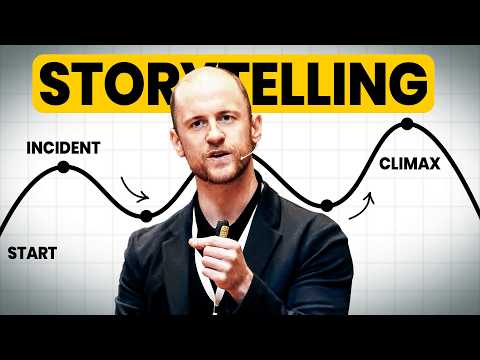 59s
59sFor more in-depth advice, you can watch the following videos:
This, as explained byNPR, should help you start.