Data as of Aug 25, 2026 · Based on 302 AI responses from ChatGPT Search and Google AI Mode · See how Parse measures this


Brands AI recommends here
Named in 73% of answers
Best when you want visual urine cues: PrettyLitter’s silica crystals change color to flag alkaline/acidic urine and blood for early urinary or kidney issue alerts; it won’t record weight or visit patterns.
Named in 69% of answers
Best when you want behavioral and multi‑cat data: Petivity’s mat tracks weight, visit frequency and duration to reveal changes in habits; it does not perform chemical urine testing like color-changing litter.
Named in 41% of answers
Named in 40% of answers
Source | Citation share |
|---|---|
Smart Litter Box Monitor - Scale & Cat Health Monitor | Petivityhttps://www.petivity.com/products/smart-litter-box-monitor | 6.1% |
Health Monitoring and Color Changing Cat Litter | PrettyLitterhttps://www.prettylitter.com/ | 6.0% |
 Rhodes™ Pet Science - Pet Science Reimaginedhttps://www.smartboxlitter.com/ | 3.0% |
Smart Box™ | Health Monitoring Cat Litterhttps://www.smartboxlitter.com/product | 2.9% |
 Petivity Smart Litterbox Monitor Systemhttps://www.purina.com/petivity-smart-litter-box-monitor | 2.8% |
 Fresh Step™ Clumping Health Monitoring Cat Litterhttps://www.freshstep.com/our-litter/health-monitoring-clumping-cat-litter/ | 2.1% |
 Is Health Monitoring Cat Litter Worth It? | Anasazi Animal Clinichttps://anasazivet.com/is-health-monitoring-cat-litter-worth-it/ | 1.9% |
Smart Litter Box Monitor - Scale & Cat Health Monitor | Petivityhttps://www.petivity.com/products/smart-litterbox-monitor | 1.5% |
 What is the Best Smart Cat Litter Box with Camera in 2025? - SiiPethttps://siipet.com/blogs/knowledge/best-smart-cat-litter-box-with-camera | 1.4% |
Fresh Step™ Clumping Health Monitoring Cat Litter – Unscented, Color-Changinghttps://www.freshstep.com/our-litter/crystals-health-monitoring-litter/ | 1.4% |
Yes — there are now **“smart” litter systems that can give you useful health clues**, not just scoop automatically. ### My top picks - **Purina Petivity Smart Litterbox Monitor System** - $129.99 (Chewy)
Yes — there are now “smart” litter systems that can give you useful health clues, not just scoop automatically.
Purina Petivity Smart Litterbox Monitor System - $129.99 (Chewy)
PETKIT Purobot Crystal Duo Camera & PH Monitoring - $249.00 (Chewy)
PrettyLitter Health Monitoring Cat Litter - $29.97 (Walmart)
CATLINK Pro Ultra AI Health Monitor - $479.00 (Best Buy)
Best for tracking behavior: Purina Petivity Smart Litterbox Monitor — sits under a regular litter box and tracks things like how often your cat uses it, weight, and waste type. This can be especially useful for noticing changes over time.
Best all-in-one health monitoring: PETKIT Purobot Crystal Duo — combines an automatic box with a camera and urine-pH monitoring, giving you considerably more information than ordinary litter.
Simplest/cheapest approach: PrettyLitter — the litter itself changes color based on urine chemistry/pH, so you don't need a smart litter box.
Most ambitious: CATLINK Pro Ultra — uses an AI camera and health-monitoring features intended to identify things such as blood or abnormal stool.
The useful part isn't necessarily diagnosing a disease. It's detecting changes from your cat's normal baseline, such as:
Those changes can be early reasons to call your veterinarian.
One important caveat: these are monitoring tools, not veterinary diagnostic devices. A color change or unusual litter-box pattern doesn't tell you exactly what's wrong, and a normal reading doesn't rule out illness.
If you tell me how many cats you have, their approximate ages, and your budget (e.g. under $150 / $300 / $600), I can narrow this down to the 2–3 smartest options for your household.
No sources cited
Yes! There are a couple of different ways to get health insights from where your cat does their business, ranging from color-changing crystal litters to smart tech monitors and high-tech automatic boxes. 1. Color-Changing Health Monitoring Litters (Chemical/pH Detection) These are silica-based crystal litters or…
Yes! There are a couple of different ways to get health insights from where your cat does their business, ranging from color-changing crystal litters to smart tech monitors and high-tech automatic boxes.
These are silica-based crystal litters or additives that change color depending on the chemical composition (like pH levels or blood presence) of your cat’s urine. They can give you a quick heads-up on potential urinary tract infections (UTIs), bladder stones, or kidney issues.
Add to list A silica crystal litter that changes color based on abnormalities in urine pH, alkalinity, or bilirubin, signaling potential health risks.
Add to list If you don't want to completely switch your preferred litter, this is a crystal additive you sprinkle over your existing fresh litter to spot pH fluctuations.
Instead of analyzing the urine chemically, these systems track how your cat uses the box—monitoring weight, frequency of visits, and duration, which are massive indicators of issues like diabetes, UTIs, or kidney disease.
To help narrow down what fits best, tell me:
Yes — and there are a few genuinely interesting options now. The key distinction is **“smart cleaning” vs. “health monitoring.”** If your priority is health insights, I’d focus on systems that track **urination/defecation frequency, cat weight, and changes in litter-box behavior** rather than simply an app-controlled…
Yes — and there are a few genuinely interesting options now. The key distinction is “smart cleaning” vs. “health monitoring.” If your priority is health insights, I’d focus on systems that track urination/defecation frequency, cat weight, and changes in litter-box behavior rather than simply an app-controlled scooper.
This is particularly interesting because you don't have to replace your existing litter box. The monitor sits underneath it and uses sensors/AI to track:
It can alert you to changes that may be associated with things such as UTIs, kidney disease, diabetes, hyperthyroidism, or obesity. It can also produce reports you can share with your veterinarian.
The important caveat: it isn't a diagnostic device. A change in litter-box behavior is a reason to investigate with your vet, not a diagnosis by itself.
One nice feature is that it can identify up to five cats without requiring a collar or microchip, although you initially have to help train it to recognize them.
PrettyLitter uses color-changing litter to indicate changes in urinary pH. That's a much simpler approach than a smart box, and it can give you an additional visual clue about what's happening in the litter box.
It's useful, but I'd consider it one piece of information rather than a health-monitoring system. It doesn't give you the longitudinal weight/frequency data that Petivity does.
The Petlibro Luma is a newer, more sophisticated direction: it combines automatic cleaning with a camera/AI system that can identify cats, track their habits and weight, and analyze waste. A recent hands-on review found its health/activity tracking particularly interesting for multi-cat households.
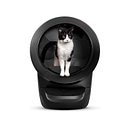
There's also the Litter-Robot 5, which emphasizes monitoring your cat's litter-box habits alongside automatic cleaning:
If your thought is “I want to know earlier if something is changing with my cat's health”, I'd actually lean toward Petivity + a good conventional litter box rather than spending $600–800 on a robotic box.
That's because changes in weight and bathroom frequency are incredibly useful longitudinal signals. Research published in Applied Animal Behaviour Science in 2025 also found that AI litter-box models can identify individual cats, elimination type, frequency, duration, and weight with promising accuracy.
If you tell me how many cats you have, their approximate ages, and whether you're looking for automatic scooping too, I can narrow this down to the 2–3 smartest options for your situation.
Yes, you don't even necessarily need "smart litter"—instead, smart **litter box monitoring systems** or **under-box scales** do the heavy lifting by tracking your cat's habits . Because cats are notoriously good at hiding illness, these systems track weight, bathroom frequency, and duration to flag potential issues…
Yes, you don't even necessarily need "smart litter"—instead, smart litter box monitoring systems or under-box scales do the heavy lifting by tracking your cat's habits . Because cats are notoriously good at hiding illness, these systems track weight, bathroom frequency, and duration to flag potential issues early.
Top options for gaining health insights include:
Add to list This is a smart scale/sensor pad that sits under your existing litter box rather than being a standalone box. It uses AI to track your cat's weight, bathroom frequency, time of day, and waste output. It can differentiate between up to 5 cats and sends data to an app, alerting you to behavioral changes that might signal UTIs, kidney disease, diabetes, or obesity. You can check it out or order it via Chewy.
Add to listSelf-Cleaning Smart Litter Boxes (like CATLINK Ultra Go to product viewer dialog for this item.) : High-end automatic boxes feature multi-cat recognition algorithms and companion apps that log usage frequency, weight fluctuations, and waste trends, providing daily and weekly health reports straight to your phone. You can find options like this through retailers like Best Buy.
Smart Health Litters (Diagnostic Litter) : If you prefer a chemical/visual approach rather than tech hardware, brands like PrettyLitter use a pH-sensitive silica gel litter that changes color based on the chemical composition of your cat's urine, helping you spot anomalies like high acidity, blood, or alkalinity before clinical symptoms appear.
To help narrow down the best choice for you, tell me:
Yes. There are several “smart” litter options that can give you health-related insights, though they are **monitoring tools, not veterinary diagnostic devices**. They’re best at spotting changes from your cat’s normal habits (which can be very useful because cats often hide illness).…
Yes. There are several “smart” litter options that can give you health-related insights, though they are monitoring tools, not veterinary diagnostic devices. They’re best at spotting changes from your cat’s normal habits (which can be very useful because cats often hide illness).
Here are the main types:
If you tell me your cat’s age, number of cats, and whether you want automatic cleaning or health monitoring first, I can narrow it down.
Yes, absolutely! The market has evolved far beyond basic plastic bins and standard automatic scoopers . There are now smart monitoring systems, AI-powered add-on cameras, and specialized litters designed specifically to give you early insights into potential issues like urinary tract infections (UTIs), kidney disease,…
Yes, absolutely! The market has evolved far beyond basic plastic bins and standard automatic scoopers . There are now smart monitoring systems, AI-powered add-on cameras, and specialized litters designed specifically to give you early insights into potential issues like urinary tract infections (UTIs), kidney disease, diabetes, and digestive trouble.
The primary health-monitoring options available fall into three distinct categories:
These don't scoop or clean—instead, they are smart weight-scale platforms that sit underneath your existing standard litter box.
If you want visual confirmation alongside behavioral data, AI camera attachments or advanced automated boxes can analyze waste directly.
If you aren't ready to invest in hardware or apps, you can use specialized chemical-reactive litters.
To help narrow down which system fits best, let me know:
Yes — and there are a few different approaches depending on how much health information you want. ### 🥇 Best for health insights: Petivity Smart Litter Box Monitor ### [Purina Petivity Smart Litterbox Monitor…
Yes — and there are a few different approaches depending on how much health information you want.
$129.99
This is the one I'd look at first if your priority is learning about your cat's health rather than simply avoiding scooping.
It sits under your existing litter box and uses sensors/AI to track:
The app can alert you to changes that may be associated with things such as UTIs, kidney disease, diabetes, hyperthyroidism, or obesity. It can also generate reports you can share with your veterinarian.
One important distinction: it's a monitoring/early-warning system, not a diagnostic device.
$799.00
$529.99
$899.00
$249.00
$29.97
Litter-Robot 5 is more of a premium automatic litter box + activity/weight monitoring solution. It's appealing if you want the box to clean itself and collect behavioral data.
CATLINK/PETKIT go further into the "smart bathroom" concept, with features such as cameras, AI behavior recognition, weight tracking and, in some models, urine-related monitoring.
PrettyLitter takes a simpler approach: the litter itself changes color based on urine chemistry/pH, giving you another visual health signal rather than relying on electronics.
If your goal is:
| Your priority | I'd consider |
|---|---|
| Early health warnings | Petivity |
| Self-cleaning + health/activity data | Litter-Robot 5 |
| Maximum tech/AI/camera features | CATLINK or PETKIT |
| Simple urine-health indicator | PrettyLitter |
| Keep your existing litter box | Petivity |
There's actually some scientific support for this general concept: a 2025 study found that intelligent litter-box systems can identify individual cats, elimination type, weight, frequency and duration, with the researchers noting their potential for detecting subtle changes relevant to veterinary care.
If you tell me your cat's age, how many cats you have, and roughly what you're willing to spend ($100–200, $200–500, $500+), I can narrow this down to the 2–3 smartest choices for you.
Yes, you can get insights into your cat 's health through smart litter systems, though they generally fall into two categories: **chemically reactive litters** that change color based on urine composition, and **smart hardware/monitors** that track behavior, weight, and…
Yes, you can get insights into your cat 's health through smart litter systems, though they generally fall into two categories: chemically reactive litters that change color based on urine composition, and smart hardware/monitors that track behavior, weight, and habits.
The primary options available to track your cat's well-being include:
To help narrow down the best fit, are you managing a single-cat or multi-cat household , and would you prefer a low-maintenance additive/litter or a smart digital monitor device?

`Yes, you can get smarter cat litter and monitoring systems that offer great insights into your cat's health` . Because cats are notoriously good at hiding illness until it is advanced , these products are designed to spot early warning signs—mostly focusing on urinary tract infections (UTIs), bladder stones, crystal…
Yes, you can get smarter cat litter and monitoring systems that offer great insights into your cat's health . Because cats are notoriously good at hiding illness until it is advanced , these products are designed to spot early warning signs—mostly focusing on urinary tract infections (UTIs), bladder stones, crystal risks, and kidney issues.
There are two main ways to go "smart" with your cat's box: Color-Changing Litters (chemical indicators) and Smart Monitor Hardware (digital tracking).
These are typically non-clumping silica crystal litters or crystal additives that react chemically with your cat’s urine. You fill the box normally and look for abnormal color shifts within a couple of hours of use:
The Catch Go to product viewer dialog for this item.: They work best in single-cat households. If you have multiple cats, it's hard to tell which cat triggered a color change.
If you want deep, continuous data (like visit frequency, duration, weight fluctuations, and even visual stool analysis) rather than just a chemical color change, digital monitors are the next evolution:
A digital scale platform that slips underneath your existing standard litter box. It tracks weight and logs how often and how long your cat uses the box, sending trends and alerts to an app. It can differentiate between multiple cats using weight signatures.
Mountable smart camera systems that use computer vision to analyze bathroom posture, visit length, and stool/urine quality (detecting straining, diarrhea, or blood) while separating multi-cat profiles via AI pet ID.
Summary of Pros and Cons
To help narrow down the best fit, tell me:

Absolutely. There are now a few genuinely “smart” cat-litter options, but they monitor **different things**. ### 🥇 Best for health signals: PrettyLitter ### [PrettyLitter Health Monitoring Cat Litter](https://www.chewy.com/prettylitter-health-monitoring-cat/dp/659654?utm_source=chatgpt.com)
Absolutely. There are now a few genuinely “smart” cat-litter options, but they monitor different things.
$27.48
PrettyLitter is probably the closest match to what you're imagining. Its crystals change color based on urine chemistry, including changes in acidity/alkalinity and visible blood. That can provide an early warning that something may be abnormal.
The important caveat: it's an early-warning tool, not a diagnostic test. PrettyLitter itself says it cannot diagnose conditions or reliably monitor an existing disease.
$129.99
This is particularly interesting if you want numbers and trends rather than color changes. A sensor sits underneath your existing litter box and tracks things like:
It then sends insights/alerts through an app.
For one cat, I think this is one of the more useful approaches because changes in frequency and weight can be much more informative than simply seeing an unusual urine color.
$899.99
The newer Litter-Robot 5 Pro combines automatic scooping with cameras/AI and health-related tracking through the Whisker app. Current reviews describe it as the most sophisticated option in the Litter-Robot lineup, particularly for multi-cat households.
It's substantially more expensive, though.
| If your priority is… | I'd look at |
|---|---|
| Detecting possible urinary abnormalities | PrettyLitter |
| Tracking weight + bathroom habits over time | Petivity |
| Automatic cleaning + smart health data | Litter-Robot 5 Pro |
| Just automatic cleaning with some tracking | Litter-Robot 4 |
One particularly nice setup is Petivity + a normal litter box: you get behavioral/weight data without having to replace your entire litter-box system.
If you tell me how many cats you have, their approximate ages, and whether you want automatic scooping, I can narrow this down to the best 2–3 options for you and compare the ongoing costs.