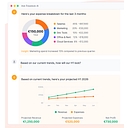
Data as of Aug 25, 2026 · Based on 303 AI responses from ChatGPT Search and Google AI Mode · See how Parse measures this
Brands AI recommends here
Named in 51% of answers
Best when your org uses Microsoft 365 and needs structured, channel-based discussions with documents and meetings integrated to reduce app switching; tradeoff: can be heavier and more complex to manage.
Named in 49% of answers
Best for teams prioritizing calm, asynchronous work: Twist organizes conversations into topic threads to lower real‑time pressure and notification noise; tradeoff: not ideal for instant voice-driven collaboration.
Named in 48% of answers
Best when strict topic-based threading is needed to stop chat floods: Zulip forces organized, asynchronous discussions so updates don’t get lost; tradeoff: enforced threading can feel rigid for casual teams.
Named in 45% of answers
Best for security-conscious teams wanting a self-hosted Slack alternative to control data and reduce public-channel noise; tradeoff: requires hosting, maintenance and ops resources.
Source | Citation share |
|---|---|
 Top 6 Slack alternatives for team collaboration - IFTTThttps://ifttt.com/explore/top-slack-alternatives | 3.2% |
 13 best Slack alternatives for team communication [2025]https://www.zoom.com/en/blog/slack-alternatives/ | 2.9% |
 5 Best Slack Alternatives for Today’s Modern Workplaces | Smart Collaboration Toolshttps://www.melp.us/blog/5-best-slack-alternatives-for-todays-modern-workplaces/ | 2.4% |
 Top 10 Slack Alternatives for Team Collaboration in 2025 - Reddithttps://www.reddit.com/r/CollaborationSoftware/comments/1lj6gl9/top_10_slack_alternatives_for_team_collaboration/ | 2.2% |
 The Best 20 Collaboration Tools for Teams in 2026: Compare at a Glancehttps://www.wrike.com/collaborative-work-guide/best-collaboration-tools-software/ | 1.9% |
 The 5 best Slack alternatives for businesses in 2026https://zapier.com/blog/slack-alternatives/ | 1.9% |
 12 Best Online Collaboration Platforms (2026 Comparison) | Reclaimhttps://reclaim.ai/blog/collaboration-platforms | 1.7% |
 11 Best Slack Alternatives for Team Communication in 2025https://www.stepsize.com/blog/best-slack-alternatives-for-team-communication | 1.6% |
 Zulip - Wikipediahttps://en.wikipedia.org/wiki/Zulip | 1.5% |
Top 5 Free Collaboration Tools in 2025 (No Budget ... - Reddithttps://www.reddit.com/r/CollaborationSoftware/comments/1klia2v/top_5_free_collaboration_tools_in_2025_no_budget/ | 1.5% |
If your main complaint with Slack is **constant pings, fragmented conversations, and the pressure to respond immediately**, I’d look at tools that change the communication model—not just Slack clones. ### My shortlist - **[twist.com](https://twist.com/?utm_source=chatgpt.com) — best overall fit.** It is deliberately…
If your main complaint with Slack is constant pings, fragmented conversations, and the pressure to respond immediately, I’d look at tools that change the communication model—not just Slack clones.
If you specifically said “less distracting than Slack,” I'd start with Twist. It's one of the few options where reducing interruption is actually part of the product's philosophy, rather than merely a notification setting.
If by “collaboration hub” you mean “one place for conversations + projects + docs + tasks, with less chat,” I'd lean toward Basecamp instead.
If you tell me your team size, whether you're remote, and whether you already use Google Workspace or Microsoft 365, I can narrow this to 2–3 options and compare them on distraction, organization, integrations, and price.
If the constant pinging, real-time pressure, and endless streams of fragmented chat in Slack are driving your team crazy, you are looking for a **calm, asynchronous-first** collaboration hub.[](https://twist.com/) [[1]](https://twist.com/)[[2]](https://www.usecarly.com/blog/basecamp-alternatives/) The best…
If the constant pinging, real-time pressure, and endless streams of fragmented chat in Slack are driving your team crazy, you are looking for a calm, asynchronous-first collaboration hub.
The best alternatives trade instant interruptions for structured, thoughtful communication.
If you want to narrow this down, tell me:
I can help you pick the exact tool that matches your workflow.
If your main complaint with Slack is **notification noise and the pressure to respond immediately**, I’d look at tools that change the communication model—not just another Slack clone. ### My shortlist - **Twist — best overall for a calmer team.** It’s built around threaded, asynchronous conversations rather than a…
If your main complaint with Slack is notification noise and the pressure to respond immediately, I’d look at tools that change the communication model—not just another Slack clone.
If you told me "I want my team to communicate effectively without living in chat," I'd start with Twist.
If you mean "I want one place for projects, decisions, files, tasks, and occasional discussion," I'd investigate Basecamp instead.
The important distinction is that simply moving from Slack to Teams, Discord, or Mattermost probably won't solve the underlying problem: they're still fundamentally real-time chat environments.
If you tell me team size, whether you're remote/hybrid, and what you currently use for docs/project management, I can narrow this to 2–3 options and explain exactly how I'd structure the hub.
If you are drowning in the real-time, ping-heavy, notification-cluttered nature of Slack, you are looking to move from **synchronous chat** to **asynchronous, structured…
If you are drowning in the real-time, ping-heavy, notification-cluttered nature of Slack, you are looking to move from synchronous chat to asynchronous, structured communication.
The best alternatives trade endless chat streams for threaded, calm, and project-centered workspaces:
To help narrow down the ideal fit, tell me:
Here are top web results for exploring this topic: [](https://slack.com/blog/compare/teams-alternatives)  Slack·https://slack.com Best Microsoft **Teams** Alternatives for 2026 - **Slack** Best for flexible team collaboration: Slack. Slack is…
Here are top web results for exploring this topic:
Slack·https://slack.com Best Microsoft Teams Alternatives for 2026 - Slack Best for flexible team collaboration: Slack. Slack is a work operating system that organizes communication into channels, direct messages, and shared workspaces. Teams use it to coordinate conversatio
Reddit·https://www.reddit.com What Are the Best Alternatives to Mainstream Collaboration Tools ...Most discussions about collaboration software start and end with the usual suspects (Slack, Microsoft Teams, Zoom). But what lesser-known…
IFTTT·https://ifttt.com Top 6 Slack alternatives for team collaboration - IFTTT 4. Twist. Pricing: Free plan available; Unlimited plan $6/user/month. If Slack feels too noisy, Twist offers a calmer, more focused alternative. Built by the creators of Todoist, Twist was designed ar
agilityportal.io·https://agilityportal.io/blog/slack-alternatives-internal-communication**Slack** Alternatives for Internal Communication: Better Tools for ...AgilityPortal is an all-in-one employee communication and digital workplace platform designed to centralise communication, collaboration, knowledge, and employee engagement in one place. Unlike tradit
Rocket.Chat·https://www.rocket.chat We've Tried 5 Different Slack Alternatives & Here's Our Conclusion Best Slack alternatives for efficient and secure work communication. Choosing a team collaboration software can be a difficult and is a time-consuming process, so in this content we have summed up our
RingCentral·https://www.ringcentral.com 11 Best Slack Alternatives for Team Collaboration - RingCentral Integration with GitHub, real-time messaging including one-to-one messages, open channels, or project-specific threads, and colour-coded tags for team communications threads,, Flowdock offers a great
Lark·https://www.larksuite.com 11 Top Slack Competitors for Your Team in 2026 - Lark Exploring Slack competitors to boost your team's collaboration and productivity beyond Slack's limits. Facebook·https://www.facebook.com What are alternatives to Slack for small team collaboration?Secure Cloud Networks. Amazon Chime is a great alternative to Slack. Chime is a secure, real-time communication and collaboration service that lets you chat, make voice and video calls, and share file
DeskFlex·https://www.deskflex.com Best 30 Collaboration Tools in 2026 for Remote & Hybrid Work Teams 1. Slack. Slack is one of the most widely used team communication platforms. It organizes conversations into channels, which makes it easier to separate projects, departments, and ongoing discussions.
Zoom·https://www.zoom.com 13 best Slack alternatives for team communication [2025] - Zoom Zoom Chat is part of Zoom Workplace, a team collaboration platform that brings all your communications together. It offers chat for teams to collaborate in real time or asynchronously through channels
No sources cited
If your main complaint is **“Slack makes everyone feel like they have to be available all the time,”** I’d look at tools designed around **asynchronous collaboration**, rather than another Slack clone. ### My shortlist - **[twist.com](https://twist.com/?utm_source=chatgpt.com) — best overall fit.** It uses topic-based…
If your main complaint is “Slack makes everyone feel like they have to be available all the time,” I’d look at tools designed around asynchronous collaboration, rather than another Slack clone.
Twist sounds closest to what you're describing. Its core design is explicitly about less interruption: conversations stay in threads, the inbox surfaces things relevant to you, and notifications can be controlled or snoozed.
The important distinction is that you're not merely replacing Slack with another chat app. You're changing the team's communication model from:
“Someone said something → everyone sees it immediately → everyone reacts” to:
“Here's a topic → the relevant people contribute → others catch up when they're ready.” If you tell me team size, remote vs. in-office, and whether you need project management/docs alongside communication, I can narrow this to 2–3 options and compare them on distraction, organization, integrations, and price.
If the main problem with Slack is **constant interruption**, I’d look less at “Slack clones” and more at **async-first collaboration hubs**. A few good fits: | Tool | Best for | Why it feels calmer | |---|---|---|
If the main problem with Slack is constant interruption, I’d look less at “Slack clones” and more at async-first collaboration hubs. A few good fits:
| Tool | Best for | Why it feels calmer |
|---|---|---|
| Twist | Remote teams, knowledge work, teams that hate pings | Built around threaded discussions instead of always-on chat; conversations are meant to be read and answered later. twistapp.com |
| Basecamp | Teams wanting fewer apps | Organizes work around projects, messages, docs, and schedules rather than endless chat streams. |
| Microsoft Teams | Companies already using Microsoft 365 | Good if you want chat plus files/meetings in one ecosystem, though it can still feel chat-heavy if not managed carefully. www.stackfyi.com |
| Google Chat | Google Workspace teams | A simpler Slack alternative if your files and meetings already live in Google tools. unil.ink |
| Zulip | Technical teams that need structure | Uses topic-based conversations so busy channels don’t become one giant stream. lymlyt.pro |
My shortlist based on “less distracting than Slack”:
A useful question: what do you want the hub to replace?
If you tell me your team size, whether you’re remote, and whether you need chat, docs, tasks, or project tracking, I can narrow it down.
- **Basecamp** is built entirely around asynchronous communication. It replaces endless chat streams with dedicated message boards, automatic check-ins, and to-do lists, making it much harder to get sucked into real-time distractions. You can explore features on the Basecamp…
To help narrow down the best fit, could you tell me:
If your team’s problem with Slack is **noise, interruptions, and conversations disappearing**, I’d look at tools that are designed around **async work** rather than just “Slack but different.”…
If your team’s problem with Slack is noise, interruptions, and conversations disappearing, I’d look at tools that are designed around async work rather than just “Slack but different.”
Here are the strongest options:
| Tool | Best for | Why it feels calmer |
|---|---|---|
| Twist | Remote teams that want less chat pressure | Thread-based discussions, fewer “instant reply” expectations, and a focus on async communication rather than live streams. weballoon.apptwistapp.com |
| Basecamp | Teams that want a hub for projects, decisions, and updates | Replaces chat sprawl with projects, message boards, schedules, and to-dos. lymlyt.pro |
| Zulip | Technical teams with lots of parallel conversations | Topic-based threading keeps discussions separated instead of one giant channel stream. lymlyt.pro |
| Microsoft Teams | Companies already using Microsoft 365 | Strong integration with Office apps, meetings, and enterprise workflows. resources.rework.com |
| Google Chat | Google Workspace teams | A lighter move if your team already lives in Gmail, Drive, and Meet. resources.rework.com |
My shortlist based on your “less distracting than Slack” requirement:
A useful question: Are you trying to replace Slack entirely, or keep chat but make the “source of truth” somewhere calmer (docs/projects/tasks)? The best choice changes a lot depending on that.
If you want a quieter workspace that swaps real-time anxiety for focused, threaded discussions, several strong alternatives to Slack prioritize deep work and asynchronous…
If you want a quieter workspace that swaps real-time anxiety for focused, threaded discussions, several strong alternatives to Slack prioritize deep work and asynchronous communication.
If you'd like to narrow this down, tell me: