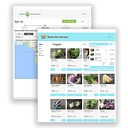
Data as of Aug 25, 2026 · Based on 329 AI responses from ChatGPT Search and Google AI Mode · See how Parse measures this
For farms, the best platform depends on your specific model. 

Brands AI recommends here
Named in 77% of answers
Named in 75% of answers
Best for versatility and multi-channel sellers. It excels for producers managing sales across farmers markets, wholesale, and direct individual orders, consolidating inventory and payments effectively.
Named in 69% of answers
Best for scaling farms needing robust growth features. Its vast app ecosystem and professional design templates are ideal for farms moving to higher-volume shipping, though it lacks native farm-specific tools.
Named in 66% of answers
Best for meat and variable-weight sales. It is uniquely designed to handle inventory sold by exact pound or share, making it highly effective for bulk meat producers and subscription-based farm deliveries.
Source | Citation share |
|---|---|
 10 Best E-commerce Platforms for Farms in 2026 (Ranked & Compared)https://www.localline.co/blog/best-e-commerce-platforms-for-farms | 6.4% |
 Best Ecommerce Platforms for Farms & Food Brandshttps://growgoodroots.com/best-ecommerce-platforms-for-farms-and-specialty-food-brands/ | 5.9% |
E-Commerce for Farmers: 5 Top Platforms and Providershttps://www.grazecart.com/blog/ecommerce-for-farmers | 5.0% |
Farm E-Commerce Platform: 10 Must-Have Features & Best Providershttps://www.grazecart.com/blog/farm-e-commerce-platform | 4.2% |
 Best Platform to Sell Farm Products - Regenerative Farmers of Americahttps://www.regenerativefarmersofamerica.com/regenerative-farmers-of-america-blog/best-platform-to-sell-farm-products-comparing-top-options-for-farmers | 4.0% |
What Is the Best Farm Website Builder? 5 Top Solutionshttps://www.grazecart.com/blog/best-farm-website-builder | 3.0% |
The Best E-Commerce Platform for Farm Stores: 3 Top Providershttps://www.grazecart.com/blog/best-ecommerce-platform-for-farm-stores | 2.7% |
What Is the Best Farm Website Builder? 5 Top Solutionshttps://www.grazecart.com/blog/best-farm-website-builder | 2.3% |
8 Best E-Commerce Platforms for Farmers in 2026 (Compared)https://findhomegrown.com/blog/ecommerce-platforms-for-farmers | 1.3% |
 which platform for ecommerce farm with a few hundred productshttps://www.reddit.com/r/ecommerce/comments/1jrnsek/which_platform_for_ecommerce_farm_with_a_few/ | 1.1% |
For a farm selling directly to consumers, **Shopify is my overall recommendation**—especially if you want the business to grow beyond a simple farm stand into subscriptions, online ordering, shipping, local delivery, and a strong branded website. ### My ranking Platform | Best for | Farm fit
For a farm selling directly to consumers, Shopify is my overall recommendation—especially if you want the business to grow beyond a simple farm stand into subscriptions, online ordering, shipping, local delivery, and a strong branded website.
| Platform | Best for | Farm fit |
|---|---|---|
| Shopify | Best overall / growing farm brand | ⭐⭐⭐⭐⭐ |
| Square Online | Farm stand + online sales + simple setup | ⭐⭐⭐⭐½ |
| WooCommerce | Maximum customization/control | ⭐⭐⭐⭐ |
| Farm-specific software | CSA-heavy operations | ⭐⭐⭐⭐ |
Shopify is the platform I'd choose if you're building a serious D2C farm brand.
Why it works particularly well for a farm:
The big advantage is not having to rebuild your store when the farm grows.
Square is arguably the better simple farm operation choice.
It's particularly attractive if you sell at a farm stand, farmers markets, or events and already use Square POS. Square synchronizes online and in-person inventory/orders.
It also supports:
I'd pick Square over Shopify if your operation is primarily local and you want the simplest possible connection between your farm stand, farmers markets, POS, inventory, and website.
WooCommerce is excellent if you already have a WordPress site or have someone technical managing your website.
It's extremely customizable, including local pickup, delivery, subscriptions, shipping zones, and delivery scheduling.
The downside is that you'll be managing more pieces yourself. For a farmer who wants to spend time farming rather than maintaining a website, I'd generally favor Shopify.
Rather than making it just a conventional online store, I'd structure it around how customers actually buy farm products:
Home → Your farm story + seasonal availability + prominent "Shop Now"
Shop → Produce → Meat → Eggs & dairy → Pantry/value-added products → Farm bundles
CSA / Farm Boxes → Weekly box → Biweekly box → Seasonal subscription → Add-ons
Pickup & Delivery → Farm pickup → Farmers-market pickup → Local delivery → Shipping for shelf-stable products
About the Farm → Your story → Farming practices → Photos/videos → Where/how products are grown
Recipes & Farm Journal → Recipes using what's currently available → Seasonal updates → Harvest announcements
That last part is important: a farm has a storytelling advantage that a normal e-commerce business doesn't. Your website should sell the farm and relationship, not just individual products.
If I were starting your farm's D2C operation today:
Shopify + Shopify POS + subscriptions + local delivery/pickup would be my default stack.
If you're already heavily invested in Square, I'd seriously consider Square Online instead—the simplicity and unified POS/inventory system could outweigh Shopify's greater flexibility.
If you tell me what you're selling (produce, meat, eggs, flowers, dairy, value-added products, CSA boxes, etc.), whether you'll ship or primarily do local pickup/delivery, and roughly how many orders you expect per week, I can recommend the exact platform/plan and lay out the website architecture for your farm.


The **best direct-to-consumer (D2C) platform for a farm** depends on your specific fulfillment model, but `Barn2Door` is widely considered the top specialized choice for farms managing local deliveries, pickups, and CSAs (Community Supported Agriculture), while Shopify is the best general-purpose option if you want…
The best direct-to-consumer (D2C) platform for a farm depends on your specific fulfillment model, but Barn2Door is widely considered the top specialized choice for farms managing local deliveries, pickups, and CSAs (Community Supported Agriculture), while Shopify is the best general-purpose option if you want maximum design control and broader shipping capabilities.
Platform Comparison
| Platform | Best For | Key Advantage | Pricing Model |
|---|---|---|---|
| Barn2Door | Local farms, CSAs & pick-ups | Tailored for farm pickup schedules and inventory | Monthly subscription + transaction fees |
| Shopify | Growth & shipping | Massive app ecosystem and reliable checkout | Tiered monthly plans + credit card fees |
| Local Line | Multi-channel sales | Manages both D2C and wholesale accounts easily | Monthly subscription tiers |
| Squarespace | Simple aesthetic sites | Clean templates with minimal setup time | Flat monthly website fee |
If you tell me how you plan to fulfill orders (local pickup, home delivery, or nationwide shipping) and whether you offer subscriptions or CSAs , I can recommend the exact platform that fits your farm.
Choosing the best D2C e-commerce platform for your farm depends on **how you fulfill orders** (local pickup, local delivery routes, CSA/subscriptions, or nationwide shipping) and **how much you want to wrestle with tech**. The options break down into two categories: **ag-specific platforms** (built for local food…
Choosing the best D2C e-commerce platform for your farm depends on how you fulfill orders (local pickup, local delivery routes, CSA/subscriptions, or nationwide shipping) and how much you want to wrestle with tech.
The options break down into two categories: ag-specific platforms (built for local food logistics) and mainstream giants (built for general e-commerce).
Phase 1: The Ag-Specific Platforms (Best for Local Pickup, CSAs & Weight-Based Pricing)
If your primary sales model involves local drop-off points, farm-stand pickups, customizable CSA boxes, or selling meat/produce priced by exact weight (e.g., $X per pound where the final weight varies), specialized software saves hours of manual labor.
Phase 2: Mainstream Giants (Best for Nationwide Shipping & Ecosystems)
If you aren't tied heavily to complex local delivery routes, or if you plan to ship non-perishables (like honey, wool, packaged goods, or merchandise) nationwide, mainstream tools offer better app ecosystems and lower starting costs.
Summary Recommendation
To narrow this down, tell me:
If your goal is a **true direct-to-consumer farm business**, rather than simply putting farm products into a generic online store, I’d shortlist **Local Line, Barn2Door, and Shopify**. ### My recommendation **For most farms: [localline.co](https://www.localline.co/?utm_source=chatgpt.com) is probably the best overall…
If your goal is a true direct-to-consumer farm business, rather than simply putting farm products into a generic online store, I’d shortlist Local Line, Barn2Door, and Shopify.
For most farms: localline.co is probably the best overall choice.
It is purpose-built around how farms actually sell: DTC, CSA, farm pickup, delivery, farmers markets, and—if you add it later—wholesale. It supports sell-by-weight products, subscriptions/CSA boxes, pickup and delivery windows, inventory, and POS from the same system.
Here's how I'd think about the alternatives:
| Platform | Best for | My take |
|---|---|---|
| Local Line | Farm selling DTC + CSA + possibly wholesale | Best overall |
| Barn2Door | Farm-first DTC, subscriptions, meat, variable-weight products | Best turnkey farm solution |
| Shopify | Building a highly branded, scalable e-commerce business | Best long-term flexibility |
| Farmigo | Primarily CSA/subscription farms | Best if CSA is the business |
| WooCommerce | Maximum control and technical customization | Powerful, but more work |
These are the two I'd investigate first.
Local Line is particularly compelling if you expect your farm to have multiple sales channels. You can have retail customers, CSA members, restaurants, and other buyers using different pricing while sharing the same inventory. It also offers branded storefronts, pickup/delivery scheduling, subscriptions, and POS.
Barn2Door is excellent if your business is primarily farm-to-consumer. It handles things that generic e-commerce platforms struggle with, such as products sold by weight, deposits/final charges, seasonal subscriptions, and recurring subscriptions.
I'd lean Barn2Door if you're selling things like:
I'd lean Local Line if you expect:
shopify.com is the wildcard—and potentially the best choice if you're building a farm brand rather than simply an online farm store.
Shopify gives you an enormous ecosystem for marketing, SEO, email, subscriptions, customer accounts, analytics, integrations, and custom design. The tradeoff is that farm-specific functionality often comes from apps rather than being native. For example, CSA functionality can be added through apps such as Copia.
So I would not automatically choose Shopify just because it's the biggest platform. A farm has unusual requirements—seasonality, variable weights, limited inventory, pickup windows, delivery routes, CSA shares—that a generic e-commerce platform wasn't designed around.
If you told me nothing else about the farm, my ranking would be:
1. Local Line — best overall farm DTC platform 2. Barn2Door — best turnkey farm-specific platform 3. Shopify — best if brand/e-commerce growth is the priority 4. Farmigo — best if you're primarily a CSA 5. WooCommerce — best if you have technical resources and want maximum control
One important caveat: don't choose based on the storefront alone. For a farm, the back-office workflow—inventory, harvest availability, subscriptions, pickup/delivery, variable-weight products, payments, and order fulfillment—will have a much bigger impact on your day-to-day life.
If you tell me what you're selling (produce, meat, eggs, flowers, honey, etc.), approximate annual sales, whether you do CSA, and whether customers will pick up or you deliver, I can narrow this down to the best platform for your specific farm and compare the actual costs.

There is no single "best" platform for every farm—the right choice depends entirely on **how you fulfill orders** (local pickup vs. shipping) and **what you sell** (produce, meat by weight, or CSA…
There is no single "best" platform for every farm—the right choice depends entirely on how you fulfill orders (local pickup vs. shipping) and what you sell (produce, meat by weight, or CSA subscriptions).
The top D2C e-commerce options for farms are categorized below by how well they fit specific farm models:
If your primary sales are local pickup, delivery routes, and recurring CSA boxes, general e-commerce platforms can feel clunky. These ag-specific tools handle catch-weight pricing (e.g., pricing a whole chicken or a share of beef by exact weight) and scheduling natively.
If you sell shelf-stable goods (honey, coffee, dried herbs, value-added products) or plan to ship nationally via courier rather than focusing on local drop-offs, general e-commerce is best.
To help narrow down the ideal fit, tell me:
If your goal is to build a **true D2C farm business**—selling produce, meat, eggs, dairy, flowers, honey, CSA shares, etc. directly to consumers—I’d shortlist **Local Line, Barn2Door, and Shopify** rather than choosing a generic website builder. ### My pick: Local Line For most farms, **Local Line** is probably the…
If your goal is to build a true D2C farm business—selling produce, meat, eggs, dairy, flowers, honey, CSA shares, etc. directly to consumers—I’d shortlist Local Line, Barn2Door, and Shopify rather than choosing a generic website builder.
For most farms, Local Line is probably the best overall fit if you're serious about selling directly to consumers and may eventually add wholesale, farmers markets, or CSA.
It is purpose-built for farms and supports:
| Platform | Best for | My take |
|---|---|---|
| Local Line | Growing farms selling D2C + wholesale | ⭐ Best overall |
| Barn2Door | CSA, subscriptions & farm delivery | ⭐ Best farm-specific alternative |
| Shopify | Building a polished consumer brand and scaling | ⭐ Best long-term general e-commerce platform |
| Square Online | Small farm + farmers-market sales | Best if you already use Square |
| GrazeCart | Meat/ranch businesses | Excellent specialized option |
Barn2Door is especially compelling if your business revolves around CSA subscriptions, recurring orders, delivery routes, or variable-weight products. Its e-commerce system was specifically designed around those farm-specific problems.
Shopify is what I'd choose if your vision is bigger than a local farm store—for example, you want a beautiful branded site, online marketing, nationwide shipping, multiple product lines, and eventually a substantial e-commerce operation. Shopify also supports local delivery and subscriptions, although farm-specific functionality often comes through apps rather than being native.
The "best" platform changes substantially depending on what you're selling and how customers receive it.
For example:
One important distinction: don't choose based primarily on how nice the website looks. For a farm, inventory, harvest availability, variable weights, pickup windows, delivery zones, subscriptions, and farmers-market inventory can become much more important than the storefront itself.
If you tell me (1) what your farm sells, (2) whether you deliver/ship/pickup, (3) roughly how much you expect to sell per month, and (4) whether you need CSA subscriptions, I can narrow this down to the best 1–2 platforms for your specific farm, including current pricing and what I'd build the site with.
The "best" D2C e-commerce platform for your farm depends almost entirely on **how you plan to fulfill orders** (local pickup vs. shipping nationally) and **what you sell** (perishable produce, heavy items, variable-weight meat, or recurring CSA…
The "best" D2C e-commerce platform for your farm depends almost entirely on how you plan to fulfill orders (local pickup vs. shipping nationally) and what you sell (perishable produce, heavy items, variable-weight meat, or recurring CSA boxes).
Generic platforms like Shopify are powerful, but they often require expensive add-ons to handle farm-specific logistics like local pickup windows and variable-weight pricing.
The top options on the market are categorized below by farm type and business model:
To help narrow down the ideal fit, tell me:
If your goal is a **true farm-to-consumer e-commerce business**, I’d put **Barn2Door** at the top of the list—but **Shopify** is the better choice if you want to build a broader consumer brand that could eventually extend well beyond farm products. ### My ranking for a farm | Platform | Best for | Farm-specific…
If your goal is a true farm-to-consumer e-commerce business, I’d put Barn2Door at the top of the list—but Shopify is the better choice if you want to build a broader consumer brand that could eventually extend well beyond farm products.
| Platform | Best for | Farm-specific features | Ease | My take |
|---|---|---|---|---|
| Barn2Door | Farm-first D2C | ⭐⭐⭐⭐⭐ | ⭐⭐⭐⭐ | Best overall for most farms |
| Local Line | Farms doing D2C + wholesale | ⭐⭐⭐⭐⭐ | ⭐⭐⭐⭐ | Best alternative |
| Shopify | Building a scalable food brand | ⭐⭐⭐ | ⭐⭐⭐⭐⭐ | Best long-term brand/e-commerce platform |
| Farmigo | CSA/subscription-heavy farms | ⭐⭐⭐⭐⭐ | ⭐⭐⭐⭐ | Best for CSA operations |
| Square | Small/simple farm stands | ⭐⭐⭐ | ⭐⭐⭐⭐⭐ | Best for keeping things inexpensive/simple |
Barn2Door is purpose-built around farm sales rather than adapting generic e-commerce software to agriculture.
That matters because farms have unusual requirements: variable-weight products, seasonal inventory, CSA subscriptions, pickup windows, delivery routes, farm-stand sales and wholesale customers.
Barn2Door supports selling by weight, retail and wholesale price structures, recurring/seasonal subscriptions, delivery, pickup and shipping, and an integrated POS.
Its current published pricing starts around $119/month on an annual plan for its Entrepreneur tier, with higher tiers at $159 and $299/month; setup fees and payment processing also apply.
I'd choose it if you primarily want to sell:
The big advantage is that you don't have to assemble a dozen Shopify apps to make the system understand how a farm works.
Local Line is particularly interesting if your farm will sell both D2C and wholesale.
It offers a branded storefront, custom domain, CSA subscriptions, pickup/delivery windows, order cutoffs, guest checkout, farm-stand functionality and wholesale capabilities.
I'd lean toward Local Line over Barn2Door if your plan is something like:
Farm → consumers + restaurants + grocery stores + other businesses
rather than purely:
Farm → consumers
Shopify is the platform I'd choose if you envision your farm becoming a substantial consumer brand.
Shopify has excellent storefront design, checkout, SEO, email/marketing integrations, social commerce, POS and an enormous app ecosystem. Its current Basic plan starts at $29/month when billed annually.
The tradeoff is that farm-specific functionality isn't native. You may need apps for subscriptions, local delivery, CSA management, variable-weight products, etc. Shopify's ecosystem makes those things possible, but you end up paying for and managing more pieces.
So:
Barn2Door: "We're a farm that needs e-commerce."
Shopify: "We're building a food brand that happens to originate on a farm."
That's an important distinction.
Farmigo is worth serious consideration if CSA/membership subscriptions are the heart of your business.
It has member management, customizable shares, add-ons, recurring billing, pickup locations, delivery routing, packing lists and farm-specific reporting.
Its current pricing is unusual: 2% of delivery revenue with a $150/month minimum, charged only during months you're delivering.
That's potentially attractive for a seasonal CSA operation.
If you're starting from scratch, I'd make the decision based on your business model:
If 70%+ of sales will be local farm products → Barn2Door.
If you'll have a substantial wholesale operation too → Local Line.
If you're building a premium consumer brand with nationwide shipping → Shopify.
If CSA memberships are the core business → Farmigo.
If you're a small farm stand with relatively few products → Shopify or Square may be sufficient.
Don't choose based primarily on the prettiest website. For a farm, I'd prioritize:
Those operational features will save you vastly more time than having a slightly nicer storefront.
If you tell me what you're selling (e.g., produce, beef, eggs, flowers, honey, prepared foods), whether you'll ship or do local delivery/pickup, and roughly how many orders you expect per week, I can narrow this down to the best platform and recommended plan for your specific farm.

For a farm selling directly to consumers, **I’d choose Barn2Door if your business is primarily fresh/local farm products**. I’d choose **Shopify** if you’re building a broader consumer brand that may eventually sell lots of packaged products, ship nationally, or expand beyond the farm. ### My ranking for a farm D2C…
For a farm selling directly to consumers, I’d choose Barn2Door if your business is primarily fresh/local farm products. I’d choose Shopify if you’re building a broader consumer brand that may eventually sell lots of packaged products, ship nationally, or expand beyond the farm.
| Platform | Best for | Farm-specific fit | My take |
|---|---|---|---|
| Barn2Door | Produce, meat, eggs, CSA, local delivery/pickup | ⭐⭐⭐⭐⭐ | Best overall for a farm |
| Shopify | Packaged products + national shipping + scaling | ⭐⭐⭐⭐ | Best general-purpose platform |
| WooCommerce | Maximum customization/control | ⭐⭐⭐⭐ | Great if you're comfortable with WordPress |
| Square Online | Farmers markets + simple online store | ⭐⭐⭐⭐ | Excellent if you already use Square POS |
| Squarespace | Small, brand-focused farm with few products | ⭐⭐⭐ | Beautiful/easy, but less farm-specific |
Barn2Door is unusually well matched to how farms actually sell.
It supports things that generic e-commerce platforms tend to require apps/customization for:
Its current published plans start at $119/month plus a $399 setup fee, with higher tiers at $159 and $299/month. The plans include the online store, POS, inventory/order management, subscriptions, and sell-by-weight functionality.
The big advantage is that you're not trying to bend a traditional e-commerce system around farming. Barn2Door explicitly positions itself as an all-in-one system for direct-to-consumer farms and says it serves farms across all 50 states.
Shopify would be my choice if your vision is something like:
Farm → branded products → nationwide shipping → subscriptions → wholesale → eventually a much larger consumer brand.
Shopify has a huge ecosystem and is one of the strongest general-purpose e-commerce platforms for scaling.
The downside for a farm is that you'll often assemble the farm-specific pieces yourself: subscriptions, CSA management, delivery zones/routes, pickup windows, selling by weight, etc. That can mean additional apps and complexity.
WooCommerce makes sense if you already use WordPress or have technical help.
It's extremely customizable, but that flexibility comes with more responsibility for hosting, updates, plugins, security, and maintenance. For a farmer who wants to spend their time farming rather than maintaining a website, I'd generally favor Barn2Door or Shopify.
If you sell mostly:
One important distinction: don't choose based primarily on which platform makes the prettiest website. For a farm, inventory + fulfillment + pickup/delivery + seasonality + subscriptions can matter much more than the storefront itself.
If you tell me what your farm sells (produce, meat, eggs, flowers, honey, etc.), whether you'll deliver locally or ship, roughly how many products you have, and whether you run a CSA, I can narrow this down to the best platform and the exact setup I'd use.
Choosing the best direct-to-consumer (D2C) e-commerce platform for your farm depends heavily on **what you sell** (e.g., bulk meat, subscription boxes/CSAs, variable-weight produce, or value-added goods) and **how you fulfill orders** (local pickup, home delivery routes, or national shipping). The options break down…
Choosing the best direct-to-consumer (D2C) e-commerce platform for your farm depends heavily on what you sell (e.g., bulk meat, subscription boxes/CSAs, variable-weight produce, or value-added goods) and how you fulfill orders (local pickup, home delivery routes, or national shipping).
The options break down into two main categories: agriculture-specific platforms (which handle the unique headaches of farming) and mainstream e-commerce giants (which offer unbeatable design and marketing tools).
Phase 1: Ag-Specific Platforms (Best for Inventory & Logistics)
If your primary products are fresh vegetables, meat, dairy, or recurring CSA (Community Supported Agriculture) shares, standard e-commerce tools often fall short. You need catch-weight/variable-weight pricing ($11.50 for an exact 3.2 lb chicken) and local delivery route management.
Phase 2: Mainstream Platforms (Best for Branding & Growth)
If you sell shelf-stable goods (honeys, jams, coffee, wool, body products) or plan to ship non-perishables nationally, you may want the marketing power and clean design of a general platform.
Quick Decision Framework
To help narrow this down, tell me: