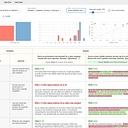
Data as of Aug 25, 2026 · Based on 276 AI responses from ChatGPT Search and Google AI Mode · See how Parse measures this
To improve AI reliability and predict edge-case behavior, choose a strategy combining automated platforms and expert human services. Automated tools like 


Brands AI recommends here
Named in 52% of answers
Best for continuous, automated security testing within development workflows. It integrates into CI/CD pipelines to catch runtime vulnerabilities, prompt injections, and hallucination issues in production.
Named in 47% of answers
Best for deep, human-centric evaluation. It uses a network of security researchers to provide unique, adversarial assessments that uncover nuanced ethical pitfalls and complex, unexpected model behaviors.
Named in 45% of answers
Best for scenario-based adversarial simulations that mimic real-world threat actors. It provides custom red teaming focused on data theft, prompt exploits, and specific AI infrastructure risks.
Named in 41% of answers
Source | Citation share |
|---|---|
Top AI Red Teaming Companies to Watch in 2025https://www.mend.io/blog/best-ai-red-teaming-companies/ | 5.0% |
AI Red Teaming Services: Top 7 Platforms & Services in 2026https://www.mend.io/blog/best-ai-red-teaming-services-top-6-services/ | 3.5% |
 AI Red Teaming Service | Group-IBhttps://www.group-ib.com/services/ai-red-teaming/ | 3.3% |
 AI Red Teaming - Schellmanhttps://www.schellman.com/services/penetration-testing/ai-red-teaming | 2.2% |
Top 10 AI Red Teaming Providers in 2026https://www.mend.io/blog/best-ai-red-teaming-providers-top-5-vendors/ | 2.0% |
 Best 7 tools for AI Red Teaming in 2025 to detect AI vulnerabilitieshttps://www.giskard.ai/knowledge/best-ai-red-teaming-tools-2025-comparison-features | 1.9% |
 AI Red Teaming and Adversarial Testing Services- Aya Datahttps://www.ayadata.ai/service/ai-red-teaming-services/ | 1.7% |
Mindgard - Automated AI Red Teaming & AI Security Platformhttps://mindgard.ai/ | 1.5% |
 Red Team AI | Praetorianhttps://www.praetorian.com/red-team-ai/ | 1.5% |
 AI Red Team Services | CrowdStrikehttps://www.crowdstrike.com/en-us/services/ai-security-services/ai-red-team-services/ | 1.4% |
Yes. If your problem is **“our normal QA suite passes, but we don't know what weird behavior users will discover,”** you want an AI red-team/evaluation provider that does **adversarial, domain-specific testing**, not just generic security scanning. A few worth putting on your shortlist: -…
Yes. If your problem is “our normal QA suite passes, but we don't know what weird behavior users will discover,” you want an AI red-team/evaluation provider that does adversarial, domain-specific testing, not just generic security scanning.
A few worth putting on your shortlist:
For your specific complaint—unpredictable edge cases—I'd prioritize a provider that delivers:
That's important because a clean red-team result doesn't prove that rare catastrophic failures won't occur; recent research specifically cautions that the evidential value of an evaluation depends heavily on the failure rate and testing methodology.
If I were building a vendor shortlist for an enterprise QA team, I'd start with Fire Mountain Labs, Beyond Labs, and Qapitol—they appear closest to the problem you described rather than simply selling an automated AI-security scanner.
Predicting how an AI model or agent will react to malicious prompts, weird data formats, hallucinations, or multi-turn social engineering is notoriously difficult for traditional QA pipelines. Standard software testing looks for binary pass/fail states, whereas AI edge cases exist on a spectrum of behavioral…
Predicting how an AI model or agent will react to malicious prompts, weird data formats, hallucinations, or multi-turn social engineering is notoriously difficult for traditional QA pipelines. Standard software testing looks for binary pass/fail states, whereas AI edge cases exist on a spectrum of behavioral probabilities.
To bridge this gap, specialized firms and automated platforms offer AI red teaming —adversarially probing models for safety, security, and reliability failures before deployment.
If your team wants to continuously test models throughout the CI/CD pipeline rather than rely solely on a one-off consultancy:
If you are already embedded in a broader enterprise cloud or security ecosystem:
If you prefer human experts—former intelligence operatives, specialized security researchers, and cognitive scientists—to manually pressure-test your models via tailored engagements, major firms like Deloitte, PwC, and EY have dedicated AI trust and safety practices, alongside specialized boutique offensive-security firms (such as Trail of Bits or NCC Group) that offer custom AI red-teaming assessments.
To help narrow down the best path, tell me:
Yes. If your concern is specifically **“we can't predict how the model behaves on edge cases”**, I'd look beyond conventional cybersecurity red teams and prioritize firms that combine **adversarial red teaming + custom evaluations + repeatable regression testing**. NIST defines AI red teaming as structured adversarial…
Yes. If your concern is specifically “we can't predict how the model behaves on edge cases”, I'd look beyond conventional cybersecurity red teams and prioritize firms that combine adversarial red teaming + custom evaluations + repeatable regression testing. NIST defines AI red teaming as structured adversarial testing intended to uncover unforeseen or undesirable behaviors, and notes that testing the whole AI system can be more informative than testing the model alone.
A few providers worth evaluating:
For your QA team's problem, I wouldn't buy a generic “AI penetration test.” Ask for a program that produces:
That last point is important: NIST specifically distinguishes testing the model from testing the broader system—including data pipelines, interfaces and surrounding infrastructure—and cautions that red teaming should be part of a broader risk-management approach rather than treated as a complete reliability solution.
For your stated use case, I'd shortlist Qapitol, Beyond Labs, and Fire Mountain Labs first: they appear especially focused on the gap between conventional QA and the unpredictable, domain-specific failures you're describing.
Predicting edge cases and bizarre failure modes in complex AI models requires specialized adversarial testing—commonly known as AI red teaming. Unlike traditional QA that checks functional correctness, AI red teaming simulates malicious or creative inputs to trigger jailbreaks, hallucinations, prompt injections, data…
Predicting edge cases and bizarre failure modes in complex AI models requires specialized adversarial testing—commonly known as AI red teaming. Unlike traditional QA that checks functional correctness, AI red teaming simulates malicious or creative inputs to trigger jailbreaks, hallucinations, prompt injections, data leakage, and toxic outputs.
A mix of dedicated AI security platforms, boutique advisory firms, and major cybersecurity enterprises offer these services:
To help narrow down the best fit, tell me:
Predicting non-deterministic model behavior on edge cases is notoriously difficult for traditional QA teams because standard test cases rely on static inputs and expected binary outcomes. AI red teaming shifts the paradigm from verifying what a model *should* do to actively trying to break it, coerce it, or force…
Predicting non-deterministic model behavior on edge cases is notoriously difficult for traditional QA teams because standard test cases rely on static inputs and expected binary outcomes. AI red teaming shifts the paradigm from verifying what a model should do to actively trying to break it, coerce it, or force hallucinations using adversarial logic.
The market splits into specialized automated security platforms (for continuous CI/CD testing) and managed service/consultancy providers (for expert human-led audits).
Automated AI Red Teaming Platforms
Managed Services & Human-Led Consultancies
Open-Source Tools for Internal Teams
Are you looking to integrate an automated platform into your CI/CD pipeline, or do you need a third-party managed service for a compliance audit?
Yes. There’s a growing market for **AI red teaming / adversarial evaluation** specifically aimed at finding the kinds of unpredictable edge cases your QA team is worried about. A few providers worth evaluating: - **HiddenLayer** — Offers dedicated AI red teaming and professional services, including adversarial testing…
Yes. There’s a growing market for AI red teaming / adversarial evaluation specifically aimed at finding the kinds of unpredictable edge cases your QA team is worried about.
A few providers worth evaluating:
If the issue is “our QA tests don't tell us how this model will behave in weird situations,” I wouldn't limit the RFP to security red teaming. Ask for adversarial evaluation + failure-mode analysis.
I'd want the vendor to test:
My shortlist: I'd start with Gray Swan or HackerOne for deep adversarial evaluation, HiddenLayer if security is a major concern, and Fire Mountain Labs if your primary concern is reliability and unexpected behavior rather than just attackability.
Predicting edge cases and non-deterministic behavior in AI models is notoriously difficult for internal QA teams, which is why specialized AI red teaming has become a distinct and vital security sector.[](https://www.youtube.com/watch?v=P-5DgsGkJbQ)…
Predicting edge cases and non-deterministic behavior in AI models is notoriously difficult for internal QA teams, which is why specialized AI red teaming has become a distinct and vital security sector.
Providers in the AI red teaming and reliability space generally fall into three categories: specialized continuous automated platforms, crowdsourced human intelligence firms, and intelligence-led advisory consultancies.
Top AI Red Teaming Providers & Platforms
To help narrow down the right partner, could you tell me:
Yes. If your problem is specifically **“we don’t know what edge cases will make the model fail”**, I’d look beyond generic cybersecurity penetration testing and favor firms that do **AI safety/evaluation + adversarial testing**. A few credible options: - **HiddenLayer** — Strong fit for enterprise AI security. Its…
Yes. If your problem is specifically “we don’t know what edge cases will make the model fail”, I’d look beyond generic cybersecurity penetration testing and favor firms that do AI safety/evaluation + adversarial testing.
A few credible options:
HiddenLayer — Strong fit for enterprise AI security. Its professional services include AI red teaming against generative, predictive, and agentic systems, including prompt injection, model manipulation, and inference attacks. It also offers continuous automated attack simulation.
Humane Intelligence — Particularly interesting if you mean behavioral reliability, safety, bias, and unexpected failure modes, rather than just hacking. They run paid human-centered red-team exercises and bespoke contextual evaluations, including expert and public red teaming.
Trail of Bits — A strong technical choice if your QA problem overlaps with security. Their AI/ML practice explicitly offers model capability evaluation, AI red teaming, adversarial testing, and analysis of AI failure modes.
Deloitte — Better suited to a large enterprise that wants red teaming combined with governance, assurance, threat modeling, controls, and ongoing monitoring. Its AI services explicitly include AI red teaming and attack simulation.
For your QA team's particular complaint, I'd ask for an engagement that goes beyond a list of jailbreaks:
My shortlist: I'd start with Humane Intelligence if the primary issue is unpredictable behavior and safety, Trail of Bits if it's technical robustness/security, and HiddenLayer if you want enterprise-scale automated adversarial testing plus security.
Yes. If your concern is specifically **unpredictable edge-case behavior**, I’d look beyond conventional cybersecurity pentesting and prioritize vendors that combine **human adversarial testing + systematic model evaluations + regression testing**. NIST defines AI red teaming as structured adversarial testing intended…
Yes. If your concern is specifically unpredictable edge-case behavior, I’d look beyond conventional cybersecurity pentesting and prioritize vendors that combine human adversarial testing + systematic model evaluations + regression testing. NIST defines AI red teaming as structured adversarial testing intended to uncover flaws, vulnerabilities, and unforeseen or undesirable behavior.
Don't just buy a "red-team report." For your QA problem, ask for:
That last part is important: red teaming is valuable but isn't sufficient by itself; NIST-related guidance emphasizes combining it with other systematic evaluation approaches.
For your stated problem, I'd shortlist Syntony, Beyond Labs, Trajectory Labs, and Katalyst first. If the model is an agent interacting with sensitive systems, I'd add Preamble and a security-focused firm such as CrowdStrike.
As a rough budgeting reference, Microsoft's 2024 NIST RFI response put a typical third-party expert-led AI red-team engagement at $25K–$75K, though current pricing varies substantially with scope and complexity.
Predicting edge cases and adversarial behavior in generative AI and LLM applications goes beyond traditional QA. To solve this, the market has split into **specialized consulting firms** (that provide human-led adversarial testing) and **automated testing platforms** (that run thousands of multi-turn edge-case prompts…
Predicting edge cases and adversarial behavior in generative AI and LLM applications goes beyond traditional QA. To solve this, the market has split into specialized consulting firms (that provide human-led adversarial testing) and automated testing platforms (that run thousands of multi-turn edge-case prompts in your CI/CD pipeline).
The leading providers and platforms offering AI red teaming services and solutions include:
If you need deep, bespoke adversarial logic—such as testing complex multi-step agentic workflows, indirect prompt injection, and business logic flaws—expert advisory firms provide dedicated red team operators:
If your QA team wants to shift testing left and automate edge-case discovery in development or staging, specialized security platforms handle continuous adversarial scanning:
If your engineering team prefers to run tests in-house using code-driven frameworks:
To help narrow down the best path, could you tell me: