Data as of Aug 25, 2026 · Based on 275 AI responses from ChatGPT Search and Google AI Mode · See how Parse measures this
To manage permissions across 50 SaaS applications, platforms like 

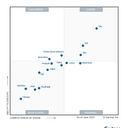
Brands AI recommends here
Named in 63% of answers
Named in 56% of answers
Best for complex SaaS environments where deep discovery of hidden apps and granular control over user permissions are needed. It automates onboarding cycles and identifies unused software licenses.
Named in 48% of answers
Named in 42% of answers
Source | Citation share |
|---|---|
 How to manage SaaS user access permissions - BetterCloudhttps://www.bettercloud.com/monitor/effectively-managing-saas-user-access-permissions/ | 2.1% |
 10 Best Identity and Access Management (IAM) Tools in 2026 | C1https://www.conductorone.com/guides/identity-and-access-management-tools/ | 2.0% |
 How to Integrate Multiple SaaS Platforms for a Unified ... - Josyshttps://www.josys.com/article/how-to-integrate-multiple-saas-platforms-for-a-unified-management-dashboard | 1.8% |
 Best SaaS Management Platforms Reviews 2026 - Gartnerhttps://www.gartner.com/reviews/market/saas-management-platforms | 1.5% |
 1Password launches Unified Access as a one-stop shop for managing company credentials – say goodbye to shadow IT and SaaS sprawl | TechRadarhttps://www.techradar.com/pro/1password-launches-unified-access-as-a-one-stop-shop-for-managing-company-credentials-say-goodbye-to-shadow-it-and-saas-sprawl | 1.5% |
SaaS User Management: From User Sprawl to One System of Recordhttps://www.zluri.com/blog/saas-user-management | 1.5% |
 JumpCloud - Wikipediahttps://en.wikipedia.org/wiki/JumpCloud | 1.4% |
 The Best SaaS Management Tools (2026 Guide)https://www.block64.com/blog/the-best-saas-management-tools-2026-guide | 1.2% |
 A Complete IT Guide to SaaS User Permission Managementhttps://www.cloudfuze.com/a-complete-guide-on-saas-user-permission-management/ | 1.1% |
 Best SaaS Management Platforms Compared (Aug. 2025) - JumpCloudhttps://jumpcloud.com/blog/best-saas-management-platforms-compared | 1.1% |
Managing permissions across 50+ SaaS applications quickly turns into an operational nightmare ("SaaS sprawl"). To get a unified access management dashboard, you generally look at two categories of tools depending on your exact pain point: **Identity and Access Management (IAM / IGA)** platforms or specialized **SaaS…
Managing permissions across 50+ SaaS applications quickly turns into an operational nightmare ("SaaS sprawl"). To get a unified access management dashboard, you generally look at two categories of tools depending on your exact pain point: Identity and Access Management (IAM / IGA) platforms or specialized SaaS Management Platforms (SMP).
If you want a single pane of glass to control who logs into what, enforce multi-factor authentication, and automate provisioning/deprovisioning, enterprise IAM/IGA tools are the gold standard. They hook directly into your apps via SAML/SCIM connectors:
If your apps don't all support clean single sign-on (SSO) or you need to audit granular user permissions and license utilization inside apps where traditional IAM has blind spots, an SMP is more appropriate:
To help narrow down which tool fits your stack, tell me:
Yes. What you’re looking for is generally called **Identity Governance and Administration (IGA)** or **SaaS access management**: a central dashboard that shows who has access to which apps, automates provisioning/deprovisioning, and supports approvals and periodic access reviews. ### Strong options -…
Yes. What you’re looking for is generally called Identity Governance and Administration (IGA) or SaaS access management: a central dashboard that shows who has access to which apps, automates provisioning/deprovisioning, and supports approvals and periodic access reviews.
Okta or Microsoft Entra are probably the first two I'd evaluate. If you need sophisticated compliance, entitlement governance, and least-privilege analysis, add SailPoint to the comparison.
The key is to look beyond SSO: you want SCIM/API provisioning, role/entitlement management, access requests, approval workflows, automated offboarding, and recurring access reviews. Otherwise you'll centralize login but still be manually managing permissions inside 50 applications.
If you tell me roughly how many employees you have and whether you're already on Microsoft 365, Google Workspace, or Okta, I can narrow this to the best 2–3 options and compare them on cost, integrations, automation, and ease of deployment.
Managing permissions across 50+ SaaS applications usually leads to "SaaS sprawl" headaches. To get a unified access management dashboard, you generally look at two categories of tools: **SaaS Management Platforms (SMPs)** (which focus heavily on discovery, lifecycle management, and fine-grained app permissions) and…
Managing permissions across 50+ SaaS applications usually leads to "SaaS sprawl" headaches. To get a unified access management dashboard, you generally look at two categories of tools: SaaS Management Platforms (SMPs) (which focus heavily on discovery, lifecycle management, and fine-grained app permissions) and Identity Providers / Identity Governance and Administration (IGA) platforms (which focus on authentication and role enforcement).
The top platforms offering unified visibility and permission management dashboards include:
If you want to narrow this down, tell me:
I can help recommend which platform fits your exact setup.
Yes. For a company with ~50 SaaS applications, you’re looking for **Identity & Access Management (IAM)** or, more specifically, **Identity Governance and Administration (IGA)**—a central place to see users, applications, roles, and permissions and automate joiner/mover/leaver workflows. A few strong options: -…
Yes. For a company with ~50 SaaS applications, you’re looking for Identity & Access Management (IAM) or, more specifically, Identity Governance and Administration (IGA)—a central place to see users, applications, roles, and permissions and automate joiner/mover/leaver workflows.
A few strong options:
If your main problem is “Who has access to what across 50 apps, and how do we centrally grant/revoke it?”, I'd shortlist Okta, JumpCloud, and Lumos.
| If you prioritize… | Consider |
|---|---|
| Mature enterprise IAM/IGA | Okta |
| Identity + devices + SaaS in one console | JumpCloud |
| SaaS permissions, access reviews & governance | Lumos |
One important distinction: SSO alone isn't enough. You want integrations that can actually provision/deprovision users and manage roles/entitlements (typically through SCIM/API integrations), otherwise you'll still be manually managing permissions inside individual apps. Okta and JumpCloud both support this kind of lifecycle management.
If you tell me your company size, current IdP (e.g. Microsoft Entra/Google Workspace/Okta), and the types of SaaS apps you use, I can narrow this to the best 2–3 options for your environment.
Yes. If your problem is **“50 SaaS apps, one place to see and control who has access to what,”** you’re looking for **SaaS access management / Identity Governance & Administration (IGA)** rather than just SSO. A few strong options: | Platform | Best fit | What stands out |
Yes. If your problem is “50 SaaS apps, one place to see and control who has access to what,” you’re looking for SaaS access management / Identity Governance & Administration (IGA) rather than just SSO.
A few strong options:
| Platform | Best fit | What stands out |
|---|---|---|
| Lumos | SaaS-heavy companies | Centralizes users, permissions, access requests, reviews, provisioning/deprovisioning, and dashboards. It can work alongside Okta or Microsoft Entra rather than replacing them. www.lumos.com |
| Torii | Broad SaaS management | Strong discovery/governance across the SaaS stack, with workflows and automation. www.toriihq.com |
| Microsoft Entra ID Governance | Microsoft-centric organizations | Access packages, lifecycle automation, access reviews, and governance across Microsoft and hundreds of non-Microsoft apps. www.toriihq.comwww.microsoft.comwww.josys.com |
| Okta | Companies already using Okta | Mature SSO + provisioning + governance ecosystem; particularly attractive if Okta is already your identity hub. www.okta.com |
| Josys | SaaS operations + access + spend | Unified dashboard for SaaS users/accounts, roles, provisioning, access reviews, licenses, and SaaS visibility. www.josys.com |
For 50 SaaS applications, I'd start with Lumos, Torii, and either Okta or Entra, depending on what you already use.
The key distinction is:
If you tell me your company size, whether you use Okta or Microsoft Entra, and roughly which SaaS apps you have, I can narrow this to the 2–3 best choices and compare them on integrations, automation, access reviews, and likely cost.
Managing user permissions and identity sprawl across dozens of separate SaaS applications typically requires one of two tool categories: **SaaS Security Posture Management (SSPM)** / **SaaS Management Platforms (SMP)** for visibility and governance, or **Identity and Access Management (IAM)** / **Identity Governance…
Managing user permissions and identity sprawl across dozens of separate SaaS applications typically requires one of two tool categories: SaaS Security Posture Management (SSPM) / SaaS Management Platforms (SMP) for visibility and governance, or Identity and Access Management (IAM) / Identity Governance and Administration (IGA) for centralized provisioning and access enforcement.
Leading solutions providing a unified dashboard to manage or audit permissions across a large SaaS stack include:
To help narrow down which platform fits best, tell me:

Okta
okta.com
Managing permissions across 50+ SaaS applications typically requires one of two tool categories: **Identity Providers (IdP) with Governance** (which handle authentication and deep role-based provisioning) or **SaaS Management Platforms / Identity Security Posture Management (SSPM)** (which specialize in discovering…
Managing permissions across 50+ SaaS applications typically requires one of two tool categories: Identity Providers (IdP) with Governance (which handle authentication and deep role-based provisioning) or SaaS Management Platforms / Identity Security Posture Management (SSPM) (which specialize in discovering apps, tracking entitlements, and auditing shadow IT).
The leading platforms offering a unified dashboard to solve this problem include:
To help narrow down which dashboard style fits your stack best, let me know:
Zluri
zluri.com
Josys
josys.com
Yes. For **50 SaaS apps**, you’re looking for an **identity governance / unified access management (IGA)** platform rather than managing permissions separately inside every app. ### Strong options | Platform | Best for | What it gives you |
Yes. For 50 SaaS apps, you’re looking for an identity governance / unified access management (IGA) platform rather than managing permissions separately inside every app.
| Platform | Best for | What it gives you |
|---|---|---|
| Okta Identity Governance | Companies already using Okta | Central app access, access requests/approvals, lifecycle automation, certifications and entitlement management. Okta's Access Requests can route app-access requests through configurable approval workflows. help.okta.com |
| Microsoft Entra ID Governance | Microsoft 365 / Azure-heavy organizations | Centralized SaaS app integration, access packages, automated access reviews and removal of stale access. It supports many SaaS apps through standards such as SAML, SCIM and OIDC. learn.microsoft.com |
| SailPoint Identity Security Cloud | Larger enterprises / complex permissions | Particularly strong for governance: centralized visibility across SaaS, entitlement management, lifecycle controls and access reviews. SailPoint specifically positions its SaaS Management capability around bringing SaaS apps under centralized management. documentation.sailpoint.com |
The important distinction is that these tools can do more than provide SSO: they can create a single view of user → application → permission, automate joiner/mover/leaver changes, require manager approval, and periodically certify that access is still appropriate.
If you tell me your current identity provider (Microsoft, Okta, Google, etc.), company size, and whether you need SOC 2/ISO/SOX compliance, I can narrow this to the best 2–3 choices and compare them on price, integrations, automation, and implementation effort.
For managing permissions across ~50 SaaS apps, you’re looking for an **Identity Governance and Administration (IGA)** or **SaaS access management** platform rather than a simple SSO tool. These products give IT/security teams a central dashboard to see who has access, automate provisioning/deprovisioning, run access…
For managing permissions across ~50 SaaS apps, you’re looking for an Identity Governance and Administration (IGA) or SaaS access management platform rather than a simple SSO tool. These products give IT/security teams a central dashboard to see who has access, automate provisioning/deprovisioning, run access reviews, and enforce least-privilege policies.
Common options:
| Platform | Best fit | What it provides |
|---|---|---|
| Okta | Companies already using SSO broadly | Central app catalog, SSO, lifecycle management, workflow automation, and integrations with many SaaS apps |
| Microsoft Microsoft Entra ID Governance | Microsoft 365/Azure-heavy organizations | Access requests, automated provisioning, access reviews, entitlement management, and governance dashboards across cloud/on-prem apps. www.microsoft.comlearn.microsoft.com |
| SailPoint | Larger enterprises with complex permissions | Deep identity governance, entitlement visibility, certifications, and compliance workflows across many systems. documentation.sailpoint.comdocumentation.sailpoint.com |
| Saviynt | Enterprises focused on compliance and access controls | IGA, risk-based access, certifications, and SaaS/cloud entitlement governance |
| BetterCloud | SaaS-heavy companies wanting app lifecycle control | SaaS discovery, onboarding/offboarding automation, and SaaS administration workflows |
| Torii | Mid-size teams trying to tame SaaS sprawl | SaaS inventory, ownership tracking, workflows, and usage visibility |
A practical way to choose:
Before selecting one, I’d inventory:
For a 50-SaaS environment, many organizations end up with a combination of SSO/identity provider + IGA/SaaS management layer rather than a single tool doing everything.
Managing user permissions and identity lifecycles across dozens of standalone SaaS apps is a massive operational bottleneck (often called SaaS sprawl). Depending on whether you need **strict authentication/SSO control**, **deep identity governance (access reviews & compliance)** , or **automated IT/HR provisioning** ,…
Managing user permissions and identity lifecycles across dozens of standalone SaaS apps is a massive operational bottleneck (often called SaaS sprawl). Depending on whether you need strict authentication/SSO control, deep identity governance (access reviews & compliance) , or automated IT/HR provisioning , several enterprise platforms offer a unified dashboard.
Best if you want a single portal for Single Sign-On (SSO), Multi-Factor Authentication (MFA), and directory-level access control.
Best if you need fine-grained permission visibility, automated access reviews, and remediation workflows inside the apps (beyond basic group-level SSO).
To help narrow down which platform fits your exact setup, let me know: