Data as of Aug 25, 2026 · Based on 352 AI responses from ChatGPT Search and Google AI Mode · See how Parse measures this
If you mainly make heavy, dense bread doughs, choose the 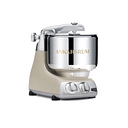


Brands AI recommends here
Named in 75% of answers
Named in 74% of answers
Named in 58% of answers
Named in 52% of answers
Source | Citation share |
|---|---|
 Best Stand Mixers (2024), Tested and Reviewed | Epicurioushttps://www.epicurious.com/expert-advice/the-best-stand-mixer-for-cookies-cakes-bread-and-beyond-article | 6.2% |
 Stand Mixer Shopping Guide: KitchenAid VS Bosch, Ankarsrum, Kenwood, Smeg, Cuisinart Mixer Comparison & Reviewhttps://www.everythingkitchens.com/blog/stand-mixer-shopping-guide-kitchenaid-vs-bosch-ankarsrum-kenwood-smeg-cuisinart-mixer-comparison-review.html | 5.0% |
 The Best Stand Mixers, Judged by Our Expert Testers (2026) | Bon Appétithttps://www.bonappetit.com/story/best-stand-mixers | 4.1% |
 9 Best Alternatives to the KitchenAid Stand Mixer of 2026 - Reviewedhttps://www.reviewed.com/home-outdoors/best-right-now/best-alternatives-to-the-kitchenaid-stand-mixer | 3.6% |
 We Tested 17 Stand Mixers—6 Stood Out Above the Resthttps://www.seriouseats.com/best-stand-mixers-7377555 | 3.3% |
 Which Stand Mixer Is Best? My Honest Review of Top 4 Modelshttps://www.youtube.com/watch | 3.2% |
 Best KitchenAid alternatives: tested stand mixers | Homes and Gardenshttps://www.homesandgardens.com/buying-guides/best-kitchenaid-stand-mixer-alternatives | 2.9% |
Best stand mixers – tested by home bakers and professional cookshttps://www.homesandgardens.com/buying-guides/best-stand-mixers | 2.3% |
 The Best Stand Mixers of 2026 | America's Test Kitchenhttps://www.americastestkitchen.com/equipment_reviews/2593-the-best-stand-mixers | 2.1% |
 Best Stand Mixer: KitchenAid, Bosch, Ankarsrum and Ooni Review - Amy Bakes Breadhttps://amybakesbread.com/best-stand-mixer-kitchenaid-bosch-and-ankarsrum-review/ | 1.8% |
For a serious home baker, the undisputed gold standard—and the one most professionals secretly or openly use at home—is the **[KitchenAid 7-Quart Bowl-Lift Stand Mixer Go to product viewer dialog for this…
For a serious home baker, the undisputed gold standard—and the one most professionals secretly or openly use at home—is the KitchenAid 7-Quart Bowl-Lift Stand Mixer Go to product viewer dialog for this item. (specifically the Pro Line Go to product viewer dialog for this item. or the redesigned models with premium touchpoints). Unlike tilt-head models, the bowl-lift design provides immense stability, and its DC motor delivers high torque directly to the bowl without stalling on heavy, low-hydration bread doughs or massive batches of cookie dough.
However, if you want to look beyond the classic KitchenAid ecosystem, there are several phenomenal alternatives ranging from heavy-duty commercial style tanks to feature-rich European kitchen machines.
Top Alternatives to KitchenAid
Add to list
Add to list
Add to list
Add to list
If you want to narrow down your choice, let me know:
I can give you a tailored recommendation.
If you’re a **serious home baker**, I’d choose based less on wattage and more on **what you bake most**. Current testing strongly favors different machines for general baking versus heavy bread work. [Bon Appétit](https://www.bonappetit.com/story/best-stand-mixers?utm_source=chatgpt.com) [Ankarsrum…
If you’re a serious home baker, I’d choose based less on wattage and more on what you bake most. Current testing strongly favors different machines for general baking versus heavy bread work.
For cakes, cookies, buttercream, pastry, brioche, pizza dough, meringue, etc., this is the one I'd buy for most serious home bakers. Recent hands-on testing from Bon Appétit put the Artisan Plus at the top after testing 14 mixers, citing its improved power and excellent versatility.
Why I like it: 5 qt is a sweet spot, the planetary mixing action is excellent for general baking, and KitchenAid's attachment ecosystem is enormous.
Downside: If you routinely make large batches of very stiff bread dough, I'd step up to a bowl-lift machine—or leave KitchenAid altogether.
If you're making large batches, bagels, pizza dough, enriched bread, or lots of cookies, this is the KitchenAid I'd choose over a tilt-head. The 7-quart bowl-lift design provides substantially more stability for dense mixtures. Current pricing is around $530–650 depending on retailer/color.
This is the interesting one.
The Ankarsrum Original is my recommendation if "serious baker" primarily means bread. America’s Test Kitchen specifically recommends it for heavy-duty, large-batch baking, especially bread. Its rotating-bowl design is fundamentally different from KitchenAid's planetary mixer.
Pros
Cons
If you bake multiple loaves every week, I'd seriously consider this over a KitchenAid.
The Bosch is the workhorse choice. Its motor sits underneath the bowl rather than above it, making the machine relatively lightweight while giving it excellent torque for dough. Current models are around $500–600 depending on configuration.
It's particularly compelling if you routinely make double/triple batches of bread dough.
The tradeoff is that it's not as elegant or intuitive as a KitchenAid, and its attachment ecosystem isn't nearly as extensive.
The Forte is a much more serious Smeg mixer than the brand's older models, with a 750W direct-drive motor. It's attractive and capable, but I wouldn't pay a premium for it over an Ankarsrum or Bosch if your priority is bread performance.
| If you mostly... | I'd buy |
|---|---|
| Bake everything | KitchenAid Artisan Plus 5-Qt |
| Make big batches | KitchenAid 7-Qt Bowl-Lift |
| Bake bread several times a week | Ankarsrum Original |
| Make lots of stiff/large dough batches | Bosch Universal Plus |
| Want something beautiful on the counter | Smeg Forte |
My personal ranking for a serious home baker: Ankarsrum if bread is the priority → KitchenAid 7-Qt Bowl-Lift for heavy-duty all-purpose baking → KitchenAid Artisan Plus for maximum versatility → Bosch Universal Plus if you're a high-volume bread baker on a somewhat tighter budget.
One important caveat: don't choose based on advertised wattage alone. Mixer motor ratings aren't directly comparable between brands; the mechanical design, torque, bowl geometry, and how the motor handles sustained load matter considerably more. Recent testing also found that the best mixer for bread isn't necessarily the best mixer for cakes and other everyday baking.
If you tell me what you bake most (e.g. sourdough, cookies, cakes, pizza, brioche) and roughly how many loaves/batches at once, I can narrow this to one specific model and size.
For a **serious home baker** , the gold standard isn't a small tilt-head model—it’s a high-capacity, high-torque **bowl-lift** mixer. When you're knee-deep in heavy sourdough boules, laminated brioche, or double-batch cookie doughs, tilt-head mixers can wobble, strain, and walk across your counter. The Best Choice (If…
For a serious home baker , the gold standard isn't a small tilt-head model—it’s a high-capacity, high-torque bowl-lift mixer.
When you're knee-deep in heavy sourdough boules, laminated brioche, or double-batch cookie doughs, tilt-head mixers can wobble, strain, and walk across your counter.
The Best Choice (If Staying with KitchenAid)
Add to list Widely favored by test kitchens (including Serious Eats ) as the ultimate powerhouse for serious home baking.
The Best Alternatives to KitchenAid
If you want to step away from the ubiquitous KitchenAid ecosystem, several standout competitors offer better motor mechanics, unique features, or sleeker designs:
Add to list
Add to list
Add to list
To help narrow this down, what types of baking do you do most often (e.g., lots of heavy bread/sourdough vs. delicate pastries and multi-tiered cakes)? I can help you pick the precise machine for your kitchen.
If you’re a **serious home baker**, especially one who makes bread, brioche, pizza, or sourdough regularly, I’d look beyond the usual KitchenAid recommendation. ## My picks - **Ankarsrum Original 7 Qt** - $799.95 (Abt Electronics, Inc.)
If you’re a serious home baker, especially one who makes bread, brioche, pizza, or sourdough regularly, I’d look beyond the usual KitchenAid recommendation.
My choice if you're willing to spend ~$800.
The Ankarsrum is particularly impressive for bread dough and large batches. Instead of a conventional planetary mixer, its bowl rotates while a roller and scraper work the dough. That makes it exceptionally good at handling stiff or large quantities of dough. America’s Test Kitchen selected it as its top mixer for heavy-duty, large-batch baking, particularly bread.
Why I like it:
Downside: It's expensive, and its unusual design takes a little getting used to. If you mostly bake cookies and cakes, you're paying for capabilities you may not use.
Bottom line: If "serious baker" means I bake bread every week and want something I'll keep for decades, this is the one I'd buy.
This is probably the most compelling KitchenAid alternative.
Its motor sits underneath the bowl, driving the mixing mechanism from below. The result is a surprisingly compact machine that's excellent at large quantities of heavy dough. Current versions are available around $500–$600.
Best for:
The tradeoff is that it isn't as intuitive or aesthetically pleasing as a KitchenAid, and its attachment ecosystem isn't nearly as extensive.
If you bake 2–4 loaves at a time, I'd seriously consider this over a KitchenAid.
If you want KitchenAid's enormous accessory ecosystem and familiar planetary mixing, I'd skip the 5-quart Artisan and go to the 7-quart bowl-lift for serious baking.
It's substantially better suited to big/heavy batches than the smaller tilt-head machines, with a 3-point locking bowl and 11 speeds. Current prices are roughly $550–$650, although sales can bring it down considerably.
The advantage is versatility: cookies, cakes, buttercream, whipped cream, bread, plus KitchenAid's huge range of optional attachments.
This is the safest "buy once and do everything" choice.
The Breville is an interesting middle ground. It's a conventional planetary mixer but has some thoughtful features aimed specifically at bakers.
I'd choose it if you make roughly equal amounts of cakes/cookies and bread and don't need KitchenAid's attachment ecosystem.
It's less of a specialized bread machine than the Bosch or Ankarsrum, but more of an all-around baker's tool.
| If you primarily... | I'd buy |
|---|---|
| Bake lots of sourdough/bread | Ankarsrum |
| Make huge batches of bread affordably | Bosch Universal Plus |
| Bake everything + want attachments | KitchenAid 7-qt Bowl-Lift |
| Mostly cakes, cookies, frosting + some bread | KitchenAid Artisan 5-qt |
| Want a sophisticated KitchenAid alternative | Breville Bakery Chef |
One important distinction: don't choose based on advertised wattage alone. Mixer design, torque, gearing, bowl geometry and how the motor transfers power to the dough matter much more. That's why a 600W Ankarsrum can be a considerably more serious bread machine than a mixer advertising a much larger wattage number.
For a serious home baker: 1. Ankarsrum → 2. Bosch → 3. KitchenAid 7-qt → 4. Breville
But if you tell me what you bake most (bread/sourdough vs. cakes/cookies), how many loaves/batches at a time, and your budget, I can narrow this down to one specific model.
If you're a **serious home baker**, I'd look beyond the usual “KitchenAid vs. everything else” framing. The best choice depends heavily on whether you're mostly making cakes/cookies or regularly kneading serious bread dough. ### My picks | Mixer | Best for | Why I'd consider it |
If you're a serious home baker, I'd look beyond the usual “KitchenAid vs. everything else” framing. The best choice depends heavily on whether you're mostly making cakes/cookies or regularly kneading serious bread dough.
| Mixer | Best for | Why I'd consider it |
|---|---|---|
| Ankarsrum Original 7L | Serious bread + large batches | Exceptional dough handling, huge capacity, and very robust. America's Test Kitchen specifically recommends it for heavy-duty, large-batch baking. www.ankarsrum.com |
| KitchenAid Artisan Plus 5-Qt | Best all-arounder | Excellent at cookies, cakes, whipping and normal bread, plus the enormous KitchenAid attachment ecosystem. Bon Appétit currently ranks it #1 overall. www.bonappetit.com |
| Breville Bakery Chef 5-Qt | Best KitchenAid alternative for general baking | Powerful 550W motor, 12 speeds, two bowls, scraper beater and useful baking-oriented features. www.bonappetit.com |
| Bosch Universal Plus | Lots of bread, especially big batches | Bottom-drive design puts substantial torque into dough, while the relatively compact machine handles large quantities well. |
| Ooni Halo Pro | Bread/pizza specialist | Worth considering if dough is the overwhelming priority; recent testing has put it ahead of Ankarsrum specifically for kneading bread. www.tomsguide.com |
Mostly bread: I'd buy the Ankarsrum Original.
$799.95
It's a genuinely different machine from a KitchenAid: the bowl rotates, rather than a planetary beater doing all the work. That makes it particularly good at large quantities of bread dough. America's Test Kitchen's latest testing specifically recommends the Ankarsrum for frequent heavy-duty and large-batch baking.
Broad mix of bread + cookies + cakes + pastry: I'd take the KitchenAid Artisan Plus. Bon Appétit's July 2026 testing put it at the top after testing 14 mixers, noting its improvements over the older Artisan.
$599.99
1. Ankarsrum — the serious baker's alternative
This is the one I'd choose if you're making sourdough, brioche, bagels, pizza and other doughs frequently. It's expensive, but it's more specialized toward exactly the work that stresses conventional planetary mixers. King Arthur currently sells it for about $800.
2. Bosch Universal Plus — excellent value for bread
A particularly compelling alternative if you make a lot of bread. The unusual bottom-mounted drive gives it strong torque and the mixer is substantially less conventional than a KitchenAid.
$599.00
3. Breville Bakery Chef — best conventional alternative
If you want something that behaves more like a KitchenAid but has more baking-focused features, this is probably my favorite. Bon Appétit's testing found its 550W motor particularly effective with tough bread dough, while the two-bowl setup is genuinely useful.
4. Cuisinart Precision Master — best budget alternative
At roughly $230 in current listings, it's dramatically cheaper than the premium KitchenAid models and gives you a 5.5-quart bowl, 500W motor and 12 speeds. It's a good choice if you want a capable mixer without spending $500–$800.
Don't choose based on wattage alone. Motor design, torque, gearing, bowl geometry and how the mixer handles dough under load matter much more. For example, Food Network's testing found the KitchenAid Artisan excellent for everyday baking but noted that it could jump on the counter with heavier breads.
My bottom line:
If you tell me what you bake most (bread/sourdough vs. cakes/cookies/pastry), typical batch size, and your budget, I can narrow this to the one mixer I'd buy in your situation.
For a serious home baker, the undisputed gold standard within the KitchenAid lineup is the **[KitchenAid 7-Quart Bowl-Lift Stand Mixer Go to product viewer dialog for this…
For a serious home baker, the undisputed gold standard within the KitchenAid lineup is the KitchenAid 7-Quart Bowl-Lift Stand Mixer Go to product viewer dialog for this item. (such as the KSM70 Go to product viewer dialog for this item.). Unlike the popular tilt-head Artisan models which can strain or "walk" across the counter under heavy, stiff bread doughs, the bowl-lift design offers a 3-point locking mechanism, a robust DC motor with double the power in the bowl, and a slow 1 2 one-half 1 2 speed setting perfect for delicate folding.
However, if you want to look beyond KitchenAid—whether for superior bread-kneading mechanics or more modern features—several exceptional alternatives exist.
Top Alternatives to KitchenAid
The Vibe: A cult-favorite Swedish powerhouse built differently than standard American mixers. Instead of a top-down motor spinning a paddle inside a stationary bowl, the motor is in the base and the entire stainless steel bowl rotates.
Why it's great for serious bakers: It handles massive batches of bread dough (up to 18 lbs) with a unique roller and scraper attachment that mimics hand-kneading. It has incredible torque and rarely strains.
Consideration: It has a distinct learning curve, and its open-bowl design makes it less ideal for quick, small-batch cake batter or whipping small amounts of cream compared to planetary mixers. You can explore details directly on the Ankarsrum Site.
The Vibe: An industrial-looking, highly functional kitchen workhorse with a bottom-drive motor.
Why it's great for serious bakers: Like Ankarsrum, it excels at heavy yeast and sourdough breads without burning out its motor or vibrating across the counter. It features a massive 6.5-quart capacity and an open-top design that lets you easily dump ingredients in while running.
Consideration: Mostly constructed of plastic housings with a utilitarian look, meaning it lacks the countertop aesthetic appeal of a KitchenAid or Smeg.
The Vibe: A high-end, feature-rich tilt-head mixer.
Why it's great for serious bakers: It features a heavy-duty 1000W motor, a built-in kitchen timer, a strip of LED lights to illuminate your batter, and scraper beaters that drastically reduce the need to stop and scrape down the bowl. It also typically ships with two mixing bowl sizes.
Consideration: It's a tilt-head machine, so while it has plenty of power for everyday baking and moderate doughs, extreme high-hydration or massive bread batches are still better suited to heavy bowl-lift or bottom-drive machines. You can check specs on the Breville Site.
The Vibe: The most direct, budget-friendly stylistic rival to the classic KitchenAid tilt-head.
Why it's great for serious bakers: It packs a 500-watt motor, 12 speeds, and a sturdy die-cast metal body at roughly half the price of a comparable KitchenAid. It also runs notably quiet.
Consideration: The beater reach doesn't scrape the absolute edges of the bowl as efficiently, meaning you'll do a bit more manual scraping for butter-and-sugar creaming tasks.
To help narrow down the ideal choice, tell me:
If you’re a **serious home baker**, I’d actually put the **Ankarsrum Original** ahead of KitchenAid—especially if bread, sourdough, pizza, bagels, or large batches are a big part of your baking. Recent testing is split: Bon Appétit names the KitchenAid Artisan Plus its overall winner, while America’s Test Kitchen…
If you’re a serious home baker, I’d actually put the Ankarsrum Original ahead of KitchenAid—especially if bread, sourdough, pizza, bagels, or large batches are a big part of your baking.
Recent testing is split: Bon Appétit names the KitchenAid Artisan Plus its overall winner, while America’s Test Kitchen specifically recommends the Ankarsrum for heavy-duty, large-batch baking, especially bread.
$799.95
$649.95
$599.00
$319.99
$599.00
1. Ankarsrum Original — best for the serious baker
~$800. Its rotating-bowl design is unusual, but it's exceptionally good at heavy dough and large batches. America’s Test Kitchen recommends it for frequent heavy-duty baking, and King Arthur calls it a standout for bread baking.
The main downside is the learning curve: it doesn't behave like a KitchenAid, and you'll need to get accustomed to its roller/scraper system.
2. KitchenAid 7-Quart Bowl-Lift — best all-around heavy-duty choice
If you make bread plus cakes, cookies, buttercream, meringues, etc., this is probably the safest choice. The bowl-lift design is more stable under heavy loads than a tilt-head, and you get KitchenAid's enormous attachment ecosystem.
3. Bosch Universal Plus — best KitchenAid alternative for bread/value
This is the sleeper pick. The bottom-drive design puts the motor underneath the bowl rather than above it, and it's particularly well suited to large batches of bread dough. The current model is around $499–$599, depending on bowl/configuration.
Its big disadvantage: it's a very different machine aesthetically and ergonomically from a KitchenAid, and its attachment ecosystem isn't as familiar.
4. Cuisinart Precision Master — best budget alternative
At roughly $250–$320, the 5.5-quart Cuisinart gives you a 500-watt motor, 12 speeds and a metal construction. It's a good choice if you want a capable everyday mixer without spending $500–$800.
5. GE Profile 7-Quart — interesting modern alternative
This is the one I'd consider if you like technology: 11 speeds, a built-in smart scale and a 7-quart bowl. It's less proven as a long-term serious-baker classic than Ankarsrum, Bosch or KitchenAid, though.
| Your baking style | My choice |
|---|---|
| Bread is your obsession | Ankarsrum Original |
| Bread + cakes + cookies + everything | KitchenAid 7-Qt Bowl-Lift |
| Lots of bread, best value | Bosch Universal Plus |
| Mostly cakes/cookies, occasional bread | KitchenAid Artisan Plus 5-Qt |
| Want to spend ~$300 | Cuisinart Precision Master |
One important distinction: don't buy a mixer based solely on advertised wattage. Torque, gearing, bowl geometry and how the mixer handles sustained loads matter much more for bread dough.
If I were spending my own money as a serious home baker, I'd choose Ankarsrum for bread-heavy baking and KitchenAid 7-Qt Bowl-Lift for maximum versatility. The Ankarsrum is the more interesting choice if you're specifically looking to escape the KitchenAid ecosystem.
For a serious home baker, the definition of the "best" stand mixer depends slightly on whether you lean toward heavy bread doughs or delicate pastries, but the gold standards are clear. While KitchenAid dominates the market , several exceptional alternatives exist depending on your baking…
For a serious home baker, the definition of the "best" stand mixer depends slightly on whether you lean toward heavy bread doughs or delicate pastries, but the gold standards are clear. While KitchenAid dominates the market , several exceptional alternatives exist depending on your baking priorities.
The Top Choices for Serious Home Bakers
If you want to stick with KitchenAid for heavy-duty, large-batch baking (like double batches of cookies or stiff bread doughs), skip the traditional tilt-head models and go for the heavy-capacity bowl-lift design. It features a DC motor that delivers twice the power in the bowl compared to tilt-head units, a 3-point locking mechanism for stability, and a dedicated half-speed setting for delicate folding.
Widely considered the ultimate machine for dedicated bread and pastry bakers. Unlike planetary mixers, the bowl itself rotates while a stationary roller and scraper knead the dough from the inside out. With a powerful 1500W bottom-mounted motor, it can handle up to 11 lbs of dough without breaking a sweat, and it comes with a separate 3.5-liter whisking bowl for meringues and batters.
Built specifically for high-hydration pizza and sourdough doughs. It brings commercial spiral-mixing dynamics (where both the bowl and spiral hook rotate simultaneously) to a home-kitchen footprint, making it a powerhouse if your baking revolves around yeast and fermentation.
A phenomenal direct competitor to KitchenAid's mid-to-high tier line. It features a strong 1000W motor, a built-in timer, a load-sensing technology that maintains speed when heavy ingredients are added, and a scraper paddle that significantly reduces the need to stop and scrape the bowl manually.
Best KitchenAid Alternatives at a Glance
A budget-to-mid-tier alternative that costs roughly half the price of a comparable KitchenAid. It runs quietly and handles cake batters and light cookies wonderfully, though it can struggle or walk a bit on the counter with heavy, stiff bread doughs.
A legendary, high-capacity alternative featuring a bottom-drive motor. It is unmatched for high-volume, heavy-duty kneading, and its open-top bowl design makes adding ingredients mid-mix completely mess-free.
If you want to narrow this down, tell me:
I can give you a tailored recommendation on which model fits your kitchen best.
If you’re a **serious home baker**, I’d narrow it to four machines rather than automatically buying a KitchenAid. The right choice depends heavily on whether you mostly make bread or a broad mix of cakes, cookies, pastries, and bread. ### My picks ### [KitchenAid 7 Quart Bowl-Lift Stand…
If you’re a serious home baker, I’d narrow it to four machines rather than automatically buying a KitchenAid. The right choice depends heavily on whether you mostly make bread or a broad mix of cakes, cookies, pastries, and bread.
$649.99
$499.00
$599.00
$24,995.00
1. Best all-around: KitchenAid 7-Qt Bowl-Lift
If you want one mixer that does almost everything exceptionally well, this is my safest recommendation. The 7-quart bowl and bowl-lift design make it substantially better suited to large batches and heavy dough than the smaller tilt-head models. It's currently around $650 at major retailers, though I found a substantially better $429 Sam's Club price.
2. Best KitchenAid alternative for bread: Ankarsrum Original
This is the one I'd seriously consider if you bake a lot of bread, sourdough, pizza, bagels, or brioche. America's Test Kitchen specifically recommends the Ankarsrum for heavy-duty, large-batch baking, particularly bread. Its rotating-bowl design is quite different from KitchenAid's planetary mixer, but that's also its strength.
The learning curve is real, though. If you're accustomed to KitchenAid, the Ankarsrum initially feels backwards.
3. Best value serious-baker alternative: Bosch Universal Plus
The Bosch is something of a cult favorite among bread bakers. Its motor sits underneath the bowl, producing a compact machine with excellent dough-handling capability. The 6.5-quart version is currently around $499.
It's less aesthetically pleasing and less intuitive than a KitchenAid, and its attachment ecosystem isn't as familiar. But if bread > cakes/cookies, I'd take the Bosch very seriously.
4. Best for broad baking + modern features: KitchenAid Artisan Plus
The new Artisan Plus is worth considering rather than assuming the old Artisan is still the current benchmark. It adds things serious bakers actually benefit from, including a bowl light, half-speed setting and improved beater coverage. Bon Appétit named it its overall winner in its 2026 testing of 14 mixers.
| Mixer | Best for | My take |
|---|---|---|
| Ankarsrum Original | Serious bread baking | ⭐ Best KitchenAid alternative |
| Bosch Universal Plus | Lots of bread + large batches | ⭐ Best value for bread |
| Ooni Halo Core | Bread/pizza enthusiasts | Very interesting new option |
| GE Profile Smart Mixer | General baking + features | Good all-round alternative |
| Breville Bakery Chef | Cakes, cookies, pastry | Excellent conventional alternative |
| Cuisinart Precision Master | Lower budget | Good value, but not my pick for extreme dough work |
The Ooni Halo Core is particularly interesting in 2026: it uses a spiral-style mixing system rather than a traditional planetary action and is specifically designed around dough development. It's a compelling choice if bread and pizza are your priority, although its attachment ecosystem isn't nearly as mature as KitchenAid's.
One important point: don't choose based on wattage alone. Bowl geometry, transmission, torque under load, and how the mixer handles dough are much more informative than a big wattage number printed on the box.
If you tell me your approximate budget and what you bake most (bread vs. cakes/cookies/pastry), I can narrow this to the 2–3 machines I'd actually spend your money on.
For a serious home baker, the definition of the "best" stand mixer depends heavily on *what* you bake. If your passion is high-hydration artisan breads and massive double-batch cookie doughs, you need a different machine than someone focusing on multi-tiered cakes and delicate…
For a serious home baker, the definition of the "best" stand mixer depends heavily on what you bake. If your passion is high-hydration artisan breads and massive double-batch cookie doughs, you need a different machine than someone focusing on multi-tiered cakes and delicate meringues.
The top recommendations for serious home bakers, including the gold standard and its fiercest rivals, break down as follows:
The Gold Standard for Serious Bakers
While the iconic KitchenAid Artisan 5-Quart Go to product viewer dialog for this item. is the darling of casual bakers , serious bakers frequently max it out on dense bread doughs. The 7-Quart Bowl-Lift model is an absolute powerhouse. It features a robust DC motor, handles heavy loads without walking across the counter or stalling, and gives you the stability required for high-volume, professional-style baking.
The Best Non-KitchenAid Alternatives
If you want to step away from KitchenAid—whether for price, design, or specialized mechanics—several high-performance alternatives stand out:
Widely considered the holy grail for serious bread and pizza bakers . Instead of a traditional planetary mixing action where the attachment spins inside a stationary bowl, the entire stainless steel bowl rotates on the Ankarsrum Go to product viewer dialog for this item., driven by a powerful 1500W motor in the base . It uses a stationary roller and scraper that knead dough identically to human hands. It handles huge batches of stiff sourdough or bagel dough with zero strain or overheating.
A direct, premium competitor to KitchenAid’s tilt-head models [3]. It features a strong 1000W motor [3], a built-in timer, an LCD readout, and a brilliant "scraper beater" attachment that wipes the sides of the bowl clean as it mixes. It bridges the gap between home aesthetics and commercial power remarkably well [3].
If your baking is 90% heavy bread, brioche, and laminated doughs, the Bosch is a legendary workhorse. It features a bottom-drive motor (up to 800 watts) and a massive open-top plastic bowl. It is exceptionally fast, though it looks more like a piece of lab equipment than a pretty countertop statement piece.
If you love the retro aesthetic of a KitchenAid but want something that operates a bit quieter and offers a distinct look, Smeg's heavy-duty aluminum-body mixers hold their own with stiff batters and stable mixing speeds.
To help narrow down which machine fits your kitchen best, let me know: