Data as of Aug 25, 2026 · Based on 38 AI responses from ChatGPT Search and Google AI Mode · See how Parse measures this
Your brand can be here too.
Source | Citation share |
|---|---|
Inspection Robots: Types, Use Cases, Costs & Benefits (Complete Guide) | Robots Internationalhttps://www.robotsinternational.com/Guides-Inspection-Robots.htm | 2.6% |
 Guide to Inspection Robots Used in Industrial Sectorshttps://gesrepair.com/guide-inspection-robots-used-industrial-sectors/ | 1.9% |
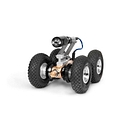 Robotic crawler pipe inspection camera - Fiberscope.nethttps://www.fiberscope.net/pipe-inspection-robot/ | 1.9% |
How to Choose the Ideal Autonomous Inspection Robot | Korialhttps://www.korial.com/resources/perspectives/how-to-choose-the-ideal-inspection-robot-for-your-facility-energy-robotics-guide-korial | 1.9% |
 How to choose the Right Pipeline Inspection Robot for Your ...https://www.pipedetect.com/how-to-choose-the-right-pipeline-inspection-robot-for-your-project.html | 1.6% |
 Inspection Robots in the Metal Industry: Smarter, Safer Plantshttps://www.anybotics.com/news/inspection-robots-metal-industry-safety-efficiency/ | 1.4% |
EXPLOSION-PROOF PIPE INSPECTION ROBOT Proteus ExZ1https://www.fiberscope.net/explosion-proof-pipe-inspection-robot/ | 1.4% |
Pipeline Explorer - NREChttps://www.nrec.ri.cmu.edu/solutions/energy/pipeline-explorer/ | 1.4% |
 ExRobotics launches UL-certified inspection robot for ...https://www.therobotreport.com/exrobotics-launches-ul-certified-inspection-robot-for-hazardous-environments/ | 1.4% |
 Poop Drones Are Keeping Sewers Running So Humans Don't Have tohttps://www.wired.com/story/poop-drones-are-keeping-sewers-running-so-humans-dont-have-to | 1.4% |
Choosing the best inspection robot depends heavily on the operating terrain—whether it's navigating explosive gas atmospheres, crawling inside narrow pipes, climbing vertical metal storage tanks, or patrolling automated factory floors.
The industry leaders categorized by their strongest operational environments include:
Add to list For standard indoor manufacturing floors, automated warehouses, and clean environments, wheeled AMRs or agile quadrupeds like the Unitree B2 are cost-effective choices. They navigate dynamic shop floors using LiDAR and vision safety sensors to audit inventory, read analog gauges, and monitor thermal anomalies via mounted infrared cameras.
If you have a specific asset in mind, let me know:
I can help you pinpoint the exact model and sensor payload required for your application.
If you're choosing inspection robots for utilities, pipelines, factories, or hazardous industrial sites, there isn't one universal winner. The best platform depends heavily on whether you need stairs, confined-space access, explosive-atmosphere certification, pipe/crawl inspection, or simply autonomous routine rounds.
| Robot / system | Best for | Key advantage | Main limitation |
|---|---|---|---|
| ANYmal / ANYmal X | Utilities, refineries, chemical plants, factories | Excellent autonomous mobility; stairs and rough terrain; strong inspection sensor suite | Higher-end industrial platform |
| Boston Dynamics Spot | Factories, substations, general industrial inspection | Very mature quadruped platform, excellent mobility and ecosystem | Not intrinsically safe for explosive Zone 1 environments |
| Taurob Inspector | Oil & gas / hazardous areas | Tracked platform with hazardous-area certification and stair capability | Less agile than a quadruped |
| ExRobotics ExR-2/ExR-2.5 | Oil & gas, petrochemical hazardous zones | Designed specifically for explosive atmospheres | Tracked; less capable on complex multi-level terrain |
| Flyability Elios 3 | Tanks, vessels, tunnels, shafts, confined spaces | Can fly where ground robots can't safely reach | Indoor/confined-space drone rather than ground patrol robot |
ANYbotics's ANYmal is probably the strongest all-around choice if your facility has stairs, pipes, uneven floors, outdoor areas, and lots of inspection points.
It is IP67-rated and designed for autonomous inspection, with visual, thermal, acoustic and LiDAR capabilities. It can autonomously negotiate stairs and difficult terrain and can operate without continuous network connectivity.
For explosive/hazardous areas, the ANYmal X is particularly compelling: it has ATEX/IECEx certification for Zone 1 IIB and is designed to operate in complex multi-floor oil & gas and chemical facilities.
Boston Dynamics Spot is an excellent choice when you want a highly mobile quadruped for factories, warehouses, substations, construction sites and other non-Ex environments.
Its big strengths are mobility, a mature developer ecosystem, remote operation and the ability to carry different sensor payloads. However, Boston Dynamics' Spot is generally aimed at conventional industrial environments rather than intrinsically safe explosive atmospheres; IP54 is also less protection than IP67 platforms such as ANYmal.
If you're talking about ATEX/IECEx Zone 1, the field narrows dramatically.
ANYbotics' comparison identifies these three as the major currently available ground platforms meeting the relevant hazardous-area certification requirements, with ANYmal X distinguished by its legged mobility.
For above-ground pipeline corridors, a quadruped such as ANYmal can be excellent because it can traverse uneven terrain and inspect valves, flanges, gauges and associated equipment.
For inside a pipeline, however, I'd use a completely different class of robot: pipe-crawling/inspection robots equipped with ultrasonic, magnetic, visual or other NDT sensors. A walking inspection robot isn't automatically the right tool for internal pipe inspection.
For large tanks, vessels, shafts, tunnels and other confined spaces, consider Flyability's Elios 3. It is a collision-tolerant inspection drone designed specifically to enter confined areas without putting people inside, and can generate LiDAR/3D data.
I'd put ANYmal near the top for power plants, substations and utility facilities. It can perform recurring autonomous rounds, collect thermal/visual/acoustic data and operate across indoor/outdoor and difficult terrain. ANYbotics specifically lists thermal, nuclear, hydro, solar, wind and distribution facilities as applications.
The important distinction is whether the utility site is ordinary industrial or contains an Ex-rated area. For the latter, certification becomes much more important than raw robot mobility.
Bottom line: If I had to select just one platform for a large industrial operator, I'd choose ANYmal for conventional facilities and ANYmal X where certified explosive-atmosphere operation is required. The combination of autonomous inspection, stairs/rough terrain, IP67 protection and inspection sensors makes it unusually well matched to real industrial plants.
If you're actually evaluating these for procurement, I can also make you a 2026 comparison of 10–15 inspection robots with price range, payloads, IP rating, ATEX/IECEx certification, battery life, sensors, autonomy, and best application.
I'd put ANYmal near the top for power plants, substations and utility facilities. It can perform recurring autonomous rounds, collect thermal/visual/acoustic data and operate across indoor/outdoor and difficult terrain. ANYbotics specifically lists thermal, nuclear, hydro, solar, wind and distribution facilities as applications.
Its big strengths are mobility, a mature developer ecosystem, remote operation and the ability to carry different sensor payloads. However, Boston Dynamics' Spot is generally aimed at conventional industrial environments rather than intrinsically safe explosive atmospheres; IP54 is also less protection than IP67 platforms such as ANYmal.
If you're choosing an inspection robot for utilities, pipelines, factories, or hazardous sites, there isn't one universal winner. The best platform depends heavily on whether you need to walk around a plant, crawl inside a pipe, enter a confined space, or operate in an explosive atmosphere.
| Robot / system | Best fit | Biggest advantage | Main limitation |
|---|---|---|---|
| ANYbotics ANYmal X | Oil & gas, chemical, utilities, hazardous plants | ATEX/IECEx Zone 1, four-legged mobility, autonomous inspection | Expensive; overkill for simple indoor routes |
| Boston Dynamics Spot | Factories, power plants, general industrial inspection | Excellent mobility + huge sensor/software ecosystem | Not certified for explosive atmospheres |
| Flyability Elios 3 | Tanks, shafts, boilers, confined spaces | Tethered collision-tolerant flying inspection | Flying platform; not a substitute for ground robots |
| Pipe/crawler robots | Pipelines, sewers, ducts, vessels | Can physically enter pipes and confined infrastructure | Usually specialized to particular pipe sizes/materials |
| Tracked Ex-rated robots | Flat hazardous areas | Intrinsically safe + compact | Less capable than quadrupeds on stairs/obstacles |
ANYbotics's ANYmal X is probably the strongest choice if "hazardous environment" is a hard requirement.
It is designed for ATEX/IECEx Zone 1 IIB environments, has IP67 protection, and combines visual, thermal, LiDAR, acoustic and optional gas sensing. Crucially, its four legs let it negotiate industrial stairs, grating, uneven terrain and pipe racks rather than being restricted to flat floors.
Best for: refineries, chemical plants, offshore platforms, power facilities and other sites where sending people into an Ex zone is undesirable.
Spot from Boston Dynamics is the more versatile choice when the environment isn't an explosive classified zone.
It's particularly attractive if you want to integrate different cameras, thermal imagers, acoustic sensors, manipulators or custom software. Its ecosystem is one of its biggest advantages.
Best for: manufacturing plants, substations, power stations, construction/industrial sites and routine visual/thermal/acoustic inspection.
The key caveat: don't treat Spot as intrinsically safe. If the robot must enter an ATEX/IECEx classified explosive atmosphere, you need an appropriately certified platform instead.
For places that a wheeled or walking robot simply can't reach—tanks, boilers, shafts, sewers, culverts and other confined structures—a collision-tolerant inspection drone such as Elios 3 is often a better tool.
This is an important distinction: a good inspection program may use both a quadruped for routine plant rounds and a confined-space drone for inaccessible assets.
If by "pipelines" you mean inside the pipe, don't buy a quadruped simply because it is a better-looking robot.
Specialized pipe crawlers are designed around:
For serious pipeline integrity work, the sensor and NDT method can matter more than the robot chassis. Specialized crawler systems from companies such as Waygate Technologies and Eddyfi are therefore worth considering alongside mobile inspection robots.
Don't start with "Which robot is coolest?" Start with the inspection task:
For industrial inspection, repeatable data and integration into maintenance workflows can be more valuable than raw robot mobility.
Bottom line: if I were building a shortlist today, I'd put ANYmal X at the top for genuinely hazardous industrial environments, Spot at the top for flexible non-Ex industrial inspection, and specialized crawlers/drones ahead of either for pipe interiors and confined spaces.
It's particularly attractive if you want to integrate different cameras, thermal imagers, acoustic sensors, manipulators or custom software. Its ecosystem is one of its biggest advantages.
Best for: manufacturing plants, substations, power stations, construction/industrial sites and routine visual/thermal/acoustic inspection.
The key caveat: don't treat Spot as intrinsically safe. If the robot must enter an ATEX/IECEx classified explosive atmosphere, you need an appropriately certified platform instead.
For places that a wheeled or walking robot simply can't reach—tanks, boilers, shafts, sewers, culverts and other confined structures—a collision-tolerant inspection drone such as Elios 3 is often a better tool.
This is an important distinction: a good inspection program may use both a quadruped for routine plant rounds and a confined-space drone for inaccessible assets.
If by "pipelines" you mean inside the pipe, don't buy a quadruped simply because it is a better-looking robot.
Specialized pipe crawlers are designed around:
For serious pipeline integrity work, the sensor and NDT method can matter more than the robot chassis. Specialized crawler systems from companies such as Waygate Technologies and Eddyfi are therefore worth considering alongside mobile inspection robots.
Selecting the best inspection robot depends heavily on the operating environment—whether it requires navigating narrow factory floors, crawling inside cramped underground pipes, or surviving explosive, gas-heavy hazardous zones.
The industry-leading inspection robots are categorized by their primary operational niches:
If you'd like to narrow this down, tell me:
I can provide a targeted recommendation and deployment outline.

Choosing the "best" inspection robot depends heavily on the geometry and hazards of your environment—whether you are walking open factory floors, climbing vertical boilers, crawling inside narrow pipes, or navigating explosive gas atmospheres.
To narrow this down to your specific project, tell me:
I researched current industrial inspection robots. The “best” choice depends heavily on the asset: a refinery floor, a buried pipeline, a sewer, a nuclear facility, or a factory line each favors a different robot type.
| Application | Leading robots | Why they stand out |
|---|---|---|
| Oil & gas, chemical plants, hazardous/explosive zones | ANYbotics ANYmal X, Taurob Inspector, explosion-proof crawlers | Certified hazardous-area operation (ATEX/IECEx), autonomous patrols, thermal/acoustic/visual inspection |
| Factories & process plants | Boston Dynamics Spot, ANYmal | Mobile inspection rounds, cameras, thermal sensors, integration with maintenance systems |
| Pipelines (inside pipes) | ROSEN Group robotic pipeline systems, Eddyfi Technologies crawlers | Designed for pipe geometry, NDT inspection, difficult “unpiggable” pipelines |
| Confined spaces, tanks, sewers, tunnels | Flyability Elios 3 | Collision-tolerant drone design, LiDAR mapping, avoids sending workers into confined spaces |
| Heavy industry / vessels / tanks | Gecko Robotics robots | Magnetic climbing, ultrasonic inspection, corrosion/thickness measurements |
ANYbotics ANYmal X is among the strongest choices for refineries, chemical plants, offshore platforms, and utilities where robots must navigate stairs, grating, uneven terrain, and hazardous zones. It is designed for ATEX/IECEx environments up to Zone 1 and supports sensors such as optical zoom cameras, thermal imaging, and acoustic monitoring.
Best for:
Strengths:
Weakness:
Boston Dynamics Spot is widely used for industrial data collection, especially where facilities need a mobile platform that can climb stairs, move through complex layouts, and carry inspection payloads.
Best for:
Typical sensors:
Weakness:
For pipelines, a walking robot is usually not the best tool. Purpose-built pipeline robots provide better inspection results.
Good examples:
Best for detecting:
Flyability Elios 3 is designed for spaces where sending humans is risky, such as tanks, sewers, ducts, and tunnels. It combines a protective cage with cameras and LiDAR mapping.
Best for:
Major advantage:
Hazard certification
Inspection payload
Mobility
Autonomy
For a large utility, refinery, or pipeline operator, a common strategy is a combination: quadruped robots for routine facility rounds + drones for confined spaces + specialized crawlers for asset integrity testing.
If you’re evaluating inspection robots for utilities, pipelines, factories, and hazardous industrial sites, there isn’t one universal winner. The best choice depends heavily on whether you need autonomous facility patrols, confined-space access, in-pipe inspection, or explosion-proof operation.
| Robot / platform | Best for | Why it stands out | Main limitation |
|---|---|---|---|
| ANYmal / ANYmal X | Utilities, power plants, factories, oil & gas | Excellent autonomous mobility; stairs, grating, rough terrain; thermal/visual/acoustic sensing | Expensive; not an in-pipe crawler |
| Boston Dynamics Spot | Factories, utilities, general industrial inspection | Mature mobile platform, strong autonomy and large inspection ecosystem | Standard Spot isn't designed for explosive atmospheres |
| ExRobotics ExR-2.5 | Hazardous/explosive oil & gas & chemical sites | ATEX/IECEx and, as of July 2026, UL-certified ExR-2.5 for North America | Specialized platform rather than general-purpose robot |
| Taurob Inspector | Hazardous oil & gas, chemical, utilities | ATEX Zone 1, IP67, 360° cameras, LiDAR, gas/thermal options, stairs | Less versatile than a quadruped for very complex terrain |
| Flyability Elios 3 | Tanks, boilers, stacks, tunnels, confined spaces | Collision-tolerant indoor drone; LiDAR, thermal and optional UT/radiation payloads | Aerial platform; not continuous ground patrol |
| Pipeline crawlers / in-line robots | Inside pipelines | Purpose-built for pipe-wall inspection and NDT | Highly dependent on pipe diameter, geometry and material |
ANYbotics ANYmal is probably my first choice if your primary requirement is repeated autonomous inspection throughout a complex facility.
It combines four-legged mobility with visual, thermal, acoustic and LiDAR sensing. It can navigate stairs, grated floors, cramped areas and uneven/wet terrain, and is rated IP67.
It's particularly compelling for:
For ordinary industrial environments, I'd choose ANYmal over a wheeled robot when the facility has lots of stairs, thresholds and irregular terrain.
This is an important distinction: "rugged" does not mean "safe in an explosive atmosphere."
For Zone 1/Ex environments, certification is critical.
ANYmal X is particularly interesting because it combines quadruped mobility with ATEX/IECEx certification, including operation in Zone 1 IIB environments.
ExRobotics ExR-2.5 is another particularly strong option. In July 2026, ExRobotics announced that ExR-2.5 became UL certified for hazardous industrial environments in North America, making it especially relevant for U.S. oil & gas, LNG and chemical operators.
ExRobotics reports deployments in refineries, chemical plants and offshore installations, with methane detection, visual/thermal inspection and other sensor capabilities.
My split:
Taurob's Inspector is rated ATEX Zone 1/IP67 and offers 360° cameras, LiDAR, thermal and gas-sensing options, plus stair capability.
Flyability Elios 3 is in a different category: it's a collision-tolerant inspection drone rather than a ground robot.
It's arguably the best choice when the question is:
"How do I inspect something humans shouldn't enter?"
It can enter tanks, boilers, chimneys, vessels, tunnels and other GPS-denied spaces while collecting 4K imagery and LiDAR. Optional payloads add UT thickness measurements and radiation detection.
That makes it excellent for:
For example, the Elios 3's radiation payload can map dose rates against its LiDAR-generated 3D environment, allowing operators to investigate radiation hotspots without entering the area.
Boston Dynamics Spot inspection solutions is still one of the strongest choices when you want a general-purpose robotic platform plus a large ecosystem of inspection integrations.
Spot can perform visual inspections, thermal inspections, gauge reading and other routine data-collection tasks.
I'd favor Spot when:
For a greenfield industrial inspection program, however, I'd compare Spot very closely with ANYmal rather than assuming Spot is automatically the best.
For inside-the-pipe inspection, I would generally not buy a quadruped like Spot or ANYmal.
You need a specialized in-pipe robot, crawler or smart-pig system, depending on the pipe.
The inspection technology matters as much as the robot:
Traditional and emerging pipeline robots have very different diameter and geometry constraints. Research published in 2026 highlights the difficulty of handling diameter changes, bends and junctions while simultaneously carrying useful NDT sensors.
For specialized situations, robotic crawlers can be extremely useful—for example, ULC Technologies' magnetic crawler can travel in the annular space between a casing and carrier pipeline to inspect coating, spacers, water/debris intrusion and take wall-thickness measurements.
If I were putting together a procurement shortlist today:
1. ANYmal — best overall autonomous industrial inspection robot
2. ANYmal X — best for complex facilities requiring Ex/Zone 1 capability
3. ExR-2.5 — best dedicated hazardous-area inspection platform, particularly compelling in North America
4. Spot — best flexible/general-purpose industrial robotics platform
5. Elios 3 — best for confined, inaccessible and vertical spaces
6. Taurob Inspector — strong hazardous-area tracked alternative
7. Specialized pipeline crawler/in-line robot — best when the asset being inspected is actually inside a pipe
The biggest procurement mistake would be choosing purely on robot mobility. I'd rank the requirements as hazard certification → inspection sensors/NDT → access geometry → autonomy → communications → integration/data platform → endurance.
If you tell me what you're inspecting (e.g., gas pipelines, water mains, substations, refineries, chemical plants, manufacturing lines), whether humans can enter the area, and whether you need ATEX/IECEx/UL certification, I can narrow this to the 3–5 best commercial robots and compare capabilities, sensors, certifications, approximate cost, and use cases.
Selecting the best inspection robot depends heavily on your specific operating environment—whether you are navigating explosive gas atmospheres, crawling miles of hidden sewer lines, or patrolling a multi-level manufacturing plant.
The industry-leading inspection robotic platforms are categorized below by their optimal environment and application:
If you can share your specific industry or the type of asset you need to inspect (e.g., internal pipes, exterior towers, or indoor electrical rooms), I can help recommend the ideal sensor payloads or vendor match for your workflow.
Selecting the best inspection robot depends heavily on the specific operating environment—whether it is an explosive gas refinery, a tight underground pipe, or a sprawling factory floor.
Hazardous & Explosive Environments (Oil, Gas, Chemical)
Pipelines & Confined Spaces (Water, Sewers, Gas Transmission)
Factories, Warehouses, & Predictive Maintenance
Best-in-class for plant asset health. Gecko's wall-climbing robots use non-destructive testing (NDT) like ultrasonic testing to measure wall thickness and structural integrity on large industrial tanks, boilers, and pipes, feeding data directly into digital twins.
Excellent high-performance quadrupeds for general factory automation, indoor mapping, and thermal anomaly tracking. They excel at regular autonomous patrol routes across non-explosive manufacturing floors and data centers at a lower capital cost than ATEX-certified units.
To help narrow down the best platform for your needs, could you share:
If you mean commercial inspection robots you could realistically deploy in 2026, there isn't one universal winner. The best platform depends heavily on whether you're inspecting a whole facility, a pipeline interior, a confined space, or an explosive atmosphere.
| Use case | Best choices | Why |
|---|---|---|
| Factories / refineries / power plants | ANYmal, Boston Dynamics Spot | Autonomous patrols, stairs, visual/thermal/acoustic sensing, mapping |
| Oil & gas / chemical plants, hazardous areas | ANYmal X, Taurob Inspector, ExRobotics ExR-2 | Designed/certified for explosive atmospheres |
| Pipelines / tanks / vessels | Gecko Robotics, Eddyfi/Waygate specialized crawlers | Better suited to contact/NDT inspection than general-purpose quadrupeds |
| Confined spaces / tanks / ducts | Flyability Elios 3 | Flying robot can enter spaces that wheeled/legged robots can't |
| Utilities / substations / outdoor infrastructure | ANYmal, Spot | Mobility + repeatable autonomous inspection |
| General-purpose R&D / teleoperation | Spot | Huge ecosystem and very flexible payload options |
ANYbotics's ANYmal is probably my first choice for a serious industrial inspection program. It's IP67-rated, handles stairs and uneven/wet terrain, can operate autonomously, and comes with visual, thermal, LiDAR and acoustic sensing. It can also integrate gas sensing.
It's particularly compelling for power & utilities, oil & gas, chemicals, mining and large factories, where you want the robot to repeatedly follow inspection routes rather than simply have a technician remotely drive it.
The standout: ANYmal X. It's designed for explosive environments and is certified for ATEX/IECEx Zone 1 IIB, making it substantially more suitable for petrochemical environments than ordinary commercial quadrupeds.
Boston Dynamics Spot remains one of the most flexible platforms for inspection, mapping and custom payloads. It's particularly attractive if you have an engineering team that wants to integrate specialized sensors or develop its own inspection applications.
I'd pick Spot over ANYmal when flexibility/custom development matters more than having a turnkey industrial-inspection package.
One important distinction: ordinary Spot should not automatically be treated as an intrinsically safe hazardous-area robot. Explosive-atmosphere certification is a procurement requirement, not something you can infer from the robot's ability to operate in a refinery.
For ATEX/IECEx Zone 1 applications, the shortlist gets much smaller:
A current industry comparison identifies these as the principal Zone-1-certified options, with ANYmal X having the mobility advantage of a legged platform.
This is one area where certification should trump robot popularity. If you're entering a classified explosive atmosphere, verify the exact robot configuration, certification, gas group, temperature class and permitted zone with the manufacturer and your site's hazardous-area authority.
Flyability's Elios 3 is a different category: it's an enclosed-protection inspection drone designed to fly inside confined industrial spaces.
That makes it excellent for tanks, boilers, shafts, tunnels and other places where sending a ground robot is impractical. Research has also demonstrated ultrasound NDT using an Elios 3 platform.
For a refinery, for example, I'd seriously consider having both a ground robot such as ANYmal X and an aerial confined-space platform rather than trying to make one robot do everything.
For inside-the-pipe inspection, I would not make Spot or ANYmal my first choice.
Pipeline inspection frequently requires specialized crawlers or in-line inspection tools carrying ultrasonic, magnetic-flux-leakage, eddy-current, laser or other NDT sensors. Those systems are designed around the pipe diameter, geometry, material and inspection standard.
For example, specialized pipeline crawlers from companies such as Eddyfi Technologies and Waygate Technologies are much closer to the right tool for serious NDT than a general-purpose quadruped. Industry guides likewise distinguish pipeline crawlers from general facility-inspection robots.
Large chemical/refinery site:
ANYmal X + Elios 3. Ground robot for routine autonomous patrols; drone for confined spaces.
Electric utility/substation:
ANYmal or Spot, depending on whether you want turnkey inspection or maximum customization.
Pipeline operator:
A specialized NDT crawler/in-line inspection system, supplemented by a quadruped for above-ground facilities.
Manufacturing plant:
ANYmal or Spot for mobile inspection, plus fixed machine-vision systems where inspection happens at a predictable production point.
Nuclear/high-radiation environment:
This requires a much more specialized evaluation—radiation tolerance, dose limits, communications, decontamination and sensor survivability become as important as mobility.
Oil & gas/chemical Zone 1:
I'd start with ANYmal X, Taurob Inspector and ExRobotics ExR-2, then eliminate anything that doesn't meet your site's exact hazardous-area certification requirements.
Bottom line: If you want one robot for broad industrial inspection, I'd put ANYmal at the top of the list. If you need maximum ecosystem/customization, look hard at Spot. If you need explosive-area operation, look specifically at ANYmal X/Taurob/ExRobotics. If you need inside confined spaces, look at Elios 3. And if you need true pipeline NDT, buy a purpose-built crawler rather than trying to adapt a general-purpose robot.