Data as of Aug 25, 2026 · Based on 42 AI responses from ChatGPT Search and Google AI Mode · See how Parse measures this
 Symbotic
Your brand can be here too.
Source | Citation share |
|---|---|
Amazon Roboticshttps://www.burrus.com/articles/best-robotics-companies/ | 2.4% |
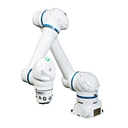 How Robotics Is Helping to Solve Labor Shortages in ...https://www.motoman.com/en-us/about/blog/how-robotics-is-helping-to-solve-labor-shortages-i | 2.4% |
 How Robotics Solve Warehouse Labor Shortages in eCommercehttps://locusrobotics.com/blog/robotics-warehouse-labor-shortage | 1.0% |
 Overcoming Labor Shortages with Automation and Robotics ...https://medium.com/partsimony/overcoming-labor-shortages-with-automation-and-robotics-the-lifeline-for-manufacturing-supply-6366f1d1ce4e | 1.0% |
 Digit Moves Over 100,000 Totes in Commercial Deployment | Agilityhttps://www.agilityrobotics.com/content/digit-moves-over-100k-totes | 1.0% |
Humanoid Robots in 2026: What Is Actually Available, Piloting, or Deployed? | Physical AI Guidehttps://physicalaiguide.com/guides/humanoid-robots-2026-availability/ | 0.8% |
 BMW Group: First humanoid robot introduced in Plant Leipzighttps://www.bmwgroup.com/en/news/general/2026/humanoid-robot-in-leipzig.html | 0.8% |
 This robot can drill, sand, paint and fetch - and could help address labour shortages in the #construction sector. It’s an example of an ‘embodied AI agent’- a #robotic system t | World Economic Forumhttps://www.facebook.com/worldeconomicforum/videos/this-robot-can-drill-sand-paint-and-fetch-and-could-help-address-labour-shortage/994559659292386/ | 0.8% |
 F.02 Contributed to the Production of 30,000 Cars at BMWhttps://www.figure.ai/news/production-at-bmw | 0.8% |
 Robotics Industry Inflection Point 2026 - The Silicon Reviewhttps://thesiliconreview.com/2026/05/robotics-industry-inflection-point-2026-ai-labor-costs | 0.6% |
If your criterion is “who is actually solving labor shortages in production environments, not just making impressive demos?”, I’d split the market into two tiers.
There's a huge difference between:
“Our robot can perform this task.” and
“A customer is running this robot continuously because it is cheaper/easier/more reliable than hiring people.” By that standard, my rough ranking is:
| Company | Real-world credibility | Labor-shortage fit | Main caveat |
|---|---|---|---|
| Symbotic | 🟢🟢🟢 | 🟢🟢🟢 | Specialized warehouse infrastructure |
| Dexterity | 🟢🟢🟢 | 🟢🟢🟢 | Still scaling deployments |
| Figure AI | 🟢🟢 | 🟢🟢🟢 | Economics/fleet scale not yet proven |
| Agility Robotics | 🟢🟢 | 🟢🟢🟢 | Scaling and utilization |
| Apptronik | 🟢🟢 | 🟢🟢 | Mostly pilots so far |
| Many other humanoid startups | 🟡/🔴 | 🟡 | Lots of demonstrations, little sustained production |
And there's a useful reality check from the current market: even in 2026, analysts are warning that humanoid robotics still has a substantial gap between impressive demonstrations and commercial execution, reliability, human intervention and fleet economics.
If I were evaluating this as an investment/theme rather than just making a company list, I'd start with Symbotic and Dexterity for near-term labor substitution, and Figure for the higher-upside humanoid thesis. The latter is much riskier, but Figure now has unusually strong evidence that its robots can operate inside an actual production process rather than just perform a demo.
When filtering out viral social media demos and looking at companies that are actively deployed in commercial environments to solve chronic labor shortages, the robotics industry splits into two clear categories: purpose-built task automation (proven, highly reliable for specific jobs) and commercial humanoids (pioneering multi-year operational rollouts).
The most credible players actively alleviating labor constraints in real-world facilities include:
These companies do not try to look human; they are engineered for a single, punishing warehouse or factory bottleneck (like unloading trucks or palletizing), making them immediately viable for labor-strapped operations.
If your focus is specifically on form-factor humanoids designed to fit into existing human-engineered infrastructure without redesigning a facility, these companies have crossed the line from lab experiments into multi-year commercial contracts.
Key Criteria Separating Demos from Credibility:
To help narrow down which system fits your operational bottleneck, let me know:
When separating PR-driven tech demos from heavy-duty operational deployments tackling real labor shortages, you have to look at companies embedded in logistics, automotive, and manufacturing supply chains with multi-year, scaled contracts.
The credible players focused on practical labor execution are categorized below by their functional niche:
These companies solve the most grueling warehouse bottlenecks (like unloading shipping containers or palletizing), where turnover is highest and human labor is scarce.
If you are looking at humanoid form-factors that are actually integrated into real corporate manufacturing workflows rather than staged laboratory videos:
If you are evaluating a deployment for a specific industry (e.g., cold-storage warehousing, precision automotive assembly, or hazardous waste inspection), let me know so I can point you toward the exact unit economics and integration requirements for that sector.
Yes. If your filter is “who is actually addressing labor shortages in production/logistics, rather than producing impressive demos?”, the credible field gets much smaller.
I’d divide it into proven automation companies and new humanoid companies that have crossed into real operations.
| Company | Labor-shortage fit | Evidence of real work | My take |
|---|---|---|---|
| Agility Robotics | ⭐⭐⭐⭐⭐ | Digit operating at GXO; >100,000 totes moved; commercial agreements with GXO, Toyota, Schaeffler | Most compelling humanoid bet |
| Figure AI | ⭐⭐⭐⭐⭐ | BMW deployment: 30,000+ vehicles, 90,000+ parts, ~1,250 hours; now Figure 03 | Very credible, particularly manufacturing |
| Symbotic | ⭐⭐⭐⭐⭐ | Large-scale automated warehouse systems already deployed commercially | More proven than humanoids |
| Dexterity | ⭐⭐⭐⭐½ | Commercial warehouse/material-handling deployments | Strong practical-automation play |
| Apptronik | ⭐⭐⭐⭐ | Industrial/manufacturing partnerships and pilots | Promising, but earlier than Agility/Figure |
| Boston Dynamics | ⭐⭐⭐⭐ | Decades of industrial robotics + Stretch warehouse robot | Excellent engineering; less pure-play labor replacement |
Agility is unusually interesting because Digit isn't merely being demonstrated; it's doing repetitive warehouse work in a customer facility.
Digit has moved more than 100,000 totes at GXO's Flowery Branch facility, specifically in a workflow where the economic rationale is reducing repetitive labor requirements. Agility says it is already operating commercially with customers including GXO, Toyota and Schaeffler.
More importantly, Agility and GXO signed a multi-year Robots-as-a-Service agreement, rather than simply announcing a technology partnership.
And the company disclosed in June 2026 that it had more than $300 million of multi-year contracted Digit v5 orders. That's considerably more meaningful to me than a video of a robot doing household chores.
Why I like it: warehouse labor is expensive, repetitive and structured enough that you don't need AGI. If Digit can reliably do one narrow task for thousands of cycles, there's a real economic wedge.
Figure has an unusually good real-world validation case at BMW.
Figure 02 operated on BMW's Spartanburg production line for roughly 10–11 months, working 10-hour shifts, Monday–Friday, moving more than 90,000 components and contributing to production of 30,000+ BMW X3s.
And this isn't just an old pilot being recycled for marketing: BMW says Figure 03 is now being deployed at Spartanburg for a more complicated logistics/sequencing application.
That's an important distinction:
Demo → pilot → repetitive production task → new, harder production task is exactly the progression I'd want to see.
Figure is therefore one of the few humanoid companies I'd regard as having credible evidence of industrialization rather than merely impressive robotics research.
If the actual investment question is “Who benefits from labor shortages?”, rather than “Who makes humanoids?”, Symbotic may be more compelling.
Its systems automate warehouses at enormous scale using purpose-built robotic systems. That's less sexy than a humanoid walking around, but economically it's often superior: if you can redesign the workflow around a machine, you don't need to make the machine look like a person.
This is an important principle for evaluating the sector:
A $500k system that eliminates a bottleneck can be much more valuable than a $50k humanoid that can theoretically do 100 different things.
Dexterity is another company I'd put on the serious side of the line because it concentrates on actual warehouse/material-handling problems rather than general-purpose robot demonstrations.
Its approach is essentially: find ugly, expensive, repetitive manual workflows and automate them.
That's exactly where I think the first major robotics economics will emerge.
Apptronik's Apollo is one of the humanoids I'd watch closely for manufacturing and logistics.
I'd put it one rung below Agility and Figure in demonstrated commercial deployment, though. The industrial partnerships are significant, but I'd want to see more evidence of sustained production-line operation before treating it as equally validated.
I wouldn't evaluate these companies primarily on:
I'd evaluate them on:
1. Customer has paid for it
2. Robot operates in a real facility
3. It performs an economically meaningful task
4. It runs repeatedly for months
5. The customer expands the deployment
6. There is evidence the robot is replacing/redeploying labor rather than simply adding an R&D expense
On that score, Agility and Figure stand out among humanoids.
BMW's progression with Figure is especially encouraging: the initial Figure 02 application was repetitive sheet-metal handling; after that deployment, BMW moved to evaluating Figure 03 for more complex logistics sequencing.
I'd be very cautious about assigning high valuations to companies whose primary evidence consists of:
That's particularly relevant in China right now: recent reporting suggests a significant portion of humanoid-robot demand is coming from government-backed training centers rather than organic industrial customers, making headline unit numbers potentially misleading.
If I were building a diligence list rather than buying based on hype:
Tier 1 — demonstrated commercial traction
Tier 2 — potentially important, but needs more proof 5. Apptronik 6. Boston Dynamics
And there's a broader lesson: the biggest winners may not be humanoid companies at all. Specialized warehouse, factory, agricultural, construction and material-handling robots can attack labor shortages today without solving the enormously harder problem of making one robot capable of doing everything.
If you're looking at this from an investment perspective, I can also rank ~15 robotics companies by actual deployments, recurring revenue/order backlog, customer quality, unit economics, and probability of becoming a $10B+ company—which produces a rather different list.
Figure has an unusually good real-world validation case at BMW.
Figure 02 operated on BMW's Spartanburg production line for roughly 10–11 months, working 10-hour shifts, Monday–Friday, moving more than 90,000 components and contributing to production of 30,000+ BMW X3s.
And this isn't just an old pilot being recycled for marketing: BMW says Figure 03 is now being deployed at Spartanburg for a more complicated logistics/sequencing application.
That's an important distinction:
Demo → pilot → repetitive production task → new, harder production task is exactly the progression I'd want to see.
Figure is therefore one of the few humanoid companies I'd regard as having credible evidence of industrialization rather than merely impressive robotics research.
If the actual investment question is “Who benefits from labor shortages?”, rather than “Who makes humanoids?”, Symbotic may be more compelling.
Its systems automate warehouses at enormous scale using purpose-built robotic systems. That's less sexy than a humanoid walking around, but economically it's often superior: if you can redesign the workflow around a machine, you don't need to make the machine look like a person.
This is an important principle for evaluating the sector:
A $500k system that eliminates a bottleneck can be much more valuable than a $50k humanoid that can theoretically do 100 different things.
Dexterity is another company I'd put on the serious side of the line because it concentrates on actual warehouse/material-handling problems rather than general-purpose robot demonstrations.
Its approach is essentially: find ugly, expensive, repetitive manual workflows and automate them.
That's exactly where I think the first major robotics economics will emerge.
Apptronik's Apollo is one of the humanoids I'd watch closely for manufacturing and logistics.
I'd put it one rung below Agility and Figure in demonstrated commercial deployment, though. The industrial partnerships are significant, but I'd want to see more evidence of sustained production-line operation before treating it as equally validated.
I wouldn't evaluate these companies primarily on:
I'd evaluate them on:
1. Customer has paid for it
2. Robot operates in a real facility
3. It performs an economically meaningful task
4. It runs repeatedly for months
5. The customer expands the deployment
6. There is evidence the robot is replacing/redeploying labor rather than simply adding an R&D expense
On that score, Agility and Figure stand out among humanoids.
BMW's progression with Figure is especially encouraging: the initial Figure 02 application was repetitive sheet-metal handling; after that deployment, BMW moved to evaluating Figure 03 for more complex logistics sequencing.
If your criterion is “who can actually relieve a labor shortage in a real operation, not just win a demo?”, I’d separate the market into two tiers.
| Company | Practicality today | Best fit | Why I take it seriously |
|---|---|---|---|
| Agility Robotics | ★★★★★ | Warehousing / logistics | Digit is already doing repetitive production work at GXO and has surpassed 100,000 totes moved in a commercial deployment. Agility Robotics Agility Robotics |
| Symbotic | ★★★★★ | Large distribution centers | Less flashy than humanoids, but arguably more proven. Its systems are deployed with major retailers, including Walmart, with a very large contracted deployment footprint. Symbotic Inc. |
| Figure AI | ★★★★½ | Automotive manufacturing | Figure 02 operated 10-hour shifts, 5 days/week, moved 90,000+ parts and contributed to production of 30,000+ BMW X3s. Figure 03 is now being evaluated for more complex logistics work at BMW. FigureAI FigureAI |
| Apptronik | ★★★★ | Manufacturing / logistics | Apollo has commercial agreements with Mercedes-Benz and GXO, and Apptronik raised $520M to scale production. Reuters |
| Zipline | ★★★★½ | Healthcare / last-mile delivery | Not humanoid, but a good example of robotics solving an actual labor/logistics problem rather than demonstrating general intelligence. |
| Boston Dynamics | ★★★★ | Inspection / industrial material handling | Extremely credible hardware and industrial pedigree, although I would distinguish its commercial applications from the “replace a warehouse worker” thesis. |
1. Agility Robotics — probably my #1 for “labor shortage” specifically.
Digit is unusually compelling because the business case doesn't require solving general-purpose robotics. Moving totes in a warehouse is a repetitive, economically measurable task. Agility has already demonstrated sustained commercial operation at GXO, rather than simply showing a robot complete a task once.
That's the distinction I'd look for: hours worked × throughput × uptime × intervention rate, rather than “look what the robot can do.”
2. Figure AI — strongest evidence for manufacturing.
The BMW deployment is significant because it was actual production, not a lab demonstration. BMW says Figure 02 worked 10-hour shifts Monday–Friday, moved 90,000+ components and operated for roughly 1,250 hours over the deployment.
Figure is therefore one of the few humanoid companies I'd put in the category of “potentially economically useful before the technology is generally solved.”
3. Apptronik — one to watch closely.
The Mercedes-Benz and GXO relationships make Apollo more interesting than a pure prototype company. The $520M financing round also gives Apptronik substantially more ability to manufacture and deploy hardware.
I'd nevertheless put it behind Agility/Figure because I want to see considerably more independently verified production hours.
If you're actually trying to solve labor shortages, I wouldn't start with humanoids.
I'd start with domain-specific automation.
A warehouse doesn't necessarily need a robot that looks like a person. It needs something that can move, pick, sort, palletize, unload, inspect, or transport goods at an acceptable cost and uptime.
That's why companies like Symbotic are arguably more important commercially than many of the humanoid startups. U.S. warehouse automation spending is already substantial: nearly 18,000 robots worth about $1.2B were ordered in the first half of 2026, according to A3 data reported by the Wall Street Journal.
Humanoids become particularly interesting where the environment is already designed for humans and redesigning the facility would be prohibitively expensive. That's where the human form has an economic advantage.
Already proven
Early but genuinely promising
High technical promise, but I'd demand more evidence
The last category isn't necessarily bad. It's just where demo capability is furthest ahead of demonstrated economics. Recent reporting on China's humanoid boom, for example, notes that a substantial amount of apparent demand comes from government-backed training centers rather than ordinary commercial customers.
For any robotics company claiming to address labor shortages, ask for these six numbers:
If a company can't provide convincing answers to those, I would treat its impressive videos as R&D evidence, not labor-replacement evidence.
If you're evaluating these companies as investments rather than potential customers, the ranking changes substantially—I can give you a “best robotics companies to invest in for the labor-shortage thesis” ranking with deployment evidence, revenue, funding/valuation, and downside risks.
The Mercedes-Benz and GXO relationships make Apollo more interesting than a pure prototype company. The $520M financing round also gives Apptronik substantially more ability to manufacture and deploy hardware.
I'd nevertheless put it behind Agility/Figure because I want to see considerably more independently verified production hours.
If you're actually trying to solve labor shortages, I wouldn't start with humanoids.
I'd start with domain-specific automation.
A warehouse doesn't necessarily need a robot that looks like a person. It needs something that can move, pick, sort, palletize, unload, inspect, or transport goods at an acceptable cost and uptime.
That's why companies like Symbotic are arguably more important commercially than many of the humanoid startups. U.S. warehouse automation spending is already substantial: nearly 18,000 robots worth about $1.2B were ordered in the first half of 2026, according to A3 data reported by the Wall Street Journal.
When separating viral social media demos from hard, revenue-generating commercial deployment, credibility comes down to repeatable units in the field, payload/uptime metrics , and commercial contracts (often via Robotics-as-a-Service or major logistics partnerships).
The companies solving actual labor gaps are categorized below by their operational maturity:
These companies are past the proof-of-concept phase; their fleets are operating daily shifts in massive fulfillment networks like Amazon, DHL, and GXO.
Humanoids are transitioning from R&D labs into real automotive and logistics shop floors, backed by serious industrial partners.
If you have a specific sector in mind—such as warehousing/logistics, heavy manufacturing , or food processing —let me know and I can detail which deployment models (RaaS vs. CapEx) and payback timelines apply best to that industry.
If by “credible” you mean robots that are actually doing economically useful work today, in environments with real labor constraints—not impressive demos—I’d separate the market into tiers.
| Company | Practicality today | Best fit | Why I take it seriously |
|---|---|---|---|
| Symbotic | ★★★★★ | High-volume warehouses/DCs | Already operating at enormous scale: its fleet processed 2.23B cases in 2025 and traveled 200M+ miles. www.symbotic.com |
| Agility Robotics | ★★★★½ | Warehousing, material movement | Digit has been in actual GXO operations since 2024 and has now moved 100,000+ totes commercially. www.agilityrobotics.comwww.agilityrobotics.com |
| Figure AI | ★★★★½ | Automotive/manufacturing | Figure 02 worked 10-hour shifts at BMW, moving 90,000+ parts and contributing to production of 30,000+ X3s; Figure 03 is now being deployed there for more complex logistics. www.figure.ai |
| ABB / FANUC / Yaskawa | ★★★★★ | Factories | Less sexy than humanoids, but decades of installed industrial automation make these extremely credible for actual labor substitution. |
| Amazon Robotics | ★★★★★ | Fulfillment | Enormous installed base and direct operational incentive; it's one of the strongest examples of robotics being deployed because the economics work rather than because the robot is interesting. |
| Boston Dynamics | ★★★★ | Inspection, material handling, industrial tasks | Strong hardware and real deployments, though I'd distinguish its commercial Spot/Stretch businesses from the still-developing humanoid market. |
| Apptronik | ★★★½ | Manufacturing/logistics | Serious commercial partnerships and a strong humanoid architecture, but less demonstrated operational scale than Agility/Figure. |
| Dexterity | ★★★★ | Warehouse loading/unloading | Particularly interesting because it attacks painful, highly manual logistics tasks rather than trying to sell a generic humanoid. |
I would not evaluate robotics companies primarily on how autonomous or humanoid the robot looks.
The question I'd ask is:
“Can this company take a job that is currently difficult to staff, run the robot for thousands of hours, and produce a measurable cost per unit that beats the human alternative?”
On that test, Symbotic is probably the strongest overall example. It isn't trying to make a robot that can do everything; it has built a tightly integrated warehouse system that performs an enormous amount of real work. Its 2025 operating data—2.23 billion cases processed—is difficult to dismiss as demo theater.
For humanoids specifically, I'd put Agility and Figure at the front of the pack.
Agility/Digit has perhaps the clearest “labor shortage → robot → repetitive job” story. Digit's initial commercial deployment at GXO was explicitly aimed at logistics work, and Agility reports more than 100,000 totes moved at the facility.
Figure has the strongest publicly demonstrated evidence that a humanoid can move beyond a controlled demo into a manufacturing line. BMW reports that Figure 02 operated for about 1,250 hours over ten months, moving 90,000+ components and supporting production of 30,000+ vehicles. Figure 03 is now being used for a more complicated sequencing/logistics task.
I would not automatically equate a huge humanoid valuation, flashy demos, or a massive pre-order announcement with solving labor shortages.
The hardest problems aren't walking, picking up a box, or manipulating an object once. They're:
A robot that can do 95% of a task but needs a human standing nearby for the other 5% can still be economically useless.
That's why I find brownfield deployment evidence particularly persuasive. BMW's experience is interesting because Figure had to integrate with existing production systems and operate alongside people, rather than simply performing a scripted demonstration.
I'd roughly rank the opportunities:
1. Proven warehouse automation — Symbotic / Amazon Robotics
Most certain. The technology already works; the question is expansion.
2. Specialized logistics robots — Agility / Dexter
Very attractive because warehouses contain huge numbers of repetitive, ergonomically unpleasant jobs.
3. Humanoids in manufacturing — Figure / Agility / Apptronik
Potentially enormous because they can theoretically enter existing human-designed workplaces without rebuilding the factory. But the economics are much less proven at scale.
4. General-purpose humanoid platforms — early-stage players
Huge upside, but I'd treat these as venture bets rather than current labor-shortage solutions.
So, if your underlying question is “which robotics companies have the best chance of actually replacing/filling labor shortages over the next 3–7 years?”, my strongest names would be Symbotic, Agility Robotics, Figure AI, Dexter, and the established industrial-robotics companies—with very different risk/reward profiles.
If you mean this from an investment perspective, I can also rank ~15 publicly traded and private robotics companies by actual deployments, revenue, unit economics, labor-hours displaced, and probability of becoming a major business, which gives a much more revealing picture than the usual “top robotics startups” lists.
Figure AI
figure.ai
When looking past viral humanoid and quadruped prototype demos into companies actually deployed at scale solving real, gritty labor shortages, the market divides into specialized verticals. The credible players aren't promising a single robot that does everything; they deploy purpose-built, high-uptime systems integrated into real supply chains, warehouses, and manufacturing floors.
The most credible robotics companies addressing practical labor shortages span several key industries:
If you have a specific industry in mind (such as retail logistics, healthcare, or construction), I can detail deployment metrics, ROI timelines, and integration hurdles for that sector.
Vebu

Flippy
getflippy.com
When looking past PR hype and dance-routine demo videos, credibility in industrial and logistics robotics is defined by real-world uptime, brownfield compatibility (dropping into existing human spaces without multi-million-dollar facility overhauls), and repeat customer deployments.
The credible players tackling practical labor shortages are segmented below by their deployment maturity—moving from proven non-humanoid automation to the vanguard of commercialized humanoids.
If your labor shortage is in moving totes, palletizing, or horizontal transit, these companies have massive, verified commercial fleets operating today.
If you are tracking general-purpose humanoid form factors entering live production environments rather than testing in sterile labs:
When the shortage is for skilled machine operators, CNC loaders, or PCB assemblers, collaborative arms require no safety cages and feature rapid payback periods.
To help narrow down which of these options fits your operational reality, tell me:
Figure AI
figure.ai
If your test is “who is actually solving labor shortages today, rather than producing impressive robot videos?”, I’d separate the market into proven industrial automation and credible humanoid bets.
| Company | Practicality today | Best fit | Why I take it seriously |
|---|---|---|---|
| Symbotic | ★★★★★ | Large warehouses/DCs | Highly automated end-to-end warehouse systems with major customers; AWG is deploying it at a facility currently handling 22M+ cases/year manually. www.globenewswire.com |
| Exotec | ★★★★★ | Warehousing / fulfillment | Skypod is deployed at 200+ sites globally, with current deployments expanding across Decathlon, Renault, DSV, etc. www.exotec.com |
| Locus Robotics | ★★★★★ | Pick/pack warehouses | Probably one of the clearest “robots augment workers and immediately improve throughput” stories. Customers include DHL, UPS Healthcare, Maersk, GEODIS and others, with documented productivity gains. locusrobotics.com |
| Dexterity | ★★★★½ | Parcel/logistics, difficult manipulation | FedEx is expanding Dexterity's autonomous trailer-loading deployment after multi-year operational validation. That's a much stronger signal than a demo. newsroom.fedex.com |
| Agility Robotics | ★★★★½ | Labor-intensive logistics/manufacturing | Digit has moved 100,000+ totes in a commercial GXO deployment, and Agility says it has >$300M of contracted multi-year orders. www.agilityrobotics.com |
| Figure AI | ★★★★ | Automotive/manufacturing | The BMW deployment is unusually substantive: Figure 02 ran 10-hour shifts, moved 90,000+ components and contributed to production of 30,000+ X3s. Figure 03 is now doing more complex logistics work there. www.figure.ai |
| Apptronik | ★★★½ | Manufacturing/logistics | Serious industrial partners—including Mercedes-Benz, GXO and Jabil—and nearly $1B raised to scale Apollo. But the evidence of sustained production economics is less mature than Agility/Figure. apptronik.com |
If you want robotics that can address labor shortages now, I'd put Symbotic, Exotec and Locus ahead of humanoids.
They don't need to solve general-purpose manipulation. They attack specific bottlenecks—moving inventory, picking, storage/retrieval, palletizing, etc.—where the ROI is much easier to demonstrate.
Dexterity is particularly interesting because it's attacking one of the nastiest remaining warehouse problems: loading/unloading irregular boxes in trailers. FedEx's expansion from a pilot into a larger operational deployment is exactly the sort of evidence I'd look for.
1. Agility Robotics — best evidence of commercial deployment
Digit isn't merely being shown to customers; it has actually been performing repetitive logistics work at GXO, with 100,000+ totes moved in deployment. Agility also reports deployments with Schaeffler and Toyota Motor Manufacturing Canada.
2. Figure AI — strongest manufacturing evidence
The BMW numbers are compelling because they're measured in production output and operating hours, not “robot successfully completed task X in a controlled demo.” Figure 02 accumulated ~1,250 operating hours and 90,000+ component movements. BMW subsequently moved to Figure 03 for more complex sequencing work.
3. Apptronik — strongest industrial ecosystem, but earlier
Apollo has attracted serious manufacturing/logistics partners and substantial capital. The question is now whether those pilots turn into large fleets with attractive economics.
I'd discount:
The metric I'd want is basically:
hours operating × tasks completed × uptime × labor displaced/augmented ÷ total system cost.
That shifts the question from “How impressive is the robot?” to “Would a warehouse/manufacturer actually buy 500 of them?”
My overall ranking for practical labor-shortage exposure today:
Symbotic / Exotec / Locus → Dexterity → Agility → Figure → Apptronik.
If you're asking this from an investment perspective, I'd use a somewhat different ranking—because the best robotics businesses aren't necessarily the companies with the most capable robots.