Data as of Aug 25, 2026 · Based on 283 AI responses from ChatGPT Search and Google AI Mode · See how Parse measures this
Choose 
Brands AI recommends here
Named in 66% of answers
Named in 48% of answers
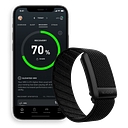
Best when you prefer a screenless, always-on band that stores continuous HRV and recovery data offline and syncs later; WHOOP excels at 24/7 tracking but provides less on-device detail than many Garmin models.
Named in 43% of answers
Named in 32% of answers
Source | Citation share |
|---|---|
 Fitness watch that does not require phone or app to setup and ...https://www.reddit.com/r/GarminWatches/comments/1egcreo/fitness_watch_that_does_not_require_phone_or_app/ | 5.6% |
 Heart Rate Variability Monitors & HRV Compatible Gadgetshttps://welltory.com/heart-rate-variability-gadgets/ | 3.3% |
 Standalone Fitness Trackers That Work Without a Phone: Full Guidehttps://vertu.com/lifestyle/can-i-use-a-fitness-tracker-without-a-smartphone/ | 1.8% |
 Best screenless fitness trackers of 2026 - Wareablehttps://www.wareable.com/fitness-trackers/best-wearables-for-discreet-fitness-tracking-320 | 1.8% |
5 devices to measure heart rate variability (HRV) and what it can tell you - Unyte Integrated Listeninghttps://integratedlistening.com/blog/5-devices-to-measure-heart-rate-variability-hrv-and-what-it-can-tell-you/ | 1.8% |
 Top 6 Fitness Trackers Without Smartphones | Verteviahttps://vertevia.com/top-6-fitness-trackers-without-smartphones/ | 1.6% |
 HRV: Comprehensive list of wearables that measure your heart rate variabilityhttps://tryterra.co/blog/finally-a-comprehensive-list-of-wearables-that-track-your-hrv-heart-rate-variability-c143faf51409 | 1.4% |
Recommended Fitness Tracker No Phone Required: Top Picks - VERTU® Official Sitehttps://vertu.com/luxury-life-guides/recommended-fitness-tracker-no-phone-required-top-picks/ | 1.1% |
 The Best Heart Rate Variability Monitors & Gadgets | mindbodygreenhttps://www.mindbodygreen.com/articles/best-hrv-monitor | 1.1% |
 Can I use my Fitbit without a phone?https://smartwatch-straps.co.uk/blogs/blog/can-i-use-my-fitbit-without-a-phone | 1.0% |
If you mean **“I want to wear it, leave my phone at home, and have it keep recording HRV”**, you have several good options. The key distinction is whether you need **HRV stored on the device and viewed later**, or whether you need **HRV displayed live without a phone**. Most trackers record independently and sync…
If you mean “I want to wear it, leave my phone at home, and have it keep recording HRV”, you have several good options. The key distinction is whether you need HRV stored on the device and viewed later, or whether you need HRV displayed live without a phone. Most trackers record independently and sync later.
Examples:
Why they fit:
Best for: athletes, runners, hikers, people who want a true standalone watch.
Downside:
Best for: someone who mainly cares about recovery, stress, sleep, and daily readiness.
Downside:
Best for: serious training and recovery optimization.
If HRV accuracy matters more than “fitness tracker” convenience:
Downside:
Best for: research-quality HRV checks, training sessions, athletes.
One question would narrow it down: do you mean no phone nearby during workouts only, or you do not want to own/use a phone at all for the tracker?
If you need a wearable that measures Heart Rate Variability (HRV) continuously or during sleep/workouts **without** needing your phone nearby to actively record or stream the data, you need a device with **on-board offline local storage**. Most modern fitness trackers and smartwatches don't require your phone *while*…
If you need a wearable that measures Heart Rate Variability (HRV) continuously or during sleep/workouts without needing your phone nearby to actively record or stream the data, you need a device with on-board offline local storage.
Most modern fitness trackers and smartwatches don't require your phone while you are working out or sleeping—they record the data locally to internal memory and sync it to your phone later via Bluetooth.
The best options that track HRV and function completely independently from a nearby phone include:
Note: While these devices measure and store HRV offline, you will still need a phone or tablet occasionally to open the companion app and view your processed recovery scores or trends.
To help narrow down the best form factor for you, let me know:
If you mean **“I want to leave my phone at home during workouts and still have HRV tracked”**, you have several good options. The key is that the tracker must **store data onboard** and sync later; truly “never needs a phone at all” devices are much rarer.…
If you mean “I want to leave my phone at home during workouts and still have HRV tracked”, you have several good options. The key is that the tracker must store data onboard and sync later; truly “never needs a phone at all” devices are much rarer.
Best for: someone who wants a normal smartwatch-style fitness tracker.
Best for: fitness tracking without paying for premium Garmin models.
Polar’s recovery tools focus heavily on overnight HRV, including metrics like Nightly Recharge.
Best for: endurance training, recovery monitoring, and people who care more about physiology than smartwatch features.
If you don’t want notifications or a display:
Best for: minimalist tracking.
Devices like WHOOP are excellent for HRV and recovery trends, but they generally depend on a phone/app ecosystem for viewing insights and often require a subscription.
One clarification would narrow this down: do you mean “no phone nearby while wearing it” (but syncing later is OK), or “I don’t own/want to use a smartphone at all”? The recommendations change a lot.
To track Heart Rate Variability (HRV) without needing your phone nearby, you need a device that features **onboard internal memory** to record and store physiological data locally , syncing it to an app later when you are back in…
To track Heart Rate Variability (HRV) without needing your phone nearby, you need a device that features onboard internal memory to record and store physiological data locally , syncing it to an app later when you are back in range.
The best options on the market that measure HRV completely independently of a nearby phone include:
To help narrow down the best option, tell me:
Here are top web results for exploring this topic: [](https://www.walmart.com/c/kp/fitness-trackers-without-smartphone)  Walmart·https://www.walmart.com**Fitness Trackers** Without **Smartphone** - Walmart Fitness Tracker Non Bluetooth…
Here are top web results for exploring this topic:
Walmart·https://www.walmart.com**Fitness Trackers** Without Smartphone - Walmart Fitness Tracker Non Bluetooth Fitness Watch No App No Phone Required Waterproof Pedometer Watch with Steps Calories Counter Sleep Tracker for Men Women Parents $24.99. Fitness Tracker Non Bluetooth Fi
Amazon.com·https://www.amazon.com**Fitness Tracker** Without Smartphone - Amazon.com Fitness trackers designed for an active, phone-free lifestyle. Get step counting, calorie tracking, and sleep monitoring in a waterproof, long-lasting design.
Reddit·https://www.reddit.com**Fitness watch** that does not require phone or app to setup and use?All can be set up and used without a phone; I believe that's true for all Garmin watches. I'd still suggest updating the firmware when you first buy any model; it can be done via computer or phone, bu
Engadget·https://www.engadget.com 5 Fitness Trackers That Don't Lock Core Features Behind a Monthly ...Garmin vívosmart 5. The Garmin vívosmart 5 on a person's right wrist Garmin. Unlike the Fitbit Air and Whoop, the vívosmart 5 has a narrow, monochrome OLED display. That, combined with its slim profil
Garage Gym Reviews·https://www.garagegymreviews.com Expert-Tested: Best Budget Fitness Trackers - Garage Gym Reviews GGR Gold Pick — Best Budget Fitness Tracker. The Xiaomi Mi Smart Band 10 is our top pick for budget-conscious buyers looking for a reliable fitness tracker. Offering up to 21 days of battery life, hea Tech Wellness·https://techwellness.com**FitBit** Without Bluetooth: The No Radiation Fitness Tracker Searching For FitBit Without Blue Tooth Radiation? This This EMF Free Fitness Tracker the Garmin vívosmart HR Activity Tracker tracks steps, miles, biking, heart rate, calories, distance and sleep no
Garmin·https://www.garmin.com Garmin announces CIRQA, a screenless health & fitness tracker Garmin today announced CIRQA™ Smart Band, its first screen-free smart band that tracks advanced fitness and wellness features—all without the need for a subscription.
Gagadget.com·https://gagadget.com Best Fitness Tracker without Phone - Gagadget.com Best Fitness Trackers: Buyer's Guide; Best Fitness Trackers That don't Need a Smartphone - TOP 7; Best Fitness Trackers without phone: Comparison; Garmin Vivoactive 5 Smartphone Fitness Tracker; SAMSU
YouTube·https://www.youtube.com Best Fitness Tracker That doesn't Need Phone ! - YouTube Best Fitness Tracker That doesn't Need Phone #ad Product Link ✓ My Picks ✓1.Garmin Vivoactive 4 GPS Smartwatch https://a.co/d/boMxV99 -------------- ✓ Best Value ✓2.SAMSUNG Galaxy Watch Active 2 https
Wareable·https://www.wareable.com Best screenless fitness trackers of 2026 - Wareable ... biceps for improved heart rate accuracy during workouts. They are 'data-first' devices. Smart rings: e.g., Oura, RingConn, Ultrahuman. The most subtle option. These are brilliant for passive 24/7
No sources cited
Yes. The key distinction is **“doesn’t need the phone nearby while collecting data”** versus “never needs a phone at all.” Most good trackers can record HRV independently and sync later; the phone is only needed to review/sync the data. ### My top picks - **Garmin Forerunner 965** - $499.99 (Garmin)
Yes. The key distinction is “doesn’t need the phone nearby while collecting data” versus “never needs a phone at all.” Most good trackers can record HRV independently and sync later; the phone is only needed to review/sync the data.
Garmin Forerunner 965 - $499.99 (Garmin)
Garmin Venu 3 - $299.99 (Target)
Apple Watch SE 3 GPS + Cellular - $299.00 (Apple)
Garmin Forerunner 965 — best overall for this requirement. It records HRV during sleep and has its own GPS, so you can exercise without carrying your phone. Garmin's HRV Status is based on overnight heart-rate measurements and builds a baseline over time.
Garmin Venu 3 — best if you want a more everyday smartwatch. It has HRV Status, GPS, and long battery life, while being less running-focused than the Forerunner.
Apple Watch cellular — best if you're an iPhone user and also want to leave the phone behind. Cellular models can stay connected without the iPhone nearby. HRV is available, although Apple's approach is less focused on HRV/recovery than Garmin's.
If by “does not require a phone nearby” you mean you don't want to own/use a phone at all, I'd narrow the choices differently. Devices such as Oura, WHOOP, and the new screenless trackers generally record independently but rely heavily on their phone apps for viewing and analysis.
If you want HRV + no phone during workouts + no monthly subscription, I'd pick a Garmin. The Vivoactive 6 is another particularly good option: its manual explicitly confirms overnight HRV Status, and it has built-in GPS.
If you tell me iPhone or Android, your budget, and whether you want to see HRV on the device itself, I can narrow it down to 2–3 specific models.
To track **Heart Rate Variability (HRV)** without needing a phone nearby, you need a device that has **onboard offline memory/storage** . Most standard fitness trackers (like standard smartwatches or rings) require a phone or base station in close Bluetooth range to stream and log data continuously, but a few…
To track Heart Rate Variability (HRV) without needing a phone nearby, you need a device that has onboard offline memory/storage . Most standard fitness trackers (like standard smartwatches or rings) require a phone or base station in close Bluetooth range to stream and log data continuously, but a few specialized devices record data locally and sync later.
If you're looking for something to wear 24/7 for daily recovery tracking versus a device strictly for standalone workouts , let me know. Do you prefer a chest strap, an armband, or a wrist wearable?
If you want **HRV tracking without needing your phone nearby**, look for a wearable that can **store data onboard** and sync later. The best options are usually watches rather than basic bands. Here are the strongest choices: | Device | HRV tracking | Phone needed during the day? | Best for |
If you want HRV tracking without needing your phone nearby, look for a wearable that can store data onboard and sync later. The best options are usually watches rather than basic bands.
Here are the strongest choices:
| Device | HRV tracking | Phone needed during the day? | Best for |
|---|---|---|---|
| Garmin watches (e.g., Garmin vívoactive 5, Garmin Instinct 3) | Yes (HRV Status, overnight HRV) | No | Athletes, training/recovery, long battery life |
| Apple Watch (especially cellular models) | Yes (HRV via Health app) | No if you use cellular; otherwise it records and syncs later | iPhone users wanting a smartwatch |
| Oura Ring | Yes (overnight HRV/readiness metrics) | No while wearing | Sleep and recovery tracking |
| Polar wearables | Yes (nightly recovery metrics) | No while recording | Training-focused users |
| COROS watches | Yes (recovery/HRV features on supported models) | No | Runners/endurance athletes |
Garmin vívoactive 5 is a particularly good fit if your priority is no phone nearby: it has its own sensors, onboard storage, GPS, and can collect health metrics while you are away from your phone.
A few good picks:
Best overall (no phone dependency): Garmin watch
Best for sleep/recovery: Oura Ring
Best if you already use iPhone: Apple Watch with cellular
Best value training watch: COROS PACE series
One important distinction: “does not require a phone nearby” can mean two things:
If you tell me your priority (sleep/recovery vs workouts, budget, iPhone/Android, and whether you want a screen), I can narrow it to 2–3 models.
No sources cited
When you need to measure **Heart Rate Variability (HRV)** without keeping a phone nearby, you run into a slight technical distinction: standard optical wrist trackers (like most smartwatches) capture data locally, but they usually require your phone within Bluetooth range to process or display it in real time. To…
When you need to measure Heart Rate Variability (HRV) without keeping a phone nearby, you run into a slight technical distinction: standard optical wrist trackers (like most smartwatches) capture data locally, but they usually require your phone within Bluetooth range to process or display it in real time.
To track HRV completely independently of a phone during your day or a workout—and sync it later—you need a device with onboard memory / offline data storage.
Top options that measure HRV and store data offline without needing a phone nearby include:
Polar H10 Heart Rate Sensor (Chest Strap)
Garmin HRM-Pro Plus or HRM 600 Go to product viewer dialog for this item. (Chest Straps)
Oura Ring 4 or RingConn / Smart Rings
How it works offline: Smart rings don't have a screen and don't need a phone near you while you wear them. They continuously track passive health metrics (including overnight HRV and stress trends) on the internal hardware for days at a time.
Syncing: They only need your phone nearby when you explicitly open the app to sync your data logs. (Note: They passively track trends rather than streaming live workout HRV without a phone).
How it works offline: This is a biometric shirt and recording pod system that captures continuous 1-lead ECG data, providing true RR intervals and HRV with up to 30 days of raw offline data storage before needing a sync. It is heavily targeted at data-driven or medical-grade autonomous tracking.
To help narrow down the best fit, tell me:

Yes. The key distinction is **“doesn’t need a phone while you’re wearing it”** versus “never needs a phone at all.” The best options can collect HRV on the device and sync to the phone later. ### Best choices ### [Garmin Instinct 3 AMOLED](https://www.garmin.com/en-US/p/1316397/pn/010-02936-00/?utm_source=chatgpt.com)
Yes. The key distinction is “doesn’t need a phone while you’re wearing it” versus “never needs a phone at all.” The best options can collect HRV on the device and sync to the phone later.
$349.99
Garmin Instinct 3 — my top pick. It measures HRV from the wrist during sleep and calculates an HRV Status based on your baseline. Garmin watches with built-in GPS can record activities without your phone nearby.
$499.99
Polar Vantage M3 — best if HRV/recovery is the priority. Polar's Nightly Recharge measures HRV automatically overnight, and the watch itself can display the recovery information; the phone is primarily for deeper analysis and syncing.
$749.99
Garmin Forerunner line — best for running/training. You get standalone GPS plus Garmin's HRV-based recovery/training metrics, without carrying your phone during workouts.
If your requirements are:
I'd go Garmin Instinct 3 for durability/battery life, or Polar Vantage M3 if HRV and recovery analysis matter more than everything else.
If you tell me your budget (e.g. under $150, $250, $400) and whether you want a watch or screenless band, I can narrow it to 2–3 options.