Data as of Aug 25, 2026 · Based on 331 AI responses from ChatGPT Search and Google AI Mode · See how Parse measures this
For heart rate variability tracking, the 


Brands AI recommends here
Named in 79% of answers
Best for passive, overnight HRV tracking. It is widely recognized for its high accuracy during sleep and comfortable, non-intrusive ring form factor, making it ideal for daily health and recovery monitoring.
Named in 76% of answers
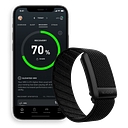
Best for continuous 24/7 recovery and strain monitoring. It excels at tracking daily HRV trends, providing actionable insights for athletes, though it lacks a traditional screen for immediate feedback.
Named in 64% of answers
Named in 49% of answers
Source | Citation share |
|---|---|
Independent Study Finds Oura Ring Most Accurate Wearable for HRV & RHR - The Pulse Bloghttps://ouraring.com/blog/oura-most-accurate-for-hrv-resting-heart-rate/ | 3.9% |
 Wearable Devices Suitable for Monitoring Twenty Four Hour Heart Rate Variability in Military Populations - PubMedhttps://pubmed.ncbi.nlm.nih.gov/33557190/ | 3.7% |
 Best Wearable Heart Rate Monitors in 2026 | CLS Healthhttps://cls.health/blog/best-wearable-heart-monitors | 3.6% |
 Validation of nocturnal resting heart rate and heart rate variability in consumer wearables - PMChttps://pmc.ncbi.nlm.nih.gov/articles/PMC12367097/ | 3.5% |
Which Device Is Most Suitable for Measuring Heart Rate Variability in the Field? A Comparative Evaluation of Two Leading Options - PMChttps://pmc.ncbi.nlm.nih.gov/articles/PMC12379770/ | 3.2% |
5 devices to measure heart rate variability (HRV) and what it can tell you - Unyte Integrated Listeninghttps://integratedlistening.com/blog/5-devices-to-measure-heart-rate-variability-hrv-and-what-it-can-tell-you/ | 3.1% |
Best HRV Monitors of 2026: Tested and Ranked | MyHRVhttps://www.myhrv.com/posts/best-hrv-monitors-2026 | 3.0% |
 Heart Rate Variability Monitors & HRV Compatible Gadgetshttps://welltory.com/heart-rate-variability-gadgets/ | 2.6% |
 Top 5 Heart-Rate Variability (HRV) Tools for Recovery and Focushttps://www.neurotrackerx.com/post/top-5-heart-rate-variability-hrv-tools-for-recovery-and-focus | 1.8% |
 Which Wearables Get HRV and Resting Heart Rate Right?https://www.mensjournal.com/health-fitness/new-research-reveals-which-devices-nail-hrv-and-resting-heart-rate-and-which-dont | 1.8% |
If **HRV is your main priority**, my pick depends on whether you want **maximum measurement accuracy** or a **comfortable wearable you can keep on 24/7**. ### My top picks - **Oura Ring 4** - $349.00 (Walmart)
If HRV is your main priority, my pick depends on whether you want maximum measurement accuracy or a comfortable wearable you can keep on 24/7.
Best overall for everyday HRV: Oura Ring 4. It is particularly strong for overnight HRV, because the finger is a good location for optical sensing and the ring can collect data throughout sleep. A 2025 multi-device validation study found the Oura Ring had the lowest HRV error among the tested sleep wearables, around 6% versus an ECG reference.
If by "best" you mean the cleanest beat-to-beat HRV data, I'd choose the Polar H10 chest strap. It uses an ECG-based electrical signal rather than optical sensing, and is widely used as a reference device in wearable-validation research.
WHOOP is probably the best alternative to Oura if you care heavily about recovery and training. Its strength is turning HRV, resting heart rate, sleep and activity data into actionable recovery/training information. Recent comparisons put it behind Oura for overnight HRV accuracy, but still in the upper tier.
I'd choose an Apple Watch if you want a smartwatch first and HRV second. It's useful, but its HRV measurement isn't directly comparable to Oura or Polar because Apple reports SDNN from short/opportunistic measurements, whereas Oura emphasizes overnight RMSSD. A validation study found Apple Watch HRV tended to differ substantially from Polar H10 measurements.
| If you want… | I'd choose |
|---|---|
| 🥇 Best everyday HRV wearable | Oura Ring 4 |
| 🎯 Most accurate HRV measurement | Polar H10 |
| 🏃 Training/recovery coaching | WHOOP |
| ⌚ Smartwatch + HRV | Apple Watch |
If I were buying specifically for HRV: I'd get the Oura Ring 4 for continuous overnight trends, or the Polar H10 if accuracy matters more than convenience.
One important caveat: don't compare the absolute HRV number from different devices as if they're interchangeable. Different devices use different metrics and measurement windows, so consistency with the same device is more useful than chasing a particular number.
When it comes to tracking Heart Rate Variability (HRV), the "best" device depends entirely on *how* and *when* you want to measure it. `Optical wrist sensors` are great for continuous, passive overnight tracking, while ECG chest straps are the gold standard for clinical-grade or real-time training accuracy. The…
When it comes to tracking Heart Rate Variability (HRV), the "best" device depends entirely on how and when you want to measure it. Optical wrist sensors are great for continuous, passive overnight tracking, while ECG chest straps are the gold standard for clinical-grade or real-time training accuracy.
The top-performing devices for HRV tracking are categorized by form factor and use case:
To help narrow down the best option for you, let me know:
## Best overall: Oura Ring If **HRV is your main priority**, I’d choose the **Oura Ring 4**. It’s particularly strong for **overnight HRV**, which is generally more useful for tracking recovery and identifying your personal trends than occasional daytime measurements. - **Oura Ring 4** - $349.00 (Walmart)
If HRV is your main priority, I’d choose the Oura Ring 4. It’s particularly strong for overnight HRV, which is generally more useful for tracking recovery and identifying your personal trends than occasional daytime measurements.
A 2025 validation study comparing consumer wearables against ECG found the Oura Ring 4 had the strongest agreement for overnight HRV among the devices tested, with a concordance correlation coefficient of about 0.99. WHOOP followed at about 0.94, while Garmin was lower in that particular study.
| Device | Best for | HRV verdict |
|---|---|---|
| Oura Ring 4 | Sleep + recovery + HRV | 🥇 Best overall |
| WHOOP 5.0 | Athletes/recovery coaching | 🥈 Excellent |
| Garmin | Endurance training + HRV | 🥉 Good, especially if you already use Garmin |
| Apple Watch | General health + smartwatch features | Good, but HRV isn't its strongest use case |
Oura vs. WHOOP is the closest decision. Oura is my pick if you primarily want a reliable, unobtrusive HRV/sleep/recovery baseline. WHOOP makes more sense if you want HRV incorporated heavily into training load, strain, and recovery coaching. Current comparisons also favor Oura for sleep-focused HRV and WHOOP for athlete-oriented recovery.
One important caveat: don't compare absolute HRV numbers between different devices. They can use different algorithms, metrics, and measurement windows. Your own multi-week trend is much more meaningful than whether your HRV says 45 ms on one device and 60 ms on another.
If you tell me iPhone vs. Android, whether you exercise seriously, and whether you care more about HRV accuracy, sleep, or training/recovery, I can narrow it down to the best 2–3 choices for you.
When it comes to tracking heart rate variability (HRV), the "best" device depends heavily on **how** you want to track it—whether through continuous 24/7 recovery scoring, a discreet smart ring, or clinical-grade ECG precision. The top-tier wearable options for HRV tracking excel in distinct categories: - *Best for…
When it comes to tracking heart rate variability (HRV), the "best" device depends heavily on how you want to track it—whether through continuous 24/7 recovery scoring, a discreet smart ring, or clinical-grade ECG precision.
The top-tier wearable options for HRV tracking excel in distinct categories:
To help narrow down the ideal choice, tell me:
The "best" device for tracking heart rate variability (HRV) depends entirely on **how you plan to wear it** and **what you want to do with the data** . Because wrist-based optical (PPG) sensors can suffer from movement artifacts, different form factors excel in different…
The "best" device for tracking heart rate variability (HRV) depends entirely on how you plan to wear it and what you want to do with the data . Because wrist-based optical (PPG) sensors can suffer from movement artifacts, different form factors excel in different categories.
The top options on the market are categorized by their specific strengths:
To help narrow down which form factor fits you best, tell me:
If **HRV is your main priority**, my pick in 2026 is the **Oura Ring**—especially for overnight HRV and recovery tracking. ### [Oura Ring 5](https://www.target.com/p/oura-ring-5-silver-size-13/-/A-95006338?utm_source=chatgpt.com&TCID=OAG&afid=chatgpt) *$399.00*
If HRV is your main priority, my pick in 2026 is the Oura Ring—especially for overnight HRV and recovery tracking.
$399.00
Why: Oura's finger-based sensing is particularly well suited to overnight measurements, when you're still and getting consistent readings. Its Readiness system incorporates HRV trends, resting heart rate, sleep, temperature, and activity rather than making you interpret a single HRV number.
Independent comparisons have generally favored Oura for overnight HRV/recovery accuracy, although it's important that some of the strongest published validation is for the Ring 4 rather than the newer Ring 5.
WHOOP is arguably better if you want HRV to drive training decisions. It measures HRV during sleep using RMSSD and feeds it into its Recovery and Strain framework.
The tradeoff is that WHOOP is much more dependent on its subscription ecosystem.
If you want HRV + GPS + workouts + notifications + ECG + general smartwatch functionality, Apple Watch is the more versatile choice. But I wouldn't choose it specifically for HRV—the way Apple samples HRV isn't as focused on continuous overnight recovery tracking as Oura or WHOOP.
| Device | HRV | Best for |
|---|---|---|
| Oura Ring 5 | ⭐⭐⭐⭐⭐ | Sleep & recovery |
| WHOOP 5.0 | ⭐⭐⭐⭐⭐ | Training & recovery coaching |
| Apple Watch | ⭐⭐⭐⭐ | Overall health + smartwatch |
| Garmin | ⭐⭐⭐⭐ | Serious training + HRV |
| Polar H10 | ⭐⭐⭐⭐⭐⭐ | Maximum measurement accuracy, but not a daily wearable |
One important caveat: HRV is most useful as a personal trend, not as an absolute number. Your normal HRV can differ dramatically from someone else's, and day-to-day changes can reflect sleep, stress, alcohol, illness, training load, and hydration.
Bottom line: If you specifically want the best wearable for tracking HRV 24/7 with minimal hassle, I'd buy Oura. If you're an athlete who wants HRV translated into daily training/recovery recommendations, I'd choose WHOOP.
If you tell me whether you're primarily interested in longevity/health, sleep, stress, or athletic recovery, I can narrow it down further.
The "best" device for tracking heart rate variability (HRV) depends entirely on whether you want **absolute clinical-grade precision** or **convenient, passive 24/7 recovery tracking** . HRV measures the exact time variation between each heartbeat in milliseconds (m s m s𝑚𝑠), making data capture sensitivity…
The "best" device for tracking heart rate variability (HRV) depends entirely on whether you want absolute clinical-grade precision or convenient, passive 24/7 recovery tracking . HRV measures the exact time variation between each heartbeat in milliseconds (m s m s𝑚𝑠), making data capture sensitivity crucial.
The top wearable options are categorized by how they perform and fit into daily life:
To help narrow down the ideal choice, let me know:
If **HRV (heart rate variability) tracking is your main priority**, the best wearable for most people is: ## 🥇 Best overall HRV wearable: Oura Ring 4 [Oura Ring 4](https://ouraring.com/store/rings/oura-ring-4/black?utm_source=chatgpt.com)
If HRV (heart rate variability) tracking is your main priority, the best wearable for most people is:
Why it stands out:
A validation study comparing consumer wearables against ECG-based reference measurements found Oura devices had the strongest agreement for nocturnal HRV among the tested devices, with WHOOP also performing well.
Best for: people interested in recovery, sleep, stress, longevity, and seeing how lifestyle changes affect HRV.
Downsides:
WHOOP is arguably the best HRV interpretation system rather than just an HRV sensor. It combines HRV with sleep, strain, and recovery coaching.
Best for:
Downsides:
Apple Watch tracks HRV, but it is better viewed as a smartwatch with HRV capability rather than an HRV-first device. Its HRV measurements are typically based on spot measurements rather than the continuous overnight recovery approach used by Oura and WHOOP.
Best for:
For the cleanest HRV measurement during a controlled reading, an ECG-style chest strap such as a Polar H10 is often considered the benchmark. It is less convenient because it is not designed for all-day passive tracking.
| Your goal | Best choice |
|---|---|
| Highest-quality daily HRV + sleep trends | Oura Ring 4 |
| Training readiness and athletic recovery | WHOOP |
| Smartwatch + occasional HRV | Apple Watch |
| Most accurate single HRV readings | Chest strap (Polar H10-type) |
| GPS endurance training + HRV trends | Garmin |
If I had to pick one device specifically for HRV, I would choose Oura Ring 4. If your main question is “How recovered am I for training today?”, I would lean toward WHOOP.
When looking for the best wearable device to track heart rate variability (HRV), the "best" choice depends entirely on whether you want **absolute clinical-grade accuracy** during specific moments or **convenient 24/7 trend tracking** while you…
When looking for the best wearable device to track heart rate variability (HRV), the "best" choice depends entirely on whether you want absolute clinical-grade accuracy during specific moments or convenient 24/7 trend tracking while you sleep.
Summary Recommendation
If you tell me how you plan to use the data (e.g., managing stress, optimizing athletic recovery, or tracking a medical condition) and your preferred style (watch, ring, or strap), I can help you pick the exact model that fits your routine.
If **HRV is your main priority**, my pick is the **Oura Ring 4**. ### [Oura Ring 4](https://ouraring.com/store/rings/oura-ring-4/black?utm_source=chatgpt.com) *$349.00*
If HRV is your main priority, my pick is the Oura Ring 4.
$349.00
| Device | HRV | Best for |
|---|---|---|
| Oura Ring 4 | ⭐⭐⭐⭐⭐ | Best overall HRV/recovery tracking |
| WHOOP 5.0 | ⭐⭐⭐⭐½ | Athletes who want recovery + strain coaching |
| Garmin | ⭐⭐⭐⭐ | Athletes who also need serious GPS/training features |
| Apple Watch | ⭐⭐⭐½ | Best all-purpose smartwatch + occasional HRV |
| Chest strap + ECG app | ⭐⭐⭐⭐⭐+ | Maximum measurement accuracy, but less convenient |
The important caveat with Apple Watch is that its native HRV measurement isn't directly comparable to Oura's: Apple primarily reports SDNN from short, intermittent measurements, whereas Oura's overnight metric is based on RMSSD. So you shouldn't simply compare the HRV numbers between the two.
If you're choosing specifically for HRV: Oura.
If you're a serious athlete who wants HRV to drive daily training decisions: I'd seriously consider WHOOP as well because its recovery/strain ecosystem is particularly strong.
If you already own an Apple Watch: you probably don't need another device unless you're specifically looking for better continuous overnight HRV and recovery tracking.
One other consideration: Oura requires a membership for its full experience, so if you strongly dislike subscriptions, there are worthwhile alternatives.
If you tell me whether you're primarily interested in longevity/health, athletic performance, stress, or sleep, I can narrow it down to the best device for your particular use case.