
Data as of Aug 25, 2026 · Based on 293 AI responses from ChatGPT, Google AI Overviews, ChatGPT Search and Google AI Mode · See how Parse measures this
The best stud finder depends on your specific project. For general DIY use and high-accuracy mounting, the 

Brands AI recommends here
Ideal for DIYers and pros needing high accuracy for mounting heavy items. It uses multiple sensors to detect the full width of a stud without needing manual calibration, simplifying installation tasks.
Best for advanced users and serious renovations. By connecting to your smartphone, it provides a visual map to see studs, pipes, and electrical wires inside your walls, offering depth beyond standard scanners.
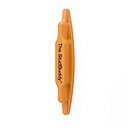
An excellent pick for simple, budget-friendly needs. This magnetic tool requires no batteries and is effective for finding drywall screws, though it requires more manual effort to locate studs.
Franklin SensorsSource | Citation share |
|---|---|
 The Best Stud Finders of 2026, Tested and Reviewed - Outdoor Lifehttps://www.outdoorlife.com/gear/best-stud-finders/ | 11.9% |
 Best Stud Finders 2025 [watch before you buy]https://www.youtube.com/watch | 5.5% |
 The Best Stud Finders | Tested & Rankedhttps://www.techgearlab.com/topics/tools/best-stud-finder | 4.8% |
 The Best Stud Finders of 2026, Tested by Bob Vilahttps://www.bobvila.com/articles/best-stud-finders/ | 4.5% |
 Amazon Best Sellers: Best Stud Finders & Scannershttps://www.amazon.com/Best-Sellers-Stud-Finders-Scanners/zgbs/hi/553280 | 3.3% |
 The 10 Best Stud Finders of 2026, Tested and Reviewed - The Sprucehttps://www.thespruce.com/best-stud-finders-4155616 | 3.2% |
Best Stud Finders 2025 [watch before you buy]https://www.youtube.com/watch | 2.4% |
 I'm looking for a reliable stud finder that actually works - Reddithttps://www.reddit.com/r/handyman/comments/1h9r52l/im_looking_for_a_reliable_stud_finder_that/ | 2.4% |
 The 5 Best Stud Finders for Your Home DIY Projectshttps://www.bhg.com/best-stud-finders-7111268 | 2.2% |
 The 6 Best Stud Finders of 2026, Tested by Popular Mechanicshttps://www.popularmechanics.com/home/a28842874/best-stud-finders/ | 2.1% |
The Franklin Sensors ProSensor M210 Go to product viewer dialog for this item. is widely considered the best overall electronic stud finder on the market due to its unmatched speed and accuracy. If you prefer a simpler, battery-free option, testing across major reviews confirms that the C.H. Hanson 03040 Magnetic Stud Finder Go to product viewer dialog for this item. is the top choice for a foolproof, budget-friendly tool.
The top stud finders are categorized below by type and user needs:
Best Electronic Stud Finders
This model stands out because it utilizes 13 distinct sensors to scan the wall simultaneously, tracking both the edges and the center of the stud in real time without needing calibration.
An exceptional alternative that remains a top recommendation for overall speed.
The best midrange option for users who want multi-surface scanning on a budget.
Best Magnetic & Specialty Stud Finders
The absolute best option for simple, occasional home use.
The ultimate heavy-duty option for complex walls or deep detection.
Quick Comparison
| Model[1][2][3][4][5] | Type | Best For | Power Needed |
|---|---|---|---|
| Franklin Sensors M210 | Electronic | Ultimate Accuracy | 2 AA Batteries |
| Franklin Sensors 710 | Electronic | Fast, Calibration-Free | 2 AA Batteries |
| Zircon MultiScanner A200 | Electronic | Midrange Value | 9V Battery |
| C.H. Hanson 03040 | Magnetic | Simple & Bulletproof | None |
| Bosch GMS120 | Radar | Deep Scans / Concrete | 9V Battery / Rechargeable |
To help tailor this advice, could you share what kind of wall material you are scanning (e.g., standard drywall, plaster and lath, or concrete) and what you plan to hang?

The “best” stud finder depends on what features you prioritize—accuracy, ease of use, price, or extra functions like detecting live wires. Here’s a breakdown of top options across different needs:
Tip:
If you want, I can make a quick comparison chart of the top 5 stud finders, including price, features, and ideal users, so you can pick in 30 seconds. Do you want me to do that?
No sources cited
The Franklin Sensors ProSensor M210 is widely regarded as the best overall stud finder for its accuracy, wide sensing area, and ease of use, featuring multiple sensors to visualize stud locations. For advanced, visual detection of pipes and wires, the Walabot DIY 2 is top-rated, while the CH Hanson Magnetic Stud Finder is the best,3 cheap, no-battery option.
This video provides a detailed review of the top stud finders, including the Franklin Sensors ProSensor M210:
 04:28
04:28Best Stud Finders 2026
Key Features to Consider
The best stud finder overall right now (based on recent 2025–2026 testing and real-world reviews) is the:
Consistently ranked #1 in hands-on tests
Uses multiple sensors (up to 13) instead of one scanning point
Shows the full width of studs at once (not just edges)
No calibration required → just press and scan
Very low false-positive rate compared to typical “beep-style” stud finders
👉 Why people like it: it’s fast, simple, and much more accurate than most budget models.
Zircon StudSensor e50 / A100 series
Cheap and widely available
Good for basic drywall hanging
Needs calibration and is less precise than Franklin
Bosch GMS120 digital wall scanner
Detects wood, metal, and live wires
More complex but safer for drilling into unknown walls
Great if you want more than just studs
Magnetic stud finders (e.g., C.H. Hanson)
Finds screws/nails in studs
Very cheap and reliable but slower and less precise
Most people: Franklin Sensors ProSensor 710 (best balance of speed + accuracy)
Occasional DIY / cheap option: Zircon e50
Electrical / remodeling work: Bosch GMS120
Ultra-basic use: magnetic finder
If you want, tell me what you’re hanging (TV, shelves, cabinets, etc.) and your wall type, and I can narrow it down even more.
The Franklin Sensors ProSensor M210 is widely regarded as the best overall stud finder for its ease of use, accuracy, and wide sensing area that visualizes studs. For advanced, deep-scanning, and imaging capabilities, the Walabot DIY 2 is the top choice, while the CH Hanson Magnetic Stud Finder is the best low-cost, battery-free option.
This video provides a detailed review of some of the top stud finders, including the Franklin Sensors ProSensor M210:
04:28Top Stud Finder Recommendations
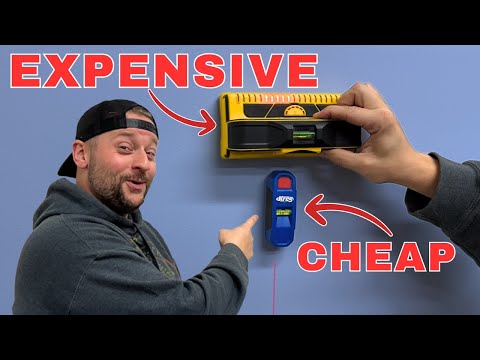
Watch this video to see a comparison of a budget magnetic stud finder and a high-tech model:
 57s
57sKey Considerations
Note: For the best results, it is often recommended to use a combination of a magnetic finder for locating screws and an electronic scanner for confirming the stud edges.
The best stud finder depends a bit on how serious your projects are, but there’s a clear “top pick” across most modern testing.
Most reviewers consistently rank this as the most accurate and easiest to use.
Why it’s the best:
Uses multiple sensors (not just one like cheap models)
Shows the full width of the stud at once
No calibration needed
Very few false positives
Works well for mounting TVs, shelves, cabinets
In hands-on testing, it repeatedly beats competitors for speed and reliability because it “maps” the wall instead of guessing edges Best Stud Finders 2026: 5 Models Tested | ToolShed TestedThe Best Stud Finders of 2026, Tested by Bob Vila.
Good if you want more than just studs.
Why people choose it:
Detects wood, metal, and live wires
Multiple scan modes
More “pro-grade” wall scanning
Downside: slightly slower and more complex to use The Best Stud Finders | Tested & Ranked.
Good for basic DIY use.
Pros:
Cheap
Works fine on standard drywall
Easy to find studs for picture frames
Cons:
Usually only finds edges (not full stud width)
More false readings than Franklin models
If you just want the best overall with least frustration → get a Franklin Sensors ProSensor
If you want wire/metal detection too → go Bosch scanner
If you just hang pictures occasionally → a Zircon budget model is fine
If you want, tell me what you’re hanging (TV, shelves, etc.) and your wall type (drywall, plaster, old house), and I’ll narrow it down to the exact best model for your situation.
The Franklin Sensors ProSensor M210 is widely considered the best overall stud finder for its accuracy, ease of use, and ability to display stud width instantly using 13 sensors. For a reliable, battery-free option, the C.H. Hanson Magnetic Stud Finder is top-rated, while the Walabot DIY 2 offers advanced imaging to detect pipes and wires.
Top Stud Finder Recommendations
This video provides a comparison of some of the best stud finders on the market:
 08:23
08:23Why These Were Chosen
Key Considerations
The short answer: the best stud finder overall right now is the Franklin Sensors ProSensor series (especially the M210 / 710 models).
After recent testing across multiple review sites and hands-on comparisons, one model consistently comes out on top:
Uses multiple sensors (not just one) , so it “sees” the whole stud instead of guessing
Shows the full width of the stud at once (less trial-and-error)
No calibration required (big advantage over most competitors)
Very low false-positive rate compared to cheaper single-sensor models
Frequently rated best in 2025–2026 tool tests and DIY reviews
In real-world testing, it consistently finds studs on the first pass and is especially popular for mounting TVs, shelves, and cabinets.
Detects wood, metal, and live wires
More advanced scanning modes than basic stud finders
Better if you want safety + versatility over simplicity
Cheaper and widely available
Works fine for basic drywall jobs
More prone to false positives than Franklin models
If you want the easiest, most accurate tool → go with Franklin Sensors ProSensor (M210/710)
If you want extra features like wire/pipe detection → go with Bosch GMS120
If you want cheap and “good enough” → Zircon models
If you want, tell me what you’re hanging (TV, shelves, mirror, etc.) and I can suggest the best specific model for that job.
If you want a straight answer: the “best” stud finder right now is usually a Franklin Sensors model —they consistently beat others for accuracy and ease of use. But the right one depends on whether you want pro-level precision, budget simplicity, or something in between.
Here’s a clear breakdown based on real testing and current top models.
Uses 13 sensors at once , so you see the entire stud , not just a guess point
Almost no calibration needed—just press and scan
Detects wood, metal, and even live wires
Widely rated the most accurate in testing
👉 This is the closest thing to “can’t mess it up” you’ll find.
Zircon StudSensor HD55 Stud Finder
Affordable electronic stud finder with basic edge detection and wire warning.
Cheap and easy to use
Good for occasional DIY (pictures, shelves)
Less accurate—requires slower scanning and practice
👉 Fine for light use, but expect occasional false readings.
Franklin Sensors ProSensor M150 Stud Finder
Reliable multi-sensor stud finder without calibration at a lower price than flagship models.
Same no-calibration design as premium Franklin models
Fewer sensors than M210 but still very accurate
Great value for homeowners
C.H. Hanson 03040 Magnetic Stud Finder
Pocket-sized magnetic stud finder that locates screws and nails with strong magnets.
Uses magnets to find screws/nails in studs
Never gives false positives (but less precise center finding)
Cheap and indestructible
👉 Many pros keep one of these plus an electronic finder.
| Attribute | Franklin Sensors ProSensor M210 Stud Finder | Franklin Sensors ProSensor M150 Stud Finder | Zircon StudSensor HD55 Stud Finder | C.H. Hanson 03040 Magnetic Stud Finder |
|---|---|---|---|---|
| Accuracy | ⭐⭐⭐⭐⭐ | ⭐⭐⭐⭐☆ | ⭐⭐⭐ | ⭐⭐⭐⭐ (but indirect) |
| Detection type | Multi-sensor electronic | Multi-sensor electronic | Single/edge electronic | Magnetic |
| Shows full stud width | ✅ Yes | ✅ Yes (fewer sensors) | ❌ No | ❌ No |
| Wire detection | ✅ Yes | ✅ Yes | ✅ Basic | ❌ No |
| Ease of use | Very easy (no calibration) | Very easy | Moderate | Very easy |
| Price level | $$$ | $$ | $ | $ |
Want the best, no frustration? → Go with the M210
On a budget? → Zircon works, just slower and less precise
DIYer who wants value? → M150 is a sweet spot
Backup tool or ultra-simple? → Magnetic (C.H. Hanson)
A lot of people complain that “all stud finders suck”—that’s usually because of cheap single-sensor models or improper use. Multi-sensor models (like Franklin) fix most of those issues by showing the full stud instead of guessing.
If you tell me what you’re planning to hang (TV, shelves, etc.), I can narrow it down even further—some situations need deeper scanning or extra features.
The top-rated stud finders for 2026 are the Franklin Sensors ProSensor M210 (best overall), CH Hanson Magnetic Stud Finder (best budget/magnetic), and Walabot DIY 2 (best advanced/imaging). These devices offer high accuracy in detecting wood, metal, and live wires behind drywall, with sensor-based models like the Franklin offering fast, wide-view scanning.
Top Stud Finder Picks
C.H. Hanson Magnetic Stud Finder - Simple, no-battery tool that uses powerful magnets to find drywall screws.
How to Choose a Stud Finder
Key Considerations


