Data as of Aug 25, 2026 · Based on 322 AI responses from ChatGPT Search and Google AI Mode · See how Parse measures this
For most DIY projects, magnetic stud finders like The 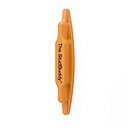


Brands AI recommends here
Ideal for DIYers who want a simple, no-fuss tool. It skips batteries entirely, using magnets to locate studs quickly. It is best for basic home projects but lacks advanced detection features.
Best for professional installers requiring precision. It combines electronic stud detection with a built-in laser and wire detection, though it sits at a higher price point than simple manual models.
A strong choice for DIYers looking for a mix of accuracy and value. Its multi-sensor design makes it more reliable than basic finders for varied home projects without breaking the bank.
Franklin SensorsSource | Citation share |
|---|---|
 The Best Stud Finders of 2026, Tested and Reviewed - Outdoor Lifehttps://www.outdoorlife.com/gear/best-stud-finders/ | 11.6% |
 Best Stud Finders 2025 [watch before you buy]https://www.youtube.com/watch | 4.8% |
 The Best Stud Finders of 2026, Tested by Bob Vilahttps://www.bobvila.com/articles/best-stud-finders/ | 4.2% |
 The Best Stud Finders | Tested & Rankedhttps://www.techgearlab.com/topics/tools/best-stud-finder | 4.0% |
 The 10 Best Stud Finders of 2026, Tested and Reviewed - The Sprucehttps://www.thespruce.com/best-stud-finders-4155616 | 3.0% |
 Amazon Best Sellers: Best Stud Finders & Scannershttps://www.amazon.com/Best-Sellers-Stud-Finders-Scanners/zgbs/hi/553280 | 2.9% |
Best Stud Finders 2025 [watch before you buy]https://www.youtube.com/watch | 2.5% |
 I'm looking for a reliable stud finder that actually works - Reddithttps://www.reddit.com/r/handyman/comments/1h9r52l/im_looking_for_a_reliable_stud_finder_that/ | 2.2% |
Best stud finder that actually WORKShttps://www.youtube.com/watch | 1.9% |
 The 6 Best Stud Finders of 2026, Tested by Popular Mechanicshttps://www.popularmechanics.com/home/a28842874/best-stud-finders/ | 1.8% |
The Franklin Sensors ProSensor 710 is widely considered the best overall electronic stud finder for home use. It uses 13 sensors simultaneously to instantly display the entire width of a stud without needing a complex calibration process.
The right choice depends on your specific wall types, budget, and tracking needs.
Watch this comparative analysis of top-selling models to see how different stud finders perform against diverse wall surfaces and hidden obstacles:
Top Stud Finder Recommendations
Direct Comparison
| Model | Type | Key Advantage | Price Range |
|---|---|---|---|
| Franklin ProSensor 710 | Electronic | No calibration needed; 13 sensors | $45 - $60 |
| Franklin ProSensor M210 | Electronic | Live wire sensing meter | $70 - $75 |
| Zircon SuperScan M3 | Electronic | Filters out plumbing and conduits | $55 - $60 |
| Zircon StudSensor A100 | Electronic | Budget tool with wire tracking | $30 - $35 |
| C.H. Hanson 03040 | Magnetic | Never needs batteries; foolproof | $10 - $15 |
Expert Perspectives
Community reviewers highlight distinct benefits between high-tech scanners and simple magnetic models:
“Metal is often missed by typical stud finders calibrated for wood studs... The Zircon MetalliScanner M40 Go to product viewer dialog for this item. is specifically designed to detect a wide variety of ferrous (magnetic) and nonferrous metals behind floors, walls, and ceilings.”
“The Zircon A100 Go to product viewer dialog for this item. worked well, and was the only tool that offered wire detection at this price range... Overall, the Zircon A100 best stud finder for the money.”
To narrow down the best tool for your project, please let me know:
For most homeowners and DIYers, the best stud finder is the Franklin Sensors ProSensor 710+. It’s fast, easy to use, and avoids one of the biggest frustrations with stud finders: false readings and constant recalibration. It uses multiple sensors to show the full width of a stud (edges and center) instead of just detecting one spot.
**
**
**
**
**
One tip: even the best stud finder can miss things. Before drilling, confirm the stud location by scanning from both directions and be cautious near outlets and switches, where wiring is often routed.
The best stud finder overall is the Franklin Sensors ProSensor M210 Stud Finder Go to product viewer dialog for this item. , praised by both professionals and DIY enthusiasts for its multi-sensor technology that instantly displays a stud's full width without requiring startup calibration.
Depending on your specific home project, budget, and wall type, your choice will likely come down to three distinct categories: multi-sensor models, full-featured electronic scanners, or simple magnetic finders.
Top Product Recommendations
Add to list
Add to list
Add to list
Key Specifications Comparison
The table below breaks down the capabilities of these top-rated models to match your project's wall material and depth needs:
| Stud Finder | Primary Technology | Max Scan Depth | Live Wire Detection? | Best For |
|---|---|---|---|---|
| Franklin Sensors M210 | Multi-Sensor Dielectric | 1.7 inches | Yes (Meter display) | Speed & ease of use |
| Zircon SuperScan M3 | Advanced Capacitive & Metal Scan | 1.5 inches (3 inches for metal) | Yes (Color-coded alert) | Complex walls with pipes |
| C.H. Hanson Magnetic | Rare Earth Magnetism | 1.0 inch (fastener depth) | No | Quick DIY & budget-conscious |
To help you decide between electronic and multi-LED units, you can see how multi-sensor technology actively tracks density alterations across a surface without needing manual calibration cycles:
If you want to narrow down your options, please let me know:
If you want the best stud finder for most homeowners, I’d get the Franklin Sensors ProSensor M210.
Independent hands-on testing from Outdoor Life named the M210 Best Overall, while Pro Tool Reviews also found Franklin's multi-sensor models particularly accurate.
Franklin Sensors ProSensor M70 - $21.97 (The Home Depot)
RYOBI Whole Stud Finder - $29.97 (The Home Depot)
Bosch GMS120-27 Wall Scanner - $119.00 (The Home Depot)
C.H. Hanson Magnetic Stud Finder - $9.38 (The Home Depot)
Franklin Sensors ProSensor MAX - $119.00 (The Home Depot)
Best cheap option: Franklin ProSensor M70 — about $22 and uses multiple sensors to show the stud's center and edges.
Best for complicated walls: Bosch GMS120-27 — better if you need to distinguish studs, metal, pipes, and wiring.
Best simple/no-battery option: C.H. Hanson Magnetic — about $10 and uses magnets to find drywall fasteners.
Best for thick walls/plaster: Franklin ProSensor MAX — scans to about 2.5 inches, but it's considerably more expensive.
Bottom line: For hanging TVs, shelves, cabinets, mirrors, etc., I'd spend the ~$60 on the M210. It's the one I'd trust for general household use.
The Franklin Sensors ProSensor M210 Go to product viewer dialog for this item. is widely regarded as the best overall electronic stud finder due to its multi-sensor technology and lack of a tedious calibration process.
When picking a stud finder, options fall into two main categories: electronic sensors that detect wall density, and magnetic finders that stick to hidden drywall screws. Top-tested models excel in specific categories, depending on budget and project requirements:
Top Product Picks
Features a wide 13-sensor array that displays the full width and center of a stud simultaneously via LEDs.
Bypasses the annoying manual calibration steps required by legacy models.
Includes a built-in live wire sensing meter for added safety while drilling.
Utilizes Target Control technology to identify clean wood studs while actively filtering out metallic false positives like plumbing and ductwork.
Offers an auto-correcting error feature and an arrow spotlight to mark precise locations.
Features a DeepScan mode capable of reading through surfaces up to 1.5 inches thick.
Employs powerful rare earth magnets that cling directly to the wall when placed over drywall screws, guaranteeing zero false positives.
Requires no batteries, calibration, or maintenance.
Features a small, pocketable design with an integrated rotating bubble vial for quick horizontal and vertical leveling.
Watch this head-to-head comparison demonstrating how high-tech electronic models stack up against inexpensive magnetic finders on real-world wall surfaces:
Feature Comparison
| Product | Type | Max Depth | Best For |
|---|---|---|---|
| Franklin ProSensor M210 | Electronic | 1.7 inches | Speed, accuracy, and full-width visualization |
| Zircon SuperScan M2 | Electronic | 1.5 inches | Avoiding metal pipes and plumbing |
| C.H. Hanson 03040 | Magnetic | 1.0 inch | Budget-conscious DIYers and lifetime reliability |
If you want to choose the right tool for your project, tell me:
I can help you pinpoint the safest, most efficient option.
If you want one stud finder that’s hard to beat, I’d pick the Franklin Sensors ProSensor M210.
$59.97
$21.97
$29.97
$49.97
$13.99
$119.00
Best cheap option: C.H. Hanson Magnetic — about $14, no batteries, and surprisingly effective for ordinary drywall. It finds the screws/nails holding drywall to the studs.
Best ~$30 option: RYOBI Whole Stud Finder — displays the whole width of the stud and is very easy to use.
Best if you want to detect wires/metal: Zircon SuperScan M2 or Bosch GMS120-27. The Zircon is considerably cheaper; the Bosch is more of a professional wall scanner.
My recommendation: For mounting a TV, cabinets, shelves, or anything heavy, spend the ~$60 on the Franklin M210. It's the one I'd want in my toolbox.
If you tell me what you're mounting and what kind of wall you have (drywall, plaster, tile, etc.), I can narrow it down to the best one for your particular job.
The absolute best stud finder for most people is the Franklin Sensors ProSensor M210 Stud Finder Go to product viewer dialog for this item. , as it delivers unmatched accuracy by utilizing 13 separate sensors to instantly track the entire width of a stud without needing manual calibration.
The best tool for your project depends on whether you prefer the speed of multi-sensor electronic tracking, the foolproof reliability of rare-earth magnets, or multi-material scanning. Expert evaluations from sources like Outdoor Life and user experiences highlight the top options available across different categories:
Best Overall Electronic Stud Finders
These devices utilize multiple sensors to track wall density changes in real-time, instantly illuminating LEDs to reveal the center and outer edges of wood or metal framing.
Widely considered the top performer overall. It features 21 precision LEDs that continue to track framing as you move it sideways, alongside an integrated live wire meter for drill safety.
A simplified, highly durable alternative that uses 9 precision sensors. It handles up to 1.5-inch thick drywall and requires zero manual calibration—just press the button and scan.
Best Magnetic Stud Finders
Magnetic models skip the batteries entirely, relying on heavy-duty rare-earth magnets to find the hidden drywall screws and nails that anchor your walls to underlying studs.
The top compact magnetic pick. Once it detects a metal fastener, its powerful internal magnet lets it stick directly to your drywall so you can work hands-free. It also has a built-in rotating bubble level.
Uses high-strength neodymium magnets that snap onto fasteners through thick paint or textured wall coatings. It features an integrated ruler and felt padding for a smooth glide.
Best Advanced Wall Scanners
If you are worried about accidentally piercing copper pipes, plastic conduits, or live electrical lines, you need an advanced multi-scanner with dedicated filtering.
Uses target-control tech to isolate clean wood studs while filtering out false positives like brackets or ductwork. It changes color on its display to indicate deep targets or live AC wires.
A heavy-duty multi-scanner that accurately maps out magnetic metals, non-magnetic plumbing, power lines, and deep wooden framing. It utilizes a color-coded light ring (green, orange, red) to guide you.
If you want to narrow down your choices, tell me:


If you want the best stud finder for most people, I’d buy the Franklin Sensors ProSensor M210.
$73.97
$53.95
$89.00
$49.97
$9.38
| If you want… | Get… |
|---|---|
| 🏆 Best overall | Franklin M210 |
| 💰 Best value | Franklin 710+ |
| 🔧 Best for studs + pipes + wires + metal | Bosch GMS120-27 |
| 🧲 Cheap/simple/no batteries | C.H. Hanson Magnetic |
| 🧱 Plaster/lath or complicated walls | Bosch GMS120-27 |
The Bosch GMS120-27 is the better choice if you're doing more serious renovation work because it can distinguish wood studs, various metals, and live wires, with a display showing what it's detecting.
Bottom line: For hanging TVs, shelves, cabinets, pictures, etc., I'd spend the extra money on the Franklin M210. It's much easier to interpret than the typical one-sensor stud finders.
If you want the best stud finder for most homeowners, I’d buy the Franklin Sensors ProSensor M210.
$59.97
Independent testing has repeatedly put the M210 near the top. Outdoor Life named it its best overall, while Pro Tool Reviews found it particularly strong on plaster and for AC-wire detection.
| If you want… | I'd get… |
|---|---|
| Best overall | Franklin ProSensor M210 |
| Best inexpensive option | Franklin M70/X700 |
| Best for plaster/lath | Franklin M210/X2100 |
| Best for thick walls | Franklin ProSensor MAX |
| Simple/cheap stud finder | Zircon HD55 |
| More comprehensive wall scanning | Bosch GMS120-27 |
$59.97
$21.96
$119.00
$19.97
$119.00
One important caveat: no electronic stud finder should be treated as proof that it's safe to drill. The wire warning is useful, but you should still use judgment about where electrical/plumbing lines are likely to run.
If you tell me what kind of walls you have (normal drywall, plaster/lath, tile, etc.) and what you're hanging, I can tell you which model I'd buy specifically.
The absolute best stud finder for most people is the Franklin Sensors ProSensor M210 Go to product viewer dialog for this item. , while the budget-friendly C.H. Hanson Magnetic Stud Finder Go to product viewer dialog for this item. stands out as the top choice for basic household projects.
The right choice depends on your budget, how often you use it, and your wall type. The highest-rated models from independent testing span a variety of categories:
Best Stud Finders
Features 13 precision sensors and a 21-LED display that map the entire width and center of a stud simultaneously.
Requires zero calibration —you just hold the button down and press it straight to the drywall.
Includes an integrated live wire meter to keep you from accidentally drilling into electrical lines.
Excellent cross-material accuracy, maintaining high performance through thick drywall, double-layered walls, and plaster.
Uses powerful rare-earth magnets to locate the hidden metal screws and nails holding the drywall to the studs.
Requires no batteries or calibration , making it virtually indestructible and always ready to use.
Sticks hands-free directly to the wall once a screw is located so you can mark your placement with ease.
Features a built-in rotating bubble level to help you keep things straight.
Features Target Control Level 1 Technology , which isolates clean wood studs while intentionally filtering out false positives like pipes and metal conduit.
Offers an advanced Metal Scan mode capable of finding ferrous metals up to 3 inches deep.
Uses a color-changing display that flashes warning indicators when deep, low-density materials or live AC wiring are found.
A professional-grade wall scanner designed for complex jobs.
Boasts a deep-detection mode that tracks metal embedded up to 4-3/4 inches deep in cured concrete.
Uses a color-coded light ring around the center mark to clearly signal when it is safe to drill.
Core Technical Comparison
| Type Electronic (Multi-sensor) | Type Magnetic | Type Electronic | Type Wall Scanner / Pro |
| Detection Method Width & Center | Detection Method Screws / Fasteners | Detection Method Center & Edges | Detection Method Center Finder |
| Max Depth 1.7 inches | Max Depth N/A (Surface pull) | Max Depth 1.5 inches | Max Depth 4.75 inches (Metal) |
| AC Wire Alert Yes | AC Wire Alert No | AC Wire Alert Yes | AC Wire Alert Yes |
| Power Source AA Batteries | Power Source None | Power Source 9V Battery | Power Source 9V Battery |
To see hands-on depth testing and compare how the leading electronic and magnetic models perform through thick drywall rigs, check out this evaluation:
Community Perspectives on Magnetic vs. Electronic Models
Reviewers and DIY communities frequently note that your choice depends heavily on your comfort level reading wall irregularities:
“The magnetic ones (Stud Buddy Go to product viewer dialog for this item., Stud Pop Go to product viewer dialog for this item. ) are reliable and only detect nails/screws in the drywall rather than pipes and wires in the wall. They work great.”
“Magnet is almost foolproof and cheap. No stud finder will prevent you from drilling into a wire.”
“Zircon works for me. Unlike magnets, it can find the exact edge of the stud, at the exact height of where you want to drill. A magnet only finds drywall screws for you.”
To help narrow down the list, please share a bit more about your project: