Data as of Aug 25, 2026 · Based on 345 AI responses from ChatGPT Search and Google AI Mode · See how Parse measures this
For most buyers who want the most accurate, consistent body‑fat tracking, choose 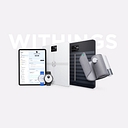


Brands AI recommends here
Named in 60% of answers
Named in 58% of answers
Best when you need near clinical‑grade results: InBody’s 8‑electrode hand‑to‑foot models deliver the most accurate body composition readings, but they cost more and are closer to professional devices.
Named in 58% of answers
Best budget fit for everyday trend monitoring: Renpho (Elis / MorphoScan) gives consistent body‑fat trends and decent app features at low cost, but it’s not a clinical‑grade measurement tool.
Named in 54% of answers
Source | Citation share |
|---|---|
 Best smart scales 2026: Track muscle mass, body fat percentage, bone density, and more | Live Sciencehttps://www.livescience.com/best-smart-scales | 6.0% |
 InBody Dial H20 | Body Composition Scale Most Accuratehttps://www.amazon.com/InBody-Composition-Accurate-Muscle-Eligible/dp/B085WBMBG1 | 3.6% |
 The 8 Best Smart Scales of 2026, Expert-Approved - Verywell Fithttps://www.verywellfit.com/best-smart-scales-4586856 | 3.0% |
 We tested 14 models to find the best body composition scales for 2026 — one stood outhttps://health.yahoo.com/your-body/weight-management/article/best-body-composition-scales-194358631.html | 2.7% |
 Best Smart Scales of 2025: Expert Recommendations | BodySpechttps://www.bodyspec.com/blog/post/best_smart_scales_of_2025_expert_recommendations | 2.6% |
 Expert-Tested: Best Smart Scales (2026) - Garage Gym Reviewshttps://www.garagegymreviews.com/best-smart-scales | 2.5% |
 Best smart scales: Top digital body composition scales | TechRadarhttps://www.techradar.com/best/best-smart-scales | 2.3% |
Best Body Fat Scales of 2025: Expert Pickshttps://www.bodyspec.com/blog/post/best_body_fat_scales_of_2025_expert_picks | 2.2% |
 Best smart scales 2026: expert tested and rated | Tom's Guidehttps://www.tomsguide.com/wellness/fitness/best-smart-scales | 2.0% |
Best Smart Scale Buying Guide (2026) - BodySpechttps://www.bodyspec.com/blog/post/best_smart_scale_buying_guide_2026 | 1.7% |
When it comes to tracking body composition like body fat percentage via bioelectrical impedance analysis (BIA), **no consumer smart scale offers absolute clinical accuracy** compared to a DEXA scan or underwater weighing. Consumer scales struggle with hydration levels, food intake, and foot-to-foot current paths.…
When it comes to tracking body composition like body fat percentage via bioelectrical impedance analysis (BIA), no consumer smart scale offers absolute clinical accuracy compared to a DEXA scan or underwater weighing. Consumer scales struggle with hydration levels, food intake, and foot-to-foot current paths.
However, the industry has shifted toward 8-electrode (segmental) BIA scales , which include a retractable handle. By passing current through both your feet and your hands, these scales measure your upper body, lower body, and torso separately, drastically improving precision and consistency over traditional 2-electrode foot-only scales.
Top brands and models known for the highest relative accuracy and consistency in consumer tracking include:
Key Takeaway for Accuracy
If absolute precision on body fat percentage matters most to you, invest in an 8-electrode scale with a hand-handle (like Withings or Arboleaf) rather than a standard flat glass scale. More importantly, always weigh yourself at the exact same time of day (ideally first thing in the morning after using the restroom and before drinking/eating) to minimize hydration-induced data swings.
If you'd like, let me know:
I can give you a direct product recommendation tailored to your goals.
If **body-fat percentage and body-composition accuracy** are your priority, I’d put **InBody** at the top—but there’s an important caveat: **no consumer smart scale measures body fat as accurately as a DEXA scan**. Smart scales use BIA, and hydration, food, exercise, and other factors can shift the estimate. [PubMed…
If body-fat percentage and body-composition accuracy are your priority, I’d put InBody at the top—but there’s an important caveat: no consumer smart scale measures body fat as accurately as a DEXA scan. Smart scales use BIA, and hydration, food, exercise, and other factors can shift the estimate.
Studies comparing InBody devices with DEXA have found strong correlations and relatively small individual errors, although InBody tends to systematically underestimate body-fat percentage by roughly 3 percentage points.
For home use, an InBody Dial such as the H20N is the option I'd choose if accuracy matters more than price or app features.
InBody H20N Whole Body Composition Scale - $299.00 (Shop WealthCare)
The Body Scan is particularly interesting because its handle provides eight-electrode, multi-frequency measurements and segmental analysis rather than relying solely on your feet.
Withings Body Scan - $499.95 (Withings)
If your goal is "My scale says 19% body fat and I want that to actually be 19%," none of these is reliable enough to promise that.
If your goal is "I want to know whether I'm becoming leaner over the next 3–6 months," a good BIA scale can be quite useful. Use it under the same conditions every time—ideally morning, after using the bathroom, before eating/drinking and before exercise. Consistency makes the trend much more meaningful.
My pick: InBody for the best body-composition measurement; Withings Body Scan for the best high-end home smart scale.
If you tell me your budget (e.g. <$100, $200, $500), I can narrow it down to the single best model and compare its accuracy, features, and price against the alternatives.
If **body-fat percentage accuracy** is your top priority, I’d choose **Withings**, specifically the **Withings Body Scan**. - **Withings Body Scan** - $499.95 (Best Buy) ### My ranking
If body-fat percentage accuracy is your top priority, I’d choose Withings, specifically the Withings Body Scan.
Withings Body Comp - $199.99 (Best Buy)
Roughly $200–$230 currently.
Tracks body fat, muscle, water and bone mass and adds cardiovascular metrics.
Independent comparisons put it ahead of the Garmin Index S2 for body-fat accuracy, although the evidence isn't as strong as I'd like for claiming a precise absolute error.
Withings Body Smart - $129.95 (Best Buy)
Around $130.
Gives you fat %, muscle, water, bone mass and visceral-fat index.
For tracking trends over time, I'd take this over spending $200 on a Garmin Index S2.
Garmin Index S2 - $199.99 (Target)
Excellent weight tracking and convenient Garmin Connect integration.
But its body-composition measurement is foot-to-foot BIA, so it has less information about your whole body than a scale with hand electrodes.
I wouldn't buy it specifically for the most accurate body-fat percentage.
No consumer smart scale can reliably tell you your true body-fat percentage. BIA estimates are affected by hydration, food, exercise, skin temperature and other factors. Even a good scale can be several percentage points away from DEXA. A peer-reviewed study comparing smart scales with DEXA found that weight was substantially more accurate than fat-mass and lean-mass estimates.
So I'd use the scale like this:
Same scale + same time of day + similar hydration/conditions → watch the trend, not the absolute number.
If you want the closest possible home measurement to DEXA, I'd go Withings Body Scan. If you want 90% of the usefulness for about $130, I'd get Withings Body Smart.
If you tell me your budget (e.g. <$100, <$200, or money-no-object), I can narrow it down to the single best model.
When it comes to consumer smart scales tracking body composition (like body fat percentage), absolute clinical accuracy is limited by the physics of **Bioelectrical Impedance Analysis (BIA)** . Standard foot-only BIA scales send a low-level electrical current through your lower body, meaning they estimate your upper…
When it comes to consumer smart scales tracking body composition (like body fat percentage), absolute clinical accuracy is limited by the physics of Bioelectrical Impedance Analysis (BIA) . Standard foot-only BIA scales send a low-level electrical current through your lower body, meaning they estimate your upper body composition using an algorithm rather than measuring it directly.
However, some brands stand out as significantly more advanced—and therefore more consistent and accurate for tracking trends—than standard budget scales.
A Quick Reality Check on Body Fat Accuracy
No home BIA smart scale will give you a 100% true absolute body fat percentage. Readings can swing by 2% to 5% based on:
Tip: To get the most accurate tracking possible, weigh yourself first thing in the morning after using the restroom and before consuming any water or food.
If you're shopping for a scale, let me know:
I can give you a tailored recommendation.


If **body-fat percentage accuracy is your #1 priority**, my pick is **InBody**—specifically the **InBody Dial H30**. It uses multi-frequency BIA with hand + foot electrodes, which is generally a better setup for whole-body composition than the basic foot-only scales. InBody says its technology has shown >98% agreement…
If body-fat percentage accuracy is your #1 priority, my pick is InBody—specifically the InBody Dial H30. It uses multi-frequency BIA with hand + foot electrodes, which is generally a better setup for whole-body composition than the basic foot-only scales. InBody says its technology has shown >98% agreement with DEXA in clinical studies, though that figure is manufacturer-reported rather than an independent head-to-head consumer-scale study.
$379.00
| Pick | Scale | Why |
|---|---|---|
| 🥇 | InBody Dial H30 | Excellent choice if body composition is the primary goal; multi-frequency, hand + foot measurement |
| 🥈 | Withings Body Scan 2 | Extremely sophisticated segmental measurement; Withings reports ≥99% DEXA correlation in internal testing www.withings.com |
| 🥉 | RENPHO MorphoScan Nova | Much cheaper, 8-electrode dual-frequency BIA and segmental analysis |
| Best value | Withings Body Smart | Good overall smart scale, but less sophisticated for body composition |
$219.99
No consumer smart scale can reliably tell you your "true" body-fat percentage the way a clinical DEXA scan can. BIA estimates are strongly affected by hydration, food/drink, exercise, skin temperature and other factors. Recent testing has found that different smart scales can produce dramatically different body-fat readings—even when used under controlled conditions.
So I'd use a smart scale primarily for trends, not the absolute number. For example, if your scale says 22% → 20% → 18% over several months under consistent measurement conditions, that's useful even if your actual DEXA value isn't exactly 18%.
If you want the most accurate at-home option: I'd choose InBody Dial H30.
If you want the most advanced overall health/body-composition station: Withings Body Scan 2 is arguably more impressive, with separate fat/muscle measurements for arms, legs and torso.
If you tell me your budget (e.g. <$150, <$300, or money-no-object), I can narrow it down to the best 2–3 scales and compare their actual accuracy evidence.
When it comes to consumer smart scales, **no single brand offers absolute clinical accuracy** for body fat percentage. Consumer smart scales rely on **Bioelectrical Impedance Analysis (BIA)** , which sends a minor, imperceptible electrical current through your body. Because electricity travels faster through water…
When it comes to consumer smart scales, no single brand offers absolute clinical accuracy for body fat percentage. Consumer smart scales rely on Bioelectrical Impedance Analysis (BIA) , which sends a minor, imperceptible electrical current through your body. Because electricity travels faster through water (muscle) than fat, it estimates your composition—but results can skew based on your hydration levels, salt intake, skin moisture, and when you last ate or exercised.
However, hardware design dramatically improves consistency and repeatability . Scales with handles and multi-frequency sensors perform significantly better than basic foot-to-foot models because they measure the upper and lower body separately rather than guessing the top half.
The top-performing smart scale brands for body composition tracking fall into these distinct categories:
Withings (Best for Advanced/Segmental Accuracy): The Withings Body Scan Go to product viewer dialog for this item. uses multi-frequency BIA combined with a retractable handlebar. This 8-electrode setup (hands and feet) provides true segmental body composition (breaking down fat and muscle mass in your arms, legs, and torso) and yields the highest consistency and detail available in a consumer-facing ecosystem.
Hume Health (Best Emerging High-End Option): The Hume Health Body Pod Go to product viewer dialog for this item. utilizes advanced multi-frequency sensors and a well-designed app ecosystem aimed closely at improving repeatability and tracking meaningful changes over time relative to standard baselines.
RENPHO (Best Value & Consistency for the Price): Models like the RENPHO MorphoScan Smart Body Scale Go to product viewer dialog for this item. offer multi-electrode/segmental analysis at a fraction of the cost of medical devices. If you want strong app tracking and consistent day-to-day trend tracking without spending over $200, Renpho is a market favorite.
Etekcity / Wyze (Best Budget Trend Trackers): Scales like the Etekcity HR Smart Fitness Go to product viewer dialog for this item. or Wyze Scale X Go to product viewer dialog for this item. use standard 4-electrode, single-frequency tech. While their absolute body fat percentage numbers might deviate from a clinical DEXA scan by several percentage points, they offer fantastic weight accuracy and reliable relative trends over time if you weigh yourself under the same conditions daily.
Tips for Getting the Most Accurate Readings
No matter which brand you choose, follow these rules to minimize BIA fluctuation:
Are you looking for a premium multi-electrode scale with a handle (like Withings or Renpho MorphoScan), or a budget-friendly option focused purely on daily weight and general trends?

If **body-fat percentage accuracy** is your priority—not just weight tracking—I'd put **InBody** at the top, with **Withings** as the best overall consumer alternative. ### My ranking 1. **InBody Dial H20N — best for body-composition tracking**
If body-fat percentage accuracy is your priority—not just weight tracking—I'd put InBody at the top, with Withings as the best overall consumer alternative.
$299.00
InBody has the strongest independent validation among the consumer-oriented options I found. Studies of InBody devices show very high repeatability and relatively small individual errors versus DEXA, although they can have a systematic tendency to underestimate body-fat percentage.
$499.95
Its big advantage is segmental, multi-frequency BIA with hand and foot electrodes, rather than relying only on your feet. Withings reports a 2025 clinical comparison with DEXA showing a 0.99 correlation for total fat mass, although that study was conducted by/for Withings, so I'd give independent evidence more weight.
$129.99
A good choice if you want automatic Wi-Fi tracking and useful trends without spending $400–500. But I wouldn't expect its body-fat number to be truly accurate to the decimal place.
No bathroom smart scale can accurately measure your actual body-fat percentage the way a DEXA scan can. They're using bioelectrical impedance (BIA), and hydration, food intake, exercise, skin temperature, and time of day can move the estimate substantially. A study comparing three consumer smart scales with DEXA concluded that their body-composition measurements weren't accurate enough to replace DEXA.
So I'd use a smart scale differently:
Bottom line: If you want the best home device specifically for tracking changes in body composition, I'd choose InBody H20N. If you want a more polished smart-health ecosystem and are willing to spend more, Withings Body Scan is compelling.
If you tell me your budget (e.g. under $100, $200, $300+), I can narrow it down to the single best scale for you.
For at-home tracking, **Withings** (specifically models like the [Withings Body Scan Go to product viewer dialog for this…
For at-home tracking, Withings (specifically models like the Withings Body Scan Go to product viewer dialog for this item. and Withings Body Smart Go to product viewer dialog for this item. ) and InBody are widely regarded as the most consistent and accurate brand ecosystems for body composition. While standard consumer smart scales rely solely on foot-to-foot bioelectrical impedance analysis (BIA), top-tier models from Withings and InBody use multi-frequency measurements combined with retractable handles (adding hand electrodes) to perform true segmental body composition analysis, measuring your arms, legs, and torso independently.
How Top Accuracy Brands Compare
| Brand & Model (Approx. Price) | Electrodes / Method | Key Metrics Tracked | Connectivity |
|---|---|---|---|
| Withings Body Scan Go to product viewer dialog for this item. (~$500) | 8-Electrode (Platform + Retractable Handle), Multi-frequency BIA | Segmental body fat/muscle (5 zones), 6-lead ECG, Vascular Age, EDA score | Wi-Fi + Bluetooth |
| InBody Dial H20 Go to product viewer dialog for this item. (~$349) | 8-Electrode (Thumb + Hand + Foot grips), Multi-frequency BIA | Segmental fat and muscle analysis, Weight, Percent body fat, BMI | Bluetooth |
| RENPHO MorphoScan Nova Go to product viewer dialog for this item. (~$180–$220) | Multi-frequency BIA with Handle | 50+ insights, Full-body analysis, visceral fat, muscle mass | Bluetooth |
| Garmin Index S2 Go to product viewer dialog for this item. (~$200) | Foot-only BIA sensors | Weight, Body fat %, skeletal muscle mass, body water, bone mass | Wi-Fi |
Understanding At-Home Accuracy Limitations
If you'd like, let me know your budget and whether you prefer a scale that syncs via Wi-Fi (so you don’t need your phone nearby) or Bluetooth , and I can help you pick the exact model.

If **body-composition accuracy** is the priority—not just weight accuracy—I'd choose **Withings**, particularly the **Body Scan**. ### [Withings Body Scan](https://www.apple.com/shop/product/hqyp2zm/a/withings-body-scan-connected-health-station-smart-scale?utm_source=chatgpt.com) *$499.95*
If body-composition accuracy is the priority—not just weight accuracy—I'd choose Withings, particularly the Body Scan.
$499.95
Withings Body Scan — best overall for body composition
Withings Body Smart — best value
$129.95
At roughly $130, this is probably what I'd buy for most people. It uses multi-frequency BIA and tracks body-fat percentage, muscle mass, water, visceral fat, etc.
InBody Dial H20/H30 — worth considering
$299.00
InBody has considerable experience with professional body-composition analyzers, and its home scales use hand-to-foot measurements. But I wouldn't assume that the InBody name automatically makes the home device more accurate than Withings.
Renpho / Eufy / Wyze — good for trends, not absolute accuracy
These can be perfectly useful if your goal is "Am I getting leaner over the next six months?" rather than "What is my actual body-fat percentage?" Recent testing still finds meaningful differences among consumer BIA scales.
No smart scale is truly accurate enough to treat its body-fat percentage as a measurement of fact. They're estimating body composition using bioelectrical impedance (BIA), and hydration, food intake, exercise, skin temperature and even time of day can move the estimate. A published comparison of commercial smart scales against DEXA found substantial errors in body-fat and lean-mass measurements.
So I'd use a smart scale this way:
Same scale + same conditions + long-term trend > chasing the "correct" percentage.
For example, weigh yourself first thing in the morning, after using the bathroom, before eating/drinking, and look at the 2–4 week trend. If the scale says 22% when your actual DEXA result is 25%, that's less important than whether it consistently moves from ~22% → 20% as you lose fat.
Bottom line:
If you tell me your budget (e.g. <$100, <$200, or money-no-object) and whether you use Apple Health, Fitbit, Garmin, or Samsung Health, I can narrow it down to the single best scale for you.
When it comes to tracking body fat percentage at home, **segmental multi-frequency BIA (Bioelectrical Impedance Analysis)** scales are the most technically advanced. Traditional smart scales only send an electrical current through your lower body (via your feet). Segmental scales add a **retractable handle** with hand…
When it comes to tracking body fat percentage at home, segmental multi-frequency BIA (Bioelectrical Impedance Analysis) scales are the most technically advanced. Traditional smart scales only send an electrical current through your lower body (via your feet). Segmental scales add a retractable handle with hand electrodes, sending current through your upper body and arms as well. This creates a full-body circuit that measures individual body segments (arms, legs, and torso) rather than guessing the upper body via algorithms.
The top choices for accuracy and advanced tracking include:
Widely considered the gold standard for consumer smart scales. It uses multi-frequency BIA combined with a pull-out handlebar to perform a true 5-zone segmental body composition analysis (fat and muscle breakdown for each arm, leg, and torso), alongside extra health metrics like a 6-lead ECG.
Built by the company famous for professional, clinical-use InBody machines found in doctors' offices and high-end gyms. The H30 Dial uses hand-and-foot multi-frequency electrodes for precise at-home segmental tracking.
Renpho MorphoScan Nova or Runstar 8E SmartScan Pro Go to product viewer dialog for this item. : Great mid-tier alternatives that also incorporate 8-electrode technology (hands and feet) for a fraction of the cost of premium medical brands.
Wyze Scale X or Etekcity HR Smart Fitness Scale Go to product viewer dialog for this item. : If you prefer a traditional foot-only scale, these budget-to-mid-range options offer fantastic consistency and app tracking for everyday trends, even if they lack upper-body hand sensors.
A Crucial Reality Check on Accuracy
No matter which brand you buy, BIA scales do not measure body fat directly —they estimate it by measuring electrical resistance and running it through an algorithm that factors in your height, weight, age, and gender.
Absolute numbers can deviate significantly (sometimes by several percentage points) from clinical "gold standard" tests like a DEXA scan. However, a high-end segmental scale is exceptional at tracking trends over time . To get the most accurate, repeatable data from any smart scale:
Would you like me to help you choose based on your budget, or are you interested in comparing Withings vs. InBody feature sets?