Data as of Aug 25, 2026 · Based on 305 AI responses from ChatGPT Search and Google AI Mode · See how Parse measures this
To coordinate EV charging with other 240-volt appliances, select a solution based on your panel's remaining capacity. A 


Brands AI recommends here
Named in 69% of answers
Best for homeowners seeking complete control. It replaces the main electrical panel to allow app-based monitoring and automatic load shedding, ensuring high-power appliances always have the necessary capacity.
Named in 59% of answers
Named in 52% of answers
Named in 39% of answers
Source | Citation share |
|---|---|
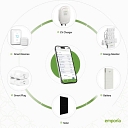 Charge Multiple EVs and Skip the Panel Upgrade: Intelligent Load Sharing is Here | Emporia Energyhttps://www.emporiaenergy.com/blog/introducing-intelligent-load-sharing/ | 6.5% |
 Smart Electrical Panel Guide 2025: Complete Comparison & Installationhttps://solartechonline.com/blog/smart-electrical-panel-guide/ | 4.1% |
simpleSwitch | EV Energy Management System & Load Managementhttps://simpleswitch.io/ | 4.0% |
NeoCharge Smart Splitter 1450 | SMUDhttps://smudenergystore.com/I-NEOSMRTSP-01-XXXX-1450-V1.html | 2.4% |
 Treehouse - NeoCharge Smart Splitter Guidehttps://resources.treehouse.pro/post/neocharge-smart-splitter-guide | 2.2% |
 SPAN Smart Electrical Panel - Vortex Solar Supplyhttps://vortexsolarsupply.com/products/span-smart-electrical-panel | 1.7% |
Smart Energy Management & Load Sharing Devicehttps://simpleswitch.io/products/50-amp-simpleswitch-evems/ | 1.7% |
 NeoCharge Smart Splitterhttps://getneocharge.com/pages/smart-splitter | 1.5% |
NEMA 14-30 Smart Splitter - EV/Dryer | NeoChargehttps://getneocharge.com/products/nema-14-30 | 1.5% |
PowerSmart | Emporia Home Energy Management Platformhttps://www.emporiaenergy.com/emporia-ev-charger-with-load-management | 1.4% |
If you’re planning for **several 240-V loads**—say an EV charger plus heat pump, electric water heater, range, or another EV—the key is **dynamic, service-level load management**, not merely an app that schedules appliances. ### My shortlist System | EV + other 240-V loads | Best fit | My take
If you’re planning for several 240-V loads—say an EV charger plus heat pump, electric water heater, range, or another EV—the key is dynamic, service-level load management, not merely an app that schedules appliances.
| System | EV + other 240-V loads | Best fit | My take |
|---|---|---|---|
| span.io + SPAN Drive | Excellent | New panel / whole-home electrification | Best premium whole-home approach |
| Emporia PowerSmart + Pro EV Charger | Excellent | Existing panel / retrofit | Best value and my first choice for most retrofits |
| Schneider Electric Square D Energy Center | Very good | New/replacement panel, solar/battery | Strong integrated alternative |
| Siemens Inhab Load Manager | Very good | Existing panel, dedicated load management | Excellent if you don't want a smart-panel replacement |
| Leviton Smart Load Center | Good | Leviton-based installation | Worth considering, but I'd verify the exact load-management architecture |
The Emporia PowerSmart approach is particularly compelling because it measures the home's actual electrical consumption and continuously adjusts EV charging current as other loads turn on and off. So if the dryer, heat pump, or water heater suddenly consumes a lot of power, the EV doesn't simply keep pulling 48 A—it backs down. When capacity becomes available, it increases charging again.
That's substantially better for your use case than a system that merely says "don't run the EV between 5–7 PM."
Emporia also now has Intelligent Load Sharing for multiple Emporia EV chargers. It can divide available EV capacity between chargers while PowerSmart handles the whole-house constraint. The two functions can be used together.
span.io is attractive if you're doing a major electrical renovation anyway. Its PowerUp system monitors and manages high-current appliances such as EV charging and electric HVAC to keep the home's total demand within its service capacity.
I'd choose SPAN over a retrofit solution when you're thinking "I want an energy-management platform for the entire house for the next 10–20 years," particularly if solar, battery backup, and multiple future electrification loads are involved.
I wouldn't replace a perfectly good panel solely to get EV load management, though.
Schneider's ecosystem is another strong choice for a new smart-panel installation, especially when you're combining EV + solar + battery + HVAC. Independent 2026 comparisons put Schneider near the top of the smart-panel field, although those rankings aren't a substitute for field reliability data.
If you have a conventional panel you want to keep, Siemens Inhab Load Manager is worth a serious look. It monitors total household energy use and permits a controlled high-current load to operate when sufficient capacity exists.
This is particularly interesting if your electrician wants a purpose-built load-management system rather than an entire smart-panel ecosystem.
For your specific description, I'd rank them:
One important distinction: EV load sharing and whole-home load management aren't the same thing. If you have two EVs, you want charger-to-charger sharing. If you have one EV + heat pump + dryer + water heater, you want service-level dynamic load management. If you expect both scenarios, choose a system capable of both.
For reliability, I'd also have the electrician verify that the proposed system is being installed under the applicable NEC automatic load-management provisions and that your local AHJ/utility accepts that configuration. Emporia specifically says PowerSmart is approved as an alternative wiring method under the NEC, but local implementation still matters.
If you tell me your service size (100/150/200 A), panel brand, and the 240-V loads you expect, I can narrow this down to the best architecture and show how the loads would be coordinated.
I'd choose SPAN over a retrofit solution when you're thinking "I want an energy-management platform for the entire house for the next 10–20 years," particularly if solar, battery backup, and multiple future electrification loads are involved.
I wouldn't replace a perfectly good panel solely to get EV load management, though.
Schneider's ecosystem is another strong choice for a new smart-panel installation, especially when you're combining EV + solar + battery + HVAC. Independent 2026 comparisons put Schneider near the top of the smart-panel field, although those rankings aren't a substitute for field reliability data.
If you have a conventional panel you want to keep, Siemens Inhab Load Manager is worth a serious look. It monitors total household energy use and permits a controlled high-current load to operate when sufficient capacity exists.
Coordinating multiple 240-volt loads—especially balancing a power-hungry Level 2 EV charger (typically 32A to 48A) alongside heavy appliances like heat pumps, electric dryers, or ranges—comes down to whether you want a **whole-home smart panel** , a **hardwired automatic load controller** , or a **plug-and-play smart…
Coordinating multiple 240-volt loads—especially balancing a power-hungry Level 2 EV charger (typically 32A to 48A) alongside heavy appliances like heat pumps, electric dryers, or ranges—comes down to whether you want a whole-home smart panel , a hardwired automatic load controller , or a plug-and-play smart splitter.
The most reliable, code-compliant systems available for this coordination fall into three distinct tiers:
These replace your traditional main or sub-panel, offering digital circuit-level monitoring and automated load shedding.
If you don't need a $3,000+ whole-home smart panel upgrade, dedicated automatic sub-assembly controllers are code-approved (NEC 702.9 / CEC equivalents) to let an EV charger share an existing service capacity safely.
If your constraint is physical breaker space or avoiding heavy electrical remodeling for a single 240V outlet:
- **[NeoCharge Smart Splitter Go to product viewer dialog for this item.](https://www.google.com/search?ibp=oshop&prds=pvt:hg,pvo:29,imageDocid:15621882811850669228,gpcid:6710805238222302230,headlineOfferDocid:12714209993859230450,catalogid:11942538385026577569,productDocid:1105546700856544796&q=product&sa=X&ved=2ahUKEwihuoq-ncaWAxUNTkEAHTW_KVwQxa4PeggIAggBCBkQBw):** Allows an EV charger and a 240V appliance (like a dryer on a NEMA 14-30 or 14-50 outlet) to share a single wall outlet safely. It automatically prioritizes the appliance—if your dryer turns on, the NeoCharge pauses the EV feed and resumes it automatically when the cycle finishes.[[1]](https://www.google.com/search?q=product&prds=pvt:hg,productid:1105546700856544796,catalogid:11942538385026577569,gpcid:6710805238222302230&ibp=oshop)
- **Splitvolt / VEVOR Automatic Switchers:** Similar budget-friendly plug-in or inline relay boxes that prioritize primary 240V lines over secondary EV charging feeds with built-in overcurrent protection breakers.[[1]](https://www.google.com/search?q=product&prds=pvt:hg,productid:11123307057055475388,catalogid:15453482230015265080,gpcid:5646274523886923036,mid:576462549189931983&ibp=oshop)
To help narrow down which system fits your specific home, could you share:
When managing heavy 240-volt loads—like an EV charger, heat pump, or induction range—without triggering a costly main service upgrade (such as moving from 1 0 0 A or 2 0 0 A up to 4 0 0 A ), a few industry-leading smart panels and load-management systems stand out for reliability and…
When managing heavy 240-volt loads—like an EV charger, heat pump, or induction range—without triggering a costly main service upgrade (such as moving from 1 0 0 A or 2 0 0 A up to 4 0 0 A ), a few industry-leading smart panels and load-management systems stand out for reliability and coordination.
Here are the top systems used to dynamically prioritize and share loads:
To help narrow down which system fits your setup best, let me know:

If your goal is **reliable coordination of an EV charger with several other 240-V loads**—heat pump, electric water heater, dryer, range, pool equipment, etc.—I’d separate the options into **true whole-home load management** and **EV-specific load management**. ### My shortlist System | Best fit | How it handles…
If your goal is reliable coordination of an EV charger with several other 240-V loads—heat pump, electric water heater, dryer, range, pool equipment, etc.—I’d separate the options into true whole-home load management and EV-specific load management.
| System | Best fit | How it handles competing 240-V loads | My take |
|---|---|---|---|
| Emporia PowerSmart + Pro EV Charger | Existing panel with EV + several large loads | Continuously measures whole-home current and dynamically raises/lowers EV charging | Best value / strongest fit for your use case |
| SPAN Panel | Replacing the main panel anyway | Monitors circuits and can pause selected loads when the home approaches its capacity | Best integrated smart-panel approach |
| Emporia Load Sharing | Two or more EVs | Shares available EV-circuit capacity among Emporia chargers | Excellent for multi-EV, but not a whole-home controller by itself |
| Sense | Monitoring/analytics | Excellent circuit-level monitoring, but less of a comprehensive automatic load controller | Good monitoring complement, not my first choice for load coordination |
Emporia Energy has one of the more directly applicable systems. Its PowerSmart setup uses a Vue energy monitor to measure the home's total consumption and dynamically adjust the EV charger's amperage. So if the dryer, heat pump, and water heater suddenly come on, EV charging backs down; when those loads turn off, charging can increase again.
That's particularly attractive when you don't want to replace the panel. The Pro charger includes the Vue monitor and PowerSmart, and Emporia says the system is intended to keep total consumption within the panel's capacity.
One important limitation: PowerSmart controls Emporia EV chargers, rather than acting as a universal controller for every manufacturer's 240-V appliance.
For two or more EVs, Emporia also now has Intelligent Load Sharing, which dynamically divides available EV capacity among connected Emporia chargers.
SPAN takes the more comprehensive approach. The SPAN Panel monitors electrical loads throughout the home and can automatically pause selected circuits when total consumption approaches the home's maximum capacity. SPAN currently says this load-management functionality is primarily available for EV charging loads.
I'd favor SPAN when you're already planning a panel replacement, especially if you want circuit-level visibility and control to grow into a more electrified home.
If you're keeping a perfectly serviceable existing panel, however, I wouldn't replace it solely to obtain EV load management.
If by "multiple 240-V loads" you primarily mean multiple EV chargers, Emporia's Load Sharing is unusually straightforward. Multiple Emporia chargers can share a circuit or dedicated EV subpanel, automatically redistributing available amperage as vehicles connect/disconnect.
But there's an important distinction:
Load Sharing ≠ whole-home load management.
For example, it can coordinate two EVs, but PowerSmart is what watches the entire house and reacts when your dryer, HVAC, water heater, etc. consume capacity. Emporia explicitly describes the two functions as complementary.
Sense can monitor dedicated 120/240-V circuits—including EV chargers, heat pumps, dryers and water heaters—using its Flex sensors.
I'd choose it primarily when energy monitoring and understanding what's consuming electricity is the priority. For automatically coordinating an EV charger against the home's aggregate electrical limit, I'd put Emporia/PowerSmart and SPAN ahead of it.
For a homeowner planning significant electrification:
One subtle but important point: don't think of this as simply "adding up the breaker sizes." A proper load-management design can take advantage of the fact that your dryer, water heater, HVAC, and EV charger aren't necessarily drawing their maximum power simultaneously. The electrician still needs to design the system according to the applicable electrical code and the specific equipment's listing/installation requirements.
If you tell me your main service size (e.g. 100A/150A/200A), the 240-V loads you have or plan to add, and whether you have one or two EVs, I can rank the systems specifically for that configuration and show where the bottleneck is likely to be.
That's particularly attractive when you don't want to replace the panel. The Pro charger includes the Vue monitor and PowerSmart, and Emporia says the system is intended to keep total consumption within the panel's capacity.
One important limitation: PowerSmart controls Emporia EV chargers, rather than acting as a universal controller for every manufacturer's 240-V appliance.
For two or more EVs, Emporia also now has Intelligent Load Sharing, which dynamically divides available EV capacity among connected Emporia chargers.
SPAN takes the more comprehensive approach. The SPAN Panel monitors electrical loads throughout the home and can automatically pause selected circuits when total consumption approaches the home's maximum capacity. SPAN currently says this load-management functionality is primarily available for EV charging loads.
I'd favor SPAN when you're already planning a panel replacement, especially if you want circuit-level visibility and control to grow into a more electrified home.
If you're keeping a perfectly serviceable existing panel, however, I wouldn't replace it solely to obtain EV load management.
If by "multiple 240-V loads" you primarily mean multiple EV chargers, Emporia's Load Sharing is unusually straightforward. Multiple Emporia chargers can share a circuit or dedicated EV subpanel, automatically redistributing available amperage as vehicles connect/disconnect.
But there's an important distinction:
Load Sharing ≠ whole-home load management.
For example, it can coordinate two EVs, but PowerSmart is what watches the entire house and reacts when your dryer, HVAC, water heater, etc. consume capacity. Emporia explicitly describes the two functions as complementary.
Sense can monitor dedicated 120/240-V circuits—including EV chargers, heat pumps, dryers and water heaters—using its Flex sensors.
I'd choose it primarily when energy monitoring and understanding what's consuming electricity is the priority. For automatically coordinating an EV charger against the home's aggregate electrical limit, I'd put Emporia/PowerSmart and SPAN ahead of it.
If your goal is **reliably coordinating a 240-V EV charger with other big loads**—HVAC/heat pump, electric range, dryer, water heater, pool equipment, etc.—I’d prioritize systems that perform **real-time, code-listed load management**, rather than panels that merely monitor energy use. ### My current ranking System |…
If your goal is reliably coordinating a 240-V EV charger with other big loads—HVAC/heat pump, electric range, dryer, water heater, pool equipment, etc.—I’d prioritize systems that perform real-time, code-listed load management, rather than panels that merely monitor energy use.
| System | EV + other 240-V loads | Best for | My take |
|---|---|---|---|
| SPAN Panel + SPAN Drive | Excellent | Whole-home electrification | Best overall |
| Schneider Energy Center / SmartAmp | Excellent for EV load management | New Schneider-based installations | Very strong alternative |
| Siemens Inhab Load Manager | Very good | Keeping an existing panel | Best retrofit-oriented option |
| Emporia Vue + EV charger/PowerSmart | Very good | Lower-cost retrofit | Excellent value |
| ABB ReliaHome | Promising/very good | Smart-panel replacement | Worth considering, particularly with ABB ecosystem |
span.io paired with span.io is the most compelling choice if you're deliberately planning for multiple future 240-V loads.
SPAN's PowerUp system continuously monitors the home's electrical demand and can dynamically manage loads to stay within the service rating. With SPAN Drive, the EV charger itself can continuously vary its charging rate, rather than simply switching the charger on and off.
That distinction matters. Suppose your 200-A service is simultaneously powering a heat pump, electric range and dryer. Instead of treating the EV as a fixed 48-A load, SPAN Drive can reduce its charging rate while those appliances are consuming power, then increase charging again as capacity becomes available. SPAN says Drive can reach 48 A when sufficient capacity exists.
Why I'd choose it: You're not just solving today's EV problem; you're creating a control layer for an increasingly electrified house.
One caveat: SPAN Drive requires a SPAN Panel, so this makes the most sense if you're already replacing your main panel.
se.com has recently introduced SmartAmp load management for Schneider Charge. It adjusts EV charging speed in real time according to the home's electrical load and, importantly, Schneider says the load-management function continues operating even when Wi-Fi is unavailable.
That's a meaningful reliability advantage over systems whose load-management logic depends heavily on cloud connectivity.
I'd put Schneider near the top if your electrician is already building around the Square D/Schneider ecosystem.
The Inhab Load Manager is designed to monitor total home consumption and allow an EV charger or another large load to consume power only when capacity is available. It is explicitly designed for retrofit or new construction.
This is the direction I'd investigate if your existing panel is perfectly good and you don't need circuit-by-circuit smart-panel control.
Emporia's PowerSmart uses a Vue energy monitor to measure whole-home consumption and dynamically adjust EV charging. Emporia says its monitor samples home consumption 3,000 times per second and PowerSmart increases or decreases EV charging as other loads change.
It can also coordinate multiple Emporia EV chargers, dividing available capacity among vehicles.
The important distinction is that Emporia is primarily an energy-monitor/load-management ecosystem, rather than a complete replacement smart panel. For a homeowner who wants to keep a conventional panel, that's actually an advantage.
The biggest thing I'd avoid is choosing based solely on an app saying a panel is "smart." Circuit monitoring isn't the same thing as certified power-control/load management. For your application, have the electrician verify that the specific combination is an approved NEC/UL power-control system (PCS) for the loads you're trying to coordinate and that your local AHJ will accept the load calculation.
For a house with 200-A service and, say, an EV + 240-V heat pump + electric range + dryer + water heater, my first conversation would be with an installer about SPAN, then compare its installed cost against Schneider or Siemens load management without replacing the whole panel. SPAN specifically documents its PowerUp system as a UL-listed PCS/EMS and says it can manage EVs and other high-current appliances without exceeding the home's service capacity.
se.com has recently introduced SmartAmp load management for Schneider Charge. It adjusts EV charging speed in real time according to the home's electrical load and, importantly, Schneider says the load-management function continues operating even when Wi-Fi is unavailable.
That's a meaningful reliability advantage over systems whose load-management logic depends heavily on cloud connectivity.
I'd put Schneider near the top if your electrician is already building around the Square D/Schneider ecosystem.
The Inhab Load Manager is designed to monitor total home consumption and allow an EV charger or another large load to consume power only when capacity is available. It is explicitly designed for retrofit or new construction.
This is the direction I'd investigate if your existing panel is perfectly good and you don't need circuit-by-circuit smart-panel control.
Emporia's PowerSmart uses a Vue energy monitor to measure whole-home consumption and dynamically adjust EV charging. Emporia says its monitor samples home consumption 3,000 times per second and PowerSmart increases or decreases EV charging as other loads change.
When coordinating multiple 240-volt loads—like an EV charger, a heat pump, an electric dryer, or an induction range—on a constrained main service panel, homeowners have three distinct tiers of hardware to choose from. Selecting the most reliable system depends on whether you want whole-home circuit intelligence, a…
When coordinating multiple 240-volt loads—like an EV charger, a heat pump, an electric dryer, or an induction range—on a constrained main service panel, homeowners have three distinct tiers of hardware to choose from. Selecting the most reliable system depends on whether you want whole-home circuit intelligence, a dedicated subpanel, or a targeted appliance-sharing switch.
These systems replace your standard breaker box entirely or integrate natively with heavy-duty ecosystem hubs. They use real-time current transformers (CTs) on every slot to monitor aggregate home consumption and dynamically throttle or shed non-essential 240V loads (like your EV) when the home approaches its service limit.
SPAN Panel: Widely considered a gold standard for circuit-level management. It provides automated tiering (prioritizing essentials like fridges while treating EVs as flexible loads), integrates cleanly with major solar-plus-storage systems (such as Tesla Powerwall 3), and features a polished app interface.
Excellent if you are pairing your home loads with large-capacity home backup batteries (like the DELTA Pro Ultra). It manages high-draw 240V appliances and EV charging via the PowerPulse ecosystem with built-in AI off-peak and solar optimization.
Highly rated for robust engineering and whole-home dynamic load balancing, making it a favorite among installers dealing with complex multi-load retrofits.
If your primary bottleneck is an overloaded 100A or 200A main panel and you want to avoid a $3,000–$6,000 service upgrade just to plug in a car, dedicated standalone EVEMS hardware intercepts the circuit safely.
If you do not need to rewrite your entire breaker box but want intelligent power distribution between multiple vehicles or a single constrained sub-feed , smart networked chargers are the cleanest route.
Offers intelligent load sharing across multiple chargers on a shared circuit or subpanel, communicating via cloud or local sensors to divide available amperage safely without monthly subscription fees.
Utilizes local hardwired communication (CAN bus) for multi-charger power sharing or whole-home current tracking via an external meter, ensuring fast response times independent of cloud connectivity.
To help narrow down which system fits your setup best, could you share:
If your goal is **reliably coordinating a 240-V EV charger with other large household loads**—HVAC, electric water heater, dryer, range, pool equipment, etc.—I’d prioritize **dynamic whole-home load management** over a panel that merely gives you energy monitoring. ### My current shortlist | System | Best fit | EV +…
If your goal is reliably coordinating a 240-V EV charger with other large household loads—HVAC, electric water heater, dryer, range, pool equipment, etc.—I’d prioritize dynamic whole-home load management over a panel that merely gives you energy monitoring.
| System | Best fit | EV + appliance coordination | Reliability take |
|---|---|---|---|
| Emporia PowerSmart + Pro EV Charger | Best overall for an existing panel | Excellent — continuously adjusts EV charging as household demand changes | My top pick for a retrofit |
| Siemens Inhab Load Manager | Dedicated load-management installation | Excellent — monitors total home load and permits the controlled load only when capacity exists | Very compelling if your electrician prefers Siemens |
| Schneider/Square D Energy Center | New smart-panel installation, especially solar/battery | Very good, with integrated whole-home monitoring and energy management | Strong choice for a full electrical-system rebuild |
| SPAN Panel | Premium smart-home/solar/battery ecosystem | Very good, particularly where you want circuit-level control and backup management | Excellent premium option, but more expensive/complex |
| Leviton Smart Load Center + energy monitor | Leviton-based new construction/retrofit | Good, especially if paired with compatible smart breakers/load controls | Attractive ecosystem, but I'd verify the exact EV load-management configuration before buying |
The standout for your particular use case is Emporia. Its PowerSmart system measures the home's total electrical consumption and dynamically raises or lowers EV charging power as appliances turn on and off. Emporia says the system can also coordinate multiple EV chargers; its newer Intelligent Load Sharing handles charger-to-charger allocation, while PowerSmart handles the whole-house capacity.
$994.66
The Siemens Inhab is particularly interesting if you don't actually need a fancy replacement smart panel. It's a dedicated UL-approved load-management system that monitors total home consumption and allows an EV charger or other large load to operate when capacity is available. That can be a simpler architecture than replacing the entire service panel.
Existing 100/150/200-A panel + adding an EV:
Emporia PowerSmart is my first choice. It directly solves the problem you're describing: "let the car have whatever capacity the house isn't currently using." It can slow charging when the HVAC/water heater/dryer kicks in and accelerate again when those loads drop.
Two EVs:
Emporia becomes even more compelling. Its Intelligent Load Sharing can divide available capacity between multiple Emporia chargers, while PowerSmart can protect the overall service capacity. The two functions address different levels of the electrical system and can be used together.
You're replacing the entire electrical panel anyway:
I'd seriously consider Schneider Electric's Square D Energy Center. It's a 200-A smart panel with integrated Wiser energy monitoring and is designed around EV, solar, battery and generator integration.
You want the most sophisticated whole-home energy/backup ecosystem:
SPAN is worth considering, particularly if solar + battery + backup circuits are part of the plan. But I wouldn't buy a premium smart panel solely to solve EV load sharing.
Don't confuse EV load sharing with whole-home load management.
For example:
For a homeowner contemplating multiple 240-V loads, I'd therefore favor a system that measures the actual service-level current and dynamically controls the EV charging rate, rather than one that simply turns appliances on/off according to a schedule.
Bottom line: For a retrofit, Emporia PowerSmart + Pro EV charger is the strongest combination I'd investigate first. For a new/replacement panel, Square D Energy Center is one of the more compelling integrated choices. And if you want a relatively focused load-management device rather than a whole new smart panel, Siemens Inhab deserves a close look.
One caveat: have the electrician verify the exact NEC/UL-listed automatic load-management configuration for your service and local AHJ before choosing equipment. The way the controlled loads are wired matters just as much as the app or smart-panel features.
Coordinating multiple 240-volt loads—like an EV charger, heat pump, or electric dryer—without triggering a costly main service upgrade (such as moving from 100A/200A to 400A) comes down to choosing the right tier of **EV Energy Management Systems (EVEMS)** or smart…
Coordinating multiple 240-volt loads—like an EV charger, heat pump, or electric dryer—without triggering a costly main service upgrade (such as moving from 100A/200A to 400A) comes down to choosing the right tier of EV Energy Management Systems (EVEMS) or smart distribution.
The most reliable solutions span three distinct hardware approaches depending on whether you want whole-home circuit intelligence, a subpanel manager, or a simple plug-and-play circuit share.
If you want granular control over every breaker in your home, a digital smart panel replaces your traditional breaker box. They use real-time current sensors on every circuit and dynamically throttle or shed non-essential 240V loads (like a dryer or heat pump) the second your main service approaches capacity.
If your main constraint is an existing feeder line or subpanel capacity rather than needing to turn individual lights on and off remotely, dedicated power managers offer a bulletproof, code-approved hardware fallback.
If you just want to share an existing 240V outlet (like a NEMA 14-30 dryer or 14-50 range circuit) with an EV charger without pulling new wire through the walls.
To help narrow down which system fits your setup best, tell me:
Coordinating multiple 240-volt loads—such as an EV charger, heat pump, electric dryer, or induction stove—on a standard residential service (like 100A or 200A) requires a reliable **Power Control System (PCS)** . The market has split into comprehensive whole-home smart panels, flexible retrofit sub-panels, and…
Coordinating multiple 240-volt loads—such as an EV charger, heat pump, electric dryer, or induction stove—on a standard residential service (like 100A or 200A) requires a reliable Power Control System (PCS) . The market has split into comprehensive whole-home smart panels, flexible retrofit sub-panels, and dedicated plug-and-play load managers.
The most reliable and code-compliant systems for coordinating EV charging with other heavy household loads include:
To help narrow down which system fits your setup best, could you share:
If your goal is **reliably coordinating a 240-V EV charger with other large household loads**—heat pump, electric water heater, range, dryer, hot tub, etc.—I’d separate true **dynamic load management** from “smart panel” features like scheduling and monitoring. ### My ranking | System | EV + other 240-V loads | Best…
If your goal is reliably coordinating a 240-V EV charger with other large household loads—heat pump, electric water heater, range, dryer, hot tub, etc.—I’d separate true dynamic load management from “smart panel” features like scheduling and monitoring.
| System | EV + other 240-V loads | Best use case | My take |
|---|---|---|---|
| SPAN Panel + SPAN Drive | Excellent | Whole-home electrification / replacing panel | Best integrated option |
| Siemens Inhab Load Manager | Excellent | Keep existing panel; manage several big loads | Best dedicated load-management option |
| Lumin Smart Panel | Very good | Retrofit/subpanel + solar/battery | Good if you want selective load shedding |
| Leviton Load Center + 2nd-gen smart breakers | Good | New panel, monitoring + controllable circuits | Strong panel ecosystem, but less compelling specifically for real-time EV throttling |
| Schneider/Square D energy management | Good | Schneider solar/storage ecosystem | Worth considering when the rest of the system is Schneider |
| Simple EV load-sharing device | Good–excellent | EV is the main problem | Often the lowest-cost and most robust solution |
SPAN is probably my first choice if you're replacing the main panel anyway.
Its PowerUp system monitors the home's total electrical demand and can manage loads according to a priority sequence. With SPAN Drive, the EV charger can actually modulate its charging current, rather than simply switching the EV on/off. SPAN says Drive can charge at up to 48 A and dynamically reduce charging when, for example, HVAC and an electric range are simultaneously consuming substantial power.
That's a meaningful distinction: variable EV charging is much nicer than repeatedly dropping and reconnecting the charger.
SPAN also specifically positions PowerUp for adding EVs, electric HVAC, induction cooking and other large loads without necessarily increasing the home's service size.
I'd choose SPAN when: you're doing a major electrical renovation, expect multiple future 240-V loads, and want one system coordinating the house.
Siemens's Inhab Load Manager is compelling if you don't want to replace the entire panel.
It continuously monitors available capacity and can manage large loads including EV chargers, water heaters and heat pumps. Importantly, Siemens says it works with any brand of EV charger or load center.
The tradeoff is that its basic load-management approach is more about disconnecting/reconnecting a load when capacity crosses a threshold, rather than continuously modulating the EV's amperage like SPAN Drive. Siemens explicitly describes the load manager as temporarily disconnecting the load and automatically reconnecting it when sufficient capacity returns.
But that's not necessarily a disadvantage for reliability. A dedicated hardware load manager doing one job can be an excellent architecture.
It can also accommodate multiple Load Managers at one property, which is interesting if you're trying to coordinate several independent 240-V loads.
Lumin is particularly attractive when you're building around solar/battery backup and want to control only the big discretionary loads.
Lumin specifically calls out EV charging, air conditioning and pool pumps as loads that benefit from its control, and it can use battery state-of-charge information to shed/reconnect designated circuits.
I'd put it ahead of a conventional smart breaker panel for someone whose primary objective is load management rather than merely energy monitoring.
Leviton has made substantial improvements to its Load Center ecosystem. Its current system combines the Load Center, 2nd-generation smart breakers, Whole Home Energy Monitor and EV charging through My Leviton. It supports circuit monitoring, schedules and automated load shedding.
I'd consider it a very good smart electrical panel, particularly if you want conventional breakers with smart capabilities rather than an all-in-one energy-management architecture.
But I wouldn't buy it solely because you want an EV to dynamically share capacity with a heat pump and water heater. The manufacturer's documentation emphasizes breaker control, scheduling and load shedding; that's different from SPAN Drive's explicit real-time EV current modulation.
If the problem is essentially:
“I have a 200-A service, but EV + heat pump + water heater occasionally exceed what the service can supply.”
you may be better served by a dedicated, listed energy/load-management device.
For example, Siemens explicitly designed Inhab to sit between the panel and a large load and prevent the panel from exceeding its capacity.
That's often a more sensible engineering solution than replacing a perfectly good panel with a $10k-ish smart-panel system.
If you're planning multiple 240-V loads, I'd prioritize systems in this order:
Replacing the panel anyway → SPAN + SPAN Drive
Keeping the existing panel → Siemens Inhab Load Manager
Solar/battery + selective load shedding → Lumin
Want smart breakers/monitoring and a conventional panel architecture → Leviton
And I'd specifically ask the electrician:
That last group of questions is more important than the “smart panel” label.
Bottom line: For multiple future 240-V loads, SPAN is the most polished integrated solution, while Siemens Inhab is probably the solution I'd investigate first if your existing panel is otherwise fine. The latter lets you solve the actual capacity problem without turning the entire electrical system into a smart-panel project.