Data as of Aug 25, 2026 · Based on 295 AI responses from ChatGPT Search and Google AI Mode · See how Parse measures this
To add a Level 2 charger to a 100-amp panel, you need a system that monitors real-time household energy usage and adjusts the EV charger speed to avoid overloading your home. Options include smart chargers from Emporia and 

Brands AI recommends here
Named in 62% of answers
Named in 49% of answers
Named in 33% of answers
Named in 30% of answers
Source | Citation share |
|---|---|
 How To Fast-Charge An EV On A 100-Amp Panel (No ...https://cleantechnica.com/2025/07/23/how-to-fast-charge-an-ev-on-a-100-amp-panel-no-upgrade-required/ | 7.9% |
What to Do When You Want an EV Charger But Don’t Have the Electrical Capacityhttps://callateamtoday.com/adding-a-smart-ev-charger-to-your-home-for-improved-load-management/ | 4.8% |
 Options for Level 2 Charging at home on 100A service : r/evcharginghttps://www.reddit.com/r/evcharging/comments/1j4msy3/options_for_level_2_charging_at_home_on_100a/ | 3.5% |
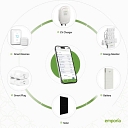 PowerSmart Load Management | Emporia Energyhttps://www.emporiaenergy.com/emporia-ev-charger-with-load-management/ | 2.6% |
Emporia Pro EV Charger | Emporia Energyhttps://www.emporiaenergy.com/pro-ev-charger/ | 2.5% |
 Do You Need An EV Charger Panel Upgrade For Home?https://simpleswitch.io/ev-charger-panel-upgrade/ | 2.4% |
What Size Electrical Panel Do I Need for EV Charging?https://simpleswitch.io/what-size-electrical-panel-do-i-need/ | 1.9% |
simpleSwitch | EV Energy Management System & Load Managementhttps://simpleswitch.io/ | 1.8% |
How to Install EV Chargers Without Upgrading Your Panelhttps://www.bvmcontracting.com/blog/install-ev-charger-without-panel-upgrade | 1.7% |
 Emporia launches Intelligent Load Management for its Level 2 EV chargershttps://chargedevs.com/newswire/emporia-launches-intelligent-load-management-for-its-level-2-ev-chargers/ | 1.6% |
Yes. **A 100-amp service does not automatically mean you need a panel upgrade for Level 2 EV charging.** The key is using a charger or external energy-management system that dynamically limits EV charging so the home's total load stays within the 100A service rating. ### Best options System | How it avoids a panel…
Yes. A 100-amp service does not automatically mean you need a panel upgrade for Level 2 EV charging. The key is using a charger or external energy-management system that dynamically limits EV charging so the home's total load stays within the 100A service rating.
| System | How it avoids a panel upgrade | 100A service? | My take |
|---|---|---|---|
| Emporia Pro + PowerSmart | Whole-home CT monitoring continuously adjusts EV charging current | Yes | ⭐ Best overall |
| Emporia Classic + PowerSmart | Adds PowerSmart to the Classic charger with a Vue monitor | Yes | Good if you already own the charger |
| Siemens Inhab Load Manager + compatible EVSE | External load-management device monitors service and enables EV charging only when capacity exists | Yes | ⭐ Best external/brand-agnostic approach |
| Emporia ChargeBoost | Uses utility smart-meter data to dynamically control charging | Yes, 100A/150A | Excellent where available, but limited rollout |
| Wallbox Pulsar Plus + Power Boost | Can dynamically regulate charging based on measured household consumption | Potentially | Worth considering, but verify the exact U.S. configuration/code approval |
This is the solution I'd look at first for a 100A house.
The Emporia Pro comes with a Vue 3 energy monitor and PowerSmart. The monitor measures the home's total consumption, and PowerSmart continuously raises or lowers the EV charging current so the combined load doesn't exceed the service rating. Emporia specifically says the system is designed to work with 60A and 100A service and can avoid a panel upgrade.
For example, imagine a 100A service:
So a charger advertised as 48A doesn't mean it continuously consumes 48A. It's the maximum; PowerSmart dynamically controls the actual current.
Emporia says the Pro can be hardwired at up to 48A on a 60A branch circuit, although your electrician determines the appropriate circuit, guaranteed charge rate and service/load calculation.
This is interesting if you don't want to be locked into one manufacturer's charger.
The Siemens Inhab Load Manager is an external energy-management system that monitors the home's total electrical usage and allows an EV charger (or another large load) to operate when sufficient capacity is available. It's UL-approved and designed for retrofit applications.
This approach can be particularly attractive when your electrician wants a dedicated, independent load-management device rather than relying on the EV charger's software.
If you already have an Emporia Classic, you don't necessarily need to replace it. Emporia offers PowerSmart as an upgrade, with the required Vue energy monitor. The current listed software upgrade is $125, while the monitor/hardware requirements depend on what you already own.
This is a particularly clever approach, but availability is the catch.
ChargeBoost connects an Emporia EV charger directly to certain utility smart meters and uses the meter's real-time information to determine how much capacity is available. Emporia says it's intended specifically for homes with 100A or 150A service that would otherwise need an upgrade.
As of the latest information I found, though, ChargeBoost is a pilot with PG&E and requires an Itron Riva 5 smart meter, so I wouldn't assume it's available in Pennsylvania.
Wallbox has its Power Boost energy-management ecosystem, and the Pulsar Plus can adjust its charging output. However, I'd distinguish this from the Emporia solution when you're specifically trying to solve a 100A service/load-calculation problem.
For a 100A installation, I would have the electrician verify that the specific Wallbox + meter/energy-management configuration is an approved Automatic Load Management System (ALMS) installation in your jurisdiction rather than assuming that "smart charger" alone eliminates the service-capacity issue.
A regular 40A or 48A smart charger isn't enough.
For example, simply buying a Wi-Fi charger and setting it to 32A doesn't necessarily solve the electrical calculation. The electrician still has to account for the EV load as a continuous load.
What you want is dynamic load management—sometimes called an Energy Management System (EMS) or Automatic Load Management System (ALMS)—that actively monitors the service and controls the EVSE.
Emporia describes PowerSmart as monitoring the entire home thousands of times per second and adjusting EV current as other loads change.
My ranking:
One important caveat: load management doesn't magically create electrical capacity. Your electrician still needs to perform the required load calculation and establish a minimum/guaranteed charging current. Emporia's installation documentation specifically says the guaranteed charge rate must be determined by a licensed electrician using NEC Article 220 or applicable local requirements.
If you tell me your EV, whether you have electric heat/central AC/electric water heater/dryer/range, and whether your 100A panel is main-breaker or fuse, I can estimate how much charging current you'd realistically get and whether 32A, 40A, or 48A makes sense.
This is a particularly clever approach, but availability is the catch.
ChargeBoost connects an Emporia EV charger directly to certain utility smart meters and uses the meter's real-time information to determine how much capacity is available. Emporia says it's intended specifically for homes with 100A or 150A service that would otherwise need an upgrade.
As of the latest information I found, though, ChargeBoost is a pilot with PG&E and requires an Itron Riva 5 smart meter, so I wouldn't assume it's available in Pennsylvania.
Wallbox has its Power Boost energy-management ecosystem, and the Pulsar Plus can adjust its charging output. However, I'd distinguish this from the Emporia solution when you're specifically trying to solve a 100A service/load-calculation problem.
For a 100A installation, I would have the electrician verify that the specific Wallbox + meter/energy-management configuration is an approved Automatic Load Management System (ALMS) installation in your jurisdiction rather than assuming that "smart charger" alone eliminates the service-capacity issue.
A regular 40A or 48A smart charger isn't enough.
For example, simply buying a Wi-Fi charger and setting it to 32A doesn't necessarily solve the electrical calculation. The electrician still has to account for the EV load as a continuous load.
What you want is dynamic load management—sometimes called an Energy Management System (EMS) or Automatic Load Management System (ALMS)—that actively monitors the service and controls the EVSE.
Emporia describes PowerSmart as monitoring the entire home thousands of times per second and adjusting EV current as other loads change.
My ranking:
Adding a Level 2 EV charger to a 100-amp electrical service without paying for an expensive main service upgrade is entirely possible . Under NEC guidelines (specifically Article 625.42), certified **Energy Management Systems (EMS)** or **Demand Control/Load Shedding systems** allow you to dynamically manage or…
Adding a Level 2 EV charger to a 100-amp electrical service without paying for an expensive main service upgrade is entirely possible . Under NEC guidelines (specifically Article 625.42), certified Energy Management Systems (EMS) or Demand Control/Load Shedding systems allow you to dynamically manage or interrupt the EV charging load when total household consumption approaches your panel’s limit.
The top-tier hardware and smart load management options available for 100-amp homes include:
To help narrow down the best fit, could you tell me:
Yes. A **100-amp service does not automatically mean you need a panel upgrade** to install Level 2 charging. The key is using **dynamic load management** (also called an Automatic Load Management System, or ALMS) that continuously monitors the home's total load and throttles the EV charger when the house is using a…
Yes. A 100-amp service does not automatically mean you need a panel upgrade to install Level 2 charging. The key is using dynamic load management (also called an Automatic Load Management System, or ALMS) that continuously monitors the home's total load and throttles the EV charger when the house is using a lot of electricity.
The strongest options I found are:
| System | How it handles 100A service | Best for |
|---|---|---|
| Emporia Pro + PowerSmart | Monitors whole-home load with Vue 3 and continuously adjusts EV charging | Best overall / most flexible |
| Tesla Wall Connector + Tesla Remote Meter | Dynamically adjusts charging based on panel load | Best if you have a Tesla or want NACS |
| Siemens Inhab Load Manager | Sits between the panel and EV circuit and disconnects/reconnects the EV load as capacity changes | Best charger-agnostic hardware solution |
The Emporia Pro is specifically designed for this situation. Its PowerSmart system uses a Vue 3 energy monitor to measure the home's total electrical consumption and automatically raise or lower the EV's charging current. Emporia explicitly says the system can work with 60A or 100A service and avoid a panel upgrade.
For example, if your 100A service is currently drawing 70A, the charger might be allowed only a relatively small charging current. If the dryer, oven and A/C shut off, PowerSmart can increase the EV's charging rate. The result is variable Level 2 charging rather than a fixed 32–48A load.
The Pro includes the Vue 3 monitor; the older Emporia Classic can also use PowerSmart, but requires the additional monitoring hardware/software.
Tesla's current Wall Connector/Universal Wall Connector supports Dynamic Power Management when paired with the Tesla Remote Meter. The meter measures the home's electrical load and the Wall Connector adjusts its charging current in real time. Tesla specifically describes this as a way to avoid an electrical service upgrade in homes with limited capacity.
For a 100A service, Tesla's documentation gives an especially useful example: the installer can configure an 80A maximum conductor limit for a 100A main, with the EV charging rate then adjusted underneath that ceiling as household loads change.
The system can theoretically deliver up to 48A when enough capacity exists, but it may drop substantially when other large loads are running. Tesla's documentation supports lower breaker configurations as well: 50A breaker/40A output, 40A/32A, 30A/24A, etc.
Important: Tesla's Dynamic Power Management is for a single Wall Connector; it isn't the same thing as Tesla's Group Power Management for multiple chargers.
This is an interesting alternative because the load manager isn't tied to a particular EV charger brand. Siemens says the Inhab Load Manager can work with any EV charger brand and monitors the home's energy consumption to determine when capacity is available.
Its approach is slightly different from Emporia/Tesla: when the home's electrical load reaches the configured threshold, it can disconnect the EV load, then reconnect it when sufficient capacity returns. Siemens says it can handle an EV circuit up to 60A and is intended specifically to avoid panel/service upgrades.
That's potentially very attractive if you already have a preferred EVSE.
If you're buying everything new: I'd lean toward Emporia Pro + PowerSmart. It provides genuinely continuous load adjustment, so you don't simply have the charger switching on and off.
If you own a Tesla: the Wall Connector + Remote Meter is an excellent solution and has very good integration with the vehicle/charger.
If you want to use a different EV charger: the Siemens Inhab Load Manager is worth having an electrician price out because it isn't locked to one EVSE manufacturer.
One important caveat: "100A service" alone isn't enough to determine whether this will work. An electrician needs to perform the required load calculation and verify the panel, service conductors, breaker space, wiring, and local AHJ requirements. Load management solves the capacity problem; it doesn't make an otherwise unsafe or obsolete panel acceptable.
Also, don't confuse a charger that merely lets you set its amperage with true load management. Setting a 32A charger manually may make the installation possible in some cases, but it doesn't automatically reduce charging when your A/C, oven, dryer, etc. turn on. The systems above actually manage the load dynamically.
Adding a Level 2 EV charger to a 100-amp electrical service without a costly main panel upgrade is entirely possible using **Energy Management Systems (EMS)** or **smart load-sharing/splitter devices** . Under the National Electrical Code (NEC 725.25 / 625.42), these devices dynamically monitor your home’s total…
Adding a Level 2 EV charger to a 100-amp electrical service without a costly main panel upgrade is entirely possible using Energy Management Systems (EMS) or smart load-sharing/splitter devices . Under the National Electrical Code (NEC 725.25 / 625.42), these devices dynamically monitor your home’s total electrical load and throttle or temporarily pause EV charging when total consumption approaches the home's limit.
The top hardware solutions and smart systems available to safely manage a Level 2 charger on 100-amp service include:
To help narrow down the best fit, tell me:
Adding a Level 2 EV charger to a 100-amp electrical service without paying for a costly main panel or service upgrade ($3,000–$6,000+) is entirely possible using an **Electric Vehicle Energy Management System (EVEMS)** or smart dynamic load…
Adding a Level 2 EV charger to a 100-amp electrical service without paying for a costly main panel or service upgrade ($3,000–$6,000+) is entirely possible using an Electric Vehicle Energy Management System (EVEMS) or smart dynamic load management.
Under NEC guidelines, these systems act as a "traffic cop", monitoring your home's total electrical draw in real time via current transformers (CTs) on your service mains. If your household load spikes (e.g., your dryer, AC, and stove turn on simultaneously), the system automatically throttles or temporarily pauses the EV charger so your total draw never exceeds your 100-amp limit.
The top smart chargers and load management options for a 100-amp service include:
If you'd like to narrow down which system fits your setup best, tell me:

Yes. A 100-amp service **does not automatically mean you need a service/panel upgrade** to install Level 2 charging. The key is **dynamic load management**: the charger monitors the home's total electrical demand and automatically reduces its charging current when the house is using more power. The strongest current…
Yes. A 100-amp service does not automatically mean you need a service/panel upgrade to install Level 2 charging. The key is dynamic load management: the charger monitors the home's total electrical demand and automatically reduces its charging current when the house is using more power.
The strongest current options I found are:
| System | 100A service | How it works | Best fit |
|---|---|---|---|
| Emporia Pro + PowerSmart | Yes | Vue monitor measures whole-home load; charger continuously adjusts its output | Best overall for a 100A home |
| Tesla Universal Wall Connector + Dynamic Power Management | Yes, with appropriate installation | Separate Tesla-approved meter/CTs monitor panel load and dynamically limit charging | Good if you want Tesla hardware |
| Emporia Classic + PowerSmart upgrade | Yes | Adds dynamic load management to an existing compatible Emporia charger | Good if you already own Emporia |
| Emporia ChargeBoost | Yes, but limited availability | Uses a utility smart meter to manage charging without a panel upgrade | Interesting utility-integrated option |
Emporia specifically says its Pro can work with 60A or 100A service. Its PowerSmart system uses a Vue energy monitor to measure the home's real-time consumption and continuously adjust EV charging so the combined load stays within the service capacity.
For example, with a 100A service, if the house is currently consuming 70A, the charger can back down rather than allowing the total to exceed the allowable limit. When the dryer, oven, HVAC, etc. shut off, charging can increase again.
Emporia says PowerSmart supports installation of its 48A charger without an electrical service-panel upgrade, although the actual maximum charging rate depends on the electrician's installation and the home's load calculation.
Important: 48A is the charger's maximum capability, not what you should expect continuously from a 100A service. A heavily loaded 100A house may spend considerable time charging at 16–30A or less.
Tesla now documents Dynamic Power Management for the Universal Wall Connector. It uses a Tesla-approved power meter and CTs in the electrical panel to measure the home's available capacity and automatically adjust charging current. Tesla explicitly describes it as useful for installations with limited power where you want to avoid an electrical upgrade.
Tesla also allows the installer to configure a lower maximum charging current depending on the circuit. Its documentation lists, for example:
Dynamic management then adjusts the actual current according to the home's instantaneous load.
Caveat: the Tesla system requires the additional power-meter/CT installation and has specific supported configurations, so I'd have the electrician verify compatibility with your particular 100A service before buying.
If you already have an Emporia Classic Level 2 charger, Emporia offers a PowerSmart upgrade rather than requiring you to replace the charger. It requires the appropriate Vue energy monitor and software; Emporia currently lists a $125 software-only upgrade or $200 for the monitor + upgrade, depending on what you already own.
This is a newer approach: instead of measuring the panel with a conventional energy monitor, ChargeBoost communicates with the utility-provided smart meter. Emporia says it is designed specifically for 100A and 150A homes that would otherwise need a service upgrade.
The big catch is availability: as of Emporia's January 2026 documentation, ChargeBoost is a pilot with PG&E and requires an Itron Riva 5 Smart Meter.
If starting from scratch: I'd put Emporia Pro + PowerSmart at the top of the list.
It's specifically designed around this problem, and Emporia explicitly documents 100A installations.
If you prefer Tesla: the Universal Wall Connector + Dynamic Power Management is a legitimate alternative, provided the electrician confirms the supported configuration and meter installation.
One important distinction: load management doesn't magically create additional electrical capacity. It makes the EV charger a flexible load. If your house is already drawing near the 100A limit, the charger may have to throttle substantially—or temporarily stop charging—when large loads are running.
Also, the electrician still needs to perform the applicable load calculation, verify the panel/service equipment, wiring, breaker capacity, grounding, and local permitting requirements. The fact that a charger has "smart load management" doesn't by itself guarantee that every 100A installation is permissible.
If you tell me what major loads you have (electric range, dryer, water heater, HVAC/heat pump, etc.) and whether you want 32A, 40A, or 48A charging, I can estimate whether a 100A service is likely to work and which of these systems makes the most sense.
Yes. A **100-amp service does not automatically rule out Level 2 charging**. The key is using an EV charger or external energy-management system that dynamically limits the charger so the home's total load stays within the service capacity. ### Best options for a 100A home | Option | How it handles 100A service | My…
Yes. A 100-amp service does not automatically rule out Level 2 charging. The key is using an EV charger or external energy-management system that dynamically limits the charger so the home's total load stays within the service capacity.
| Option | How it handles 100A service | My take |
|---|---|---|
| Emporia Pro + PowerSmart | Monitors whole-home load with a Vue 3 and continuously raises/lowers EV charging current | Best overall for most homeowners |
| Tesla Wall Connector + Tesla Remote Meter | Measures the service conductors and dynamically adjusts charging | Best if you have a Tesla or want a simple integrated system |
| Wallbox Pulsar Plus + Power Boost meter | Real-time household monitoring adjusts EV charging power | Good alternative, especially for non-Teslas |
| Siemens Inhab Load Manager | External load-management device can control an EV charger or other large load | Best if you want charger-brand independence / broader load management |
| Emporia Classic + PowerSmart | Adds the same basic dynamic load-management capability to the Classic | Good lower-cost Emporia route |
$599.00
Emporia's PowerSmart monitors the home's total electrical consumption through a Vue energy monitor and automatically adjusts EV charging. If the dryer, HVAC, water heater, etc. are consuming a lot, the EV gets less power; when those loads shut off, the EV gets more. Emporia specifically says PowerSmart is designed for 60A and 100A service panels and can allow installation without a panel upgrade.
The interesting part is that the charger doesn't have to run at a fixed 40 or 48 amps. For example, with a 100A service, it might charge at 24A while the house is heavily loaded and 40–48A when the house has plenty of capacity.
Emporia says PowerSmart is an NEC-approved alternative wiring method, although your local AHJ/electrician still needs to approve the particular installation.
$595.00
This is another particularly good solution. Tesla's Dynamic Power Management uses the Tesla Remote Meter and CTs to measure the home's actual load and continuously adjust the Wall Connector's output. Tesla explicitly describes it as a way to avoid an electrical service upgrade.
Tesla gives a useful illustration of the flexibility:
So a 100A house might, for example, have the Wall Connector on a 30A or 40A circuit and let Dynamic Power Management increase/decrease the actual charging current as household demand changes.
One important detail: Tesla's current system requires the Gen 3 Wall Connector or Universal Wall Connector plus the Tesla Remote Meter for Dynamic Power Management.
Wallbox's Power Boost is conceptually very similar: a power meter monitors the home's real-time consumption and the Pulsar Plus dynamically adjusts EV charging to avoid exceeding the home's available capacity.
$699.99
This is worth considering if you want a charger that isn't tied to Tesla or Emporia.
$994.66
This is a different approach. Instead of the charger itself doing all the load management, the Siemens Inhab Load Manager sits in the electrical system and controls a large load such as an EV charger based on available capacity. Siemens says it can work with any EV charger brand and is specifically intended to avoid panel/service upgrades.
Its behavior can be more "load shedding" oriented than Emporia/Tesla—for example, temporarily disconnecting the controlled load when the house reaches its threshold, then reconnecting it when capacity returns. Siemens documents the system as an NEC Energy Management System and recommends consulting the local AHJ for final code compliance.
Don't assume that "100A service + smart charger = automatically OK."
An electrician should perform a service/load calculation first. A 100A service has only 100A available—not 100A of EV charging capacity. Depending on the home's existing loads, the charger may need to be limited substantially.
For example, a 100A service could potentially support:
100A service → existing house loads → dynamically allocated remainder → EV
rather than:
100A service → house loads + fixed 40/48A EV load
That's exactly what the load-management systems accomplish.
Also, "no panel upgrade" doesn't mean "no electrical work." You may still need a new 2-pole breaker, appropriately sized conductors, conduit, disconnecting means, and possibly space or other modifications in the existing panel.
🥇 Emporia Pro + PowerSmart — strongest combination of charger + whole-home dynamic management, particularly if maximizing charging speed is important.
🥈 Tesla Universal Wall Connector + Remote Meter — excellent if you're in the Tesla ecosystem; Dynamic Power Management is very well documented.
🥉 Wallbox Pulsar Plus + Power Boost — solid alternative with sophisticated load management.
Siemens Inhab — particularly attractive if you want an independent load-management system that can control an EV charger regardless of manufacturer.
If you tell me what appliances you have (electric heat, electric water heater, dryer, range, AC, etc.) and whether the charger would be in the garage or outdoors, I can estimate what charging amperage a typical 100A service could realistically support and compare 24A vs. 32A vs. 40A vs. 48A charging.
Adding a Level 2 EV charger to an older **100-amp electrical panel** is entirely possible without paying for a costly service upgrade to 200 amps. The secret lies in **smart load management systems** or **smart EV chargers with dynamic power sharing** , which monitor your home's total electrical draw in real-time and…
Adding a Level 2 EV charger to an older 100-amp electrical panel is entirely possible without paying for a costly service upgrade to 200 amps. The secret lies in smart load management systems or smart EV chargers with dynamic power sharing , which monitor your home's total electrical draw in real-time and automatically throttle or pause EV charging when your household load spikes (like when your AC compressor and dryer kick on at the same time).
Here are the best options available for 100-amp homes:
Dedicated Smart EV Chargers with Dynamic Load Management
These chargers come with external current transformers (CTs) that clamp onto your main service wires to measure total incoming current. If your home approaches the 100-amp (or 80% continuous safety limit of 80 amps), the charger instantly scales down.
Widely considered a gold standard for 100-amp retrofits. By adding the Wallbox Energy Meter (which includes the CT clamps), the Pulsar Plus dynamically adjusts charging speed anywhere from 6 A up to 48 A based on real-time household energy usage.
The Emporia ecosystem pairs their whole-home energy monitor with their Wi-Fi enabled EV charger. The system communicates locally via your home network to throttle the charger if your total circuit hits a pre-configured threshold (e.g., setting a strict cap for a 100-amp main).
For Tesla owners (or CCS owners with an adapter), the Gen 3 Wall Connector Go to product viewer dialog for this item. can be set up with third-party meter integrations or specialized energy meters to dynamically ramp charging up and down based on real-time grid constraints.
Panel-Integrated & Sub-Panel Load Management
If you prefer a hardware-level solution that doesn't rely purely on Wi-Fi or smart meter communication, automatic load shedding switches are a rugged alternative.
If you'd like, let me know:
I can help you estimate whether a dynamic smart charger or a hardwired DCC switch makes the most sense for your specific setup.
A 100-amp service **does not automatically rule out a Level 2 EV charger**. The key is using an **EV Energy Management System (EVEMS)** or a charger with **dynamic load management** that watches your home's total electrical usage and reduces EV charging when other loads are running. This can often avoid a service or…
A 100-amp service does not automatically rule out a Level 2 EV charger. The key is using an EV Energy Management System (EVEMS) or a charger with dynamic load management that watches your home's total electrical usage and reduces EV charging when other loads are running. This can often avoid a service or panel upgrade, depending on your home's calculated load and local code requirements.
Some options that are commonly used:
| System | How it helps on 100A service | Notes |
|---|---|---|
| Emporia Energy Emporia Pro EV Charger + PowerSmart | Dynamically adjusts charging amperage based on whole-home consumption | One of the more homeowner-friendly solutions; uses an Emporia Vue energy monitor and can reduce charging speed when the house is near its limit. www.emporiaenergy.comwww.emporiaenergy.com |
| Tesla Wall Connector + Dynamic Power Management | Uses a power meter to monitor available capacity and modulates charging | Requires additional Tesla-approved metering hardware; useful when you want a Wall Connector but have limited service capacity. www.tesla.com |
| Wallbox Pulsar Plus with Power Boost | Adjusts EV charging based on household demand | Commonly paired with a current transformer/metering setup; availability and installation details vary by region. |
| DCC Electric DCC-12 EV Energy Management System | Physically disconnects/reconnects the EV charger circuit based on total load | A more traditional EVEMS approach: rather than continuously throttling, it pauses charging when the home load is too high. |
| Utility-integrated systems (where available) | Utility smart meter helps control EV load | For example, Emporia’s ChargeBoost program is designed specifically for avoiding upgrades in some 100A/150A homes, though availability depends on utility participation. help.emporiaenergy.com |
With 100A service, many homeowners do not need a full 48A (11.5 kW) charger. Examples:
A managed 32A charger often replenishes a typical EV overnight, so the practical difference versus a larger charger may be small.
For many 100A homes, the best-value setups are usually:
If you share your main breaker size, heating type (gas/electric/heat pump), water heater type, and the EV model, I can estimate whether you likely need load management and what charging amperage would be realistic.
Adding a Level 2 EV charger to a 100-amp service home without a costly panel upgrade ($2,000 to $4,500) is entirely possible using a certified **Electric Vehicle Energy Management System (EVEMS)** or smart load management device . Under the National Electrical Code (NEC Article 220), these systems dynamically monitor…
Adding a Level 2 EV charger to a 100-amp service home without a costly panel upgrade ($2,000 to $4,500) is entirely possible using a certified Electric Vehicle Energy Management System (EVEMS) or smart load management device . Under the National Electrical Code (NEC Article 220), these systems dynamically monitor your home’s total electrical draw and throttle or pause EV charging when household demand approaches your 100-amp limit.
The best smart chargers and hardware solutions designed for this scenario fall into a few clear categories:
Comes bundled with the Vue Home Energy Monitor that installs on your main service lines. Its PowerSmart technology measures your real-time household load thousands of times per second and dynamically ramps the charger (up to a 48A hardwired maximum capability) up or down so you never trip your main breaker. (PowerSmart is native to the Pro model and can be added as an upgrade to the Classic model).
Wallbox offers robust dynamic load management by adding external power meters (such as a Rogowski coil meter or EM340) to your main breaker feed. The charger communicates locally or via cloud to throttle the EV charging rate based on real-time home consumption.
A dedicated, compact hardware controller (non-charger specific) that can be paired with virtually any major Level 2 EV charger (allowing up to a 48A charger on a 100-amp service). It acts as a hardwired safety gatekeeper, automatically shedding or modulating the EV load when the panel hits preset thresholds.
A hardwired power management unit installed between your panel and the EV charger. It continuously monitors the main breaker; if total household consumption exceeds an 80% threshold of the 100-amp service, it temporarily cuts power to the EV charger until the house load drops.
If you don't want a hardwired setup and already have an existing 240V appliance outlet (like a NEMA 14-30 or 14-50 dryer/range outlet), this plug-in smart splitter lets you share the circuit safely. It automatically pauses EV charging whenever the heavy appliance (dryer) turns on, resuming EV charging once it finishes, requiring zero panel work.
To help narrow down the ideal solution, tell me: