Data as of Aug 25, 2026 · Based on 301 AI responses from ChatGPT Search and Google AI Mode · See how Parse measures this
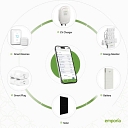
If you already have Enphase gear, choose the 

Brands AI recommends here
Named in 63% of answers
Named in 61% of answers
Named in 47% of answers
Named in 44% of answers
Source | Citation share |
|---|---|
EV chargers for home | Enphasehttps://enphase.com/ev-chargers/home | 4.4% |
Home EV Charger Installation Options for New EV Buyershttps://www.solaredge.com/en/solaredge-blog/home-ev-charger-installation | 4.1% |
SolarEdge ONE EV Charger – Optimized Charging for Home & Businesshttps://www.solaredge.com/en/products/solaredge-one-ev-charger | 2.7% |
EV charging and solar | Enphasehttps://enphase.com/learn/home-energy/solar-basics/ev-charging-and-solar | 2.5% |
 Which EV Charger Is The BEST For Solar? - YouTubehttps://www.youtube.com/watch | 2.3% |
Charge Faster with SolarEdge Home EV Chargerhttps://www.solaredge.com/us/products/residential/solaredge-home-ev-charger | 1.9% |
 SolarEdge Home EV Charger - Efficient Level 2 Solar Charginghttps://www.solarelectricsupply.com/solaredge-home-ev-charger | 1.5% |
Home EV Charger Installation for New EVs - SolarEdgehttps://www.solaredge.com/en/solaredge-blog/home-ev-charger-installation | 1.5% |
Smart Energy Management with SPAN Panel and EV Integrationhttps://www.sumzeroenergysystems.com/blog/span-panel-ev-integration-for-smart-home-energy-management | 1.4% |
 Best Level 2 EV Chargers in 2026 - EnergySagehttps://www.energysage.com/ev-charging/ev-charging-stations/ | 1.4% |
If you’re planning **solar + a home battery + an EV**, I’d choose the EV charger as part of the energy-management system—not just as a standalone Level 2 charger. ### My 2026 shortlist Charger | Best pairing | Solar/battery integration | Smart load management | My take
If you’re planning solar + a home battery + an EV, I’d choose the EV charger as part of the energy-management system—not just as a standalone Level 2 charger.
| Charger | Best pairing | Solar/battery integration | Smart load management | My take |
|---|---|---|---|---|
| Enphase Energy IQ EV Charger 2 | Enphase solar + IQ Battery | ⭐⭐⭐⭐⭐ | ⭐⭐⭐⭐⭐ | Best overall for Enphase |
| Tesla Universal Wall Connector | Tesla Solar + Powerwall | ⭐⭐⭐⭐⭐ | ⭐⭐⭐⭐ | Best for Tesla ecosystem |
| SolarEdge Home EV Charger | SolarEdge inverter + battery | ⭐⭐⭐⭐⭐ | ⭐⭐⭐⭐ | Excellent if you're already going SolarEdge |
| Wallbox Pulsar/Power Boost setup | Mixed-brand systems | ⭐⭐⭐⭐ | ⭐⭐⭐⭐⭐ | Strong choice for flexibility |
| Emporia EV Charger | Mixed-brand solar/battery | ⭐⭐⭐⭐ | ⭐⭐⭐⭐⭐ | Good value and whole-home monitoring |
If your solar installer is proposing Enphase microinverters and IQ Batteries, this is the one I'd put at the top of the list.
The charger communicates with the Enphase energy system rather than simply following a timer. It can use excess solar, account for household consumption and battery status, and dynamically reduce EV charging when the house's electrical load rises. Enphase says its solar-aware charging checks for surplus solar every 30 seconds, while its Power Control Software can dynamically manage the EV and other household loads to stay within the main-breaker limit.
It also has useful battery-specific modes: Self-Consumption, Savings/AI Optimization, and Full Backup, which can prioritize keeping the home battery charged rather than draining it into the car.
An especially interesting feature for a new solar installation is that Enphase's newer IQ EV Charger 2 is designed around broader home energy management rather than merely "solar charging."
If you're considering Tesla Solar + Powerwall, the Tesla charger is the natural alternative.
Tesla's current Home energy-management system can coordinate solar, Powerwall, EV charging and other connected loads, adjusting EV charging based on solar availability, electricity rates and household needs.
The big advantage is ecosystem integration. If you expect to own a Tesla and use Powerwall, having everything managed through Tesla Home is compelling. The Universal Wall Connector also makes more sense if you aren't certain what EV you'll own next because it supports both NACS and J1772 vehicles through its connector arrangement.
If your installer is proposing SolarEdge inverters and batteries, I'd stay within that ecosystem rather than mixing brands. SolarEdge's EV charger can use available solar energy and coordinate with the SolarEdge energy-management system.
That ecosystem approach is particularly valuable when you want the charger to participate in decisions such as "should this kilowatt go to the EV, the battery, the house, or the grid?"
Don't focus too heavily on the charger's maximum amperage. For a solar/battery home, I'd prioritize:
Enphase is particularly interesting on that last point: its current bidirectional charger architecture is designed for EV charging, home backup (V2H), and potentially grid export (V2G), subject to vehicle and system compatibility.
This is actually more important than choosing between 40A and 48A.
A 48A charger at 240 V can demand about 11.5 kW. Add an electric range, heat pump, water heater and other loads and a conventional 200A panel can become the limiting factor.
That's why I'd have the solar installer design EV charging + solar + battery + panel load management together. Enphase, for example, explicitly supports configurations where its charger dynamically adjusts EV charging to prevent exceeding the main-breaker limit, potentially avoiding a panel upgrade.
My bottom line: If you're starting from scratch, I'd choose Enphase IQ EV Charger 2 + Enphase solar + IQ Battery for the most sophisticated solar/battery/EV coordination. If you prefer Tesla's ecosystem, Powerwall + Universal Wall Connector is the other standout. For SolarEdge solar, use SolarEdge's charger; for a mixed-brand system, I'd look closely at Wallbox or Emporia rather than locking yourself into an ecosystem.
If you tell me which EV you have/plan to buy, your utility, whether you're considering Enphase/Tesla/SolarEdge solar, and whether your house has a 100A or 200A panel, I can narrow this to the best 2–3 configurations for your particular home.
If your installer is proposing SolarEdge inverters and batteries, I'd stay within that ecosystem rather than mixing brands. SolarEdge's EV charger can use available solar energy and coordinate with the SolarEdge energy-management system.
That ecosystem approach is particularly valuable when you want the charger to participate in decisions such as "should this kilowatt go to the EV, the battery, the house, or the grid?"
Don't focus too heavily on the charger's maximum amperage. For a solar/battery home, I'd prioritize:
Enphase is particularly interesting on that last point: its current bidirectional charger architecture is designed for EV charging, home backup (V2H), and potentially grid export (V2G), subject to vehicle and system compatibility.
When planning a rooftop solar and battery storage setup, choosing an EV charger (EVSE) that belongs to the **same hardware/software ecosystem** as your inverter and battery yields the tightest integration and smartest load management. Mixing independent brands often results in "dumb" tracking or high latency in…
When planning a rooftop solar and battery storage setup, choosing an EV charger (EVSE) that belongs to the same hardware/software ecosystem as your inverter and battery yields the tightest integration and smartest load management. Mixing independent brands often results in "dumb" tracking or high latency in shifting power loads.
Top-performing home EV chargers for solar, battery, and smart load management are categorized below by their ecosystem strengths.
To help narrow down the ideal choice for your home, could you share:
If you're designing **solar + home battery + EV charging as one energy system**, I’d prioritize chargers that can *dynamically respond to home consumption and solar production*, rather than simply offering Wi-Fi scheduling. ### My top picks - **Emporia Pro Smart EV Charger** - $599.00 (Home Power Tech)
If you're designing solar + home battery + EV charging as one energy system, I’d prioritize chargers that can dynamically respond to home consumption and solar production, rather than simply offering Wi-Fi scheduling.
| Charger | Solar integration | Dynamic load management | Battery/system integration | Best fit |
|---|---|---|---|---|
| Emporia Pro | ⭐⭐⭐⭐⭐ | ⭐⭐⭐⭐⭐ | ⭐⭐⭐⭐ | Best overall for solar + battery |
| SolarEdge Home EV Charger | ⭐⭐⭐⭐⭐ | ⭐⭐⭐⭐ | ⭐⭐⭐⭐⭐* | Best if you're using SolarEdge |
| Tesla Universal Wall Connector | ⭐⭐⭐ | ⭐⭐⭐⭐ | ⭐⭐⭐⭐⭐* | Best for Tesla ecosystem |
| Wallbox Pulsar Plus + meter | ⭐⭐⭐⭐ | ⭐⭐⭐⭐ | ⭐⭐⭐⭐ | Flexible, sophisticated systems |
*Integration is strongest when the rest of your system is from the same ecosystem.
For a new rooftop-solar installation, this is probably the charger I'd choose unless you have a compelling reason to stay within another manufacturer's ecosystem.
The important feature isn't the 48-amp output; it's PowerSmart dynamic load management. The Emporia Pro uses a panel energy monitor to continuously see how much power the house is consuming and adjusts EV charging accordingly. That can let you charge at high power without exceeding your home's available electrical capacity.
Even better for solar, Emporia's Excess Solar Management can automatically divert surplus solar to the EV rather than exporting it. It can adjust or stop charging when solar production falls, helping prevent the car from unnecessarily pulling from the grid.
Particularly attractive if:
One caveat: the Pro requires you to select J1772 or NACS when buying it.
If you're installing SolarEdge solar + SolarEdge battery/inverter equipment, I'd strongly consider staying inside that ecosystem.
The advantage isn't necessarily that the charger itself is dramatically better than Emporia; it's that the solar inverter, battery, home energy management and EV charger can operate as one system. That's the kind of integration I'd favor over mixing five different manufacturers.
This is especially compelling if your goal is automated energy prioritization—for example, solar serving the house first, then charging the battery/EV according to your configured strategy, rather than having independent devices making conflicting decisions.
This is the cleanest choice if you have a Tesla or expect to have one, particularly if you want NACS + J1772 compatibility in one charger.
It supports up to 48A and Tesla's power-management capabilities. The current Universal Wall Connector is about $600.
However, I'd put it behind Emporia for a solar-first installation. Tesla's strength is the Tesla ecosystem and charging management—not dedicated excess-solar control comparable to Emporia's energy-monitor-driven system.
Wallbox is another strong option if you want sophisticated energy management without committing to Tesla or SolarEdge.
The important distinction is that the power meter is what turns it into a much more capable energy-management solution. Current Wallbox packages combine the Pulsar Plus with a power meter specifically for monitoring and optimizing household electricity usage.
It's a good choice for a more elaborate home-energy setup, although I'd generally pick Emporia if solar surplus charging and whole-home load management are the primary objectives.
Rather than simply saying "install a 48A EV charger," I'd ask for:
That last point is important: "solar compatible" does not necessarily mean "solar surplus charging." Some chargers merely let you schedule charging during sunny hours. The better systems actually measure generation/consumption and dynamically modulate EV charging.
For a system you're designing from scratch: Emporia Pro is my strongest general recommendation because it combines EV charging, whole-home load management and excess-solar control in one relatively manufacturer-agnostic package. Independent 2026 testing also specifically identifies it as a leading choice for home solar and energy management.
If you're installing SolarEdge: SolarEdge's EV charger is worth serious consideration because ecosystem integration can outweigh small differences between chargers.
If you're a Tesla household: Tesla Universal Wall Connector is the cleaner choice, particularly if you value native NACS and Tesla integration.
If you tell me which solar inverter/battery you're considering (e.g., Tesla Powerwall, Enphase, SolarEdge, FranklinWH, etc.), your EV, and whether you have 100A/200A service, I can narrow this to the best 1–2 charger/system combinations.
When integrating a home EV charger with a rooftop solar and battery storage system, the "best" choices are defined by **ecosystem synergy** —how fluidly the charger talks to your inverter, battery management system (BMS), and main electrical panel to prioritize excess solar and prevent…
When integrating a home EV charger with a rooftop solar and battery storage system, the "best" choices are defined by ecosystem synergy —how fluidly the charger talks to your inverter, battery management system (BMS), and main electrical panel to prioritize excess solar and prevent overloads.
The top-performing home EV chargers for smart load management and solar integration fall into a few distinct categories depending on your hardware strategy:
If you are buying a specific solar/battery brand, matching your EV charger to that same brand yields the tightest control via a single app and the fewest communication glitches.
If your solar inverter is from one brand (e.g., Enphase, SMA) but you want an advanced, independent charger that handles dynamic load management at the panel level:
Key Features to Prioritize
When shopping or coordinating with your installer, look for these specific capabilities:
To help narrow down the ideal setup, could you share:
For a rooftop solar homeowner, the “best” EV charger is usually the one that can **talk to your home energy system** (solar inverter, battery, smart meter, or home energy management system) rather than simply being Wi-Fi connected. The goal is to do things like: - charge when solar production exceeds home loads…
For a rooftop solar homeowner, the “best” EV charger is usually the one that can talk to your home energy system (solar inverter, battery, smart meter, or home energy management system) rather than simply being Wi-Fi connected. The goal is to do things like:
Strong options to consider:
| EV charger | Best fit | Solar/battery integration strengths |
|---|---|---|
| Enphase IQ EV Charger | Homes with Enphase solar + IQ Battery | Best if your entire system is already Enphase. It can participate in the same energy ecosystem and coordinate with Enphase monitoring/control. |
| Wallbox Pulsar Plus + Power Meter | Flexible solar systems, mixed equipment | Excellent general-purpose choice. With a power meter, it can monitor household consumption and enable smarter load balancing/energy management. |
| Emporia Energy Pro Smart EV Charger | DIY-friendly energy monitoring setups | Strong value if you use Emporia’s energy monitors; supports dynamic load management and scheduling. |
| Tesla Wall Connector | Tesla vehicles, especially with Tesla solar/storage | Best Tesla ecosystem fit. If you already have Tesla solar or Powerwall, staying in one ecosystem can simplify controls. |
| ChargePoint Home Flex | EV-first households wanting a mature charger | Very polished charger with good scheduling/app features, though deeper solar coordination usually depends on your inverter/energy platform. |
1. You are installing Enphase solar + battery
2. You have solar already and may use different batteries/inverters
3. You want maximum control per dollar
4. You have Tesla solar + Powerwall
Dynamic load management
Adjustable charging amperage
Open integration support
Solar surplus mode
Battery-aware charging
A good design question for your solar installer is:
“Can the EV charger participate in the same energy management system as my inverter and battery, or is it only a standalone smart charger?”
If you tell me your planned solar/battery brand (for example Enphase, Tesla Powerwall, SolarEdge, FranklinWH, LG, Generac, etc.) and your EV model, I can narrow this to the best-compatible chargers.
No sources cited
Here are top web results for exploring this topic: [](https://www.bostonsolar.us/solar-blog-resource-center/blog/best-solar-ready-ev-chargers-for-homeowners-5-top-picks-2026/)  Boston Solar·https://www.bostonsolar.us**Best Solar** -Ready **EV…
Here are top web results for exploring this topic:
Boston Solar·https://www.bostonsolar.us**Best Solar** -Ready EV Chargers for Homeowners : 5 Top Picks 2026 Our Top Picks: Best Overall: Enphase IQ EV Charger — Seamlessly integrates with the Enphase ecosystem to prioritize excess solar. Best Value: Wallbox Pulsar Plus — Offers robust solar-matching feature
Eco Wizard·https://www.ecowizard.co.uk The Best EV Chargers Compatible With Solar Batteries - Eco Wizard This intelligent energy management is where the greatest savings are often achieved. Key reasons to choose a solar compatible charger: Maximise self-consumption of electricity generated by your solar
SolaX Power·https://www.solaxpower.com Which Solar Energy Solutions Provider Handle Smart Load Control ...You should look for a system that combines inverter control, battery scheduling, and smart load logic in one platform. The key features are solar-first operation, tariff-aware charging, configurable l
YouTube·https://www.youtube.com**Top** 6 Solar EV Chargers - Which Is Right For You? Zappi ... - YouTube Choosing the right EV charger to pair with solar panels comes down to a few key decisions: which battery ecosystem you're in, whether you need three-phase, how important design is, and whether you wan
EcoFlow·https://energy.ecoflow.com**EV** Car Charger : Add One When You Go Solar | EcoFlow US Table of contents. Why Does an EV Car Charger Complete Your Solar and Battery Setup? What Type of EV Car Charger Works Best With Solar Systems? How Do Solar Power EV Car Chargers Work With Home Batter
blog.chargeandgo.io·https://blog.chargeandgo.io/best-solar-powered-ev-charger-setups/**Best Solar** Powered EV Charger Setups for Homes - Charge & Go ... or during an outage if the system is designed for backup power. This can be a compelling setup for homeowners in areas with time-of-use utility rates, frequent outages, or limited net-metering val
ChargeRight·https://evchargeright.com**Smart** Panels & Load Management : Add an EV Charger Without a ...Yes, load management devices and smart panels let most homeowners add an EV charger without a costly panel upgrade. If your NEC Article 220 load calculation shows you're close to capacity, a load mana
Charge HQ·https://chargehq.net Options for EV charging from solar Solar EV Chargers. Solar EV chargers are similar to a standard EV wall charger with the addition of solar monitoring and control systems. The charger may have one or more sets of sensors called curren
Reddit·https://www.reddit.com Seeking Advice on Grid-Tied Whole Home Backup for EV Charging ...You can accomplish this with any solar equipment and any EV charger with an excess solar charging feature. These include Wallbox, Emporia, SolarEdge, etc. You don't necessarily need to coordinate the
kelylands.com·https://kelylands.com**Best** 4 Solar EV Charging Setups: Off-Grid to Grid-Tie Portable Power Stations, Emergency / Off-Grid Top-ups, Expandable battery systems with superior solar input for Level 1 EV charging. Portable Power Innovator. Smart Wall Chargers, Homeowners with Roof
If your goal is **solar self-consumption + battery protection + avoiding a main-panel upgrade**, I’d prioritize the charger that can see the *whole home’s* energy flow, not simply a charger with Wi-Fi. ### My ranking for a solar + battery home | Charger | Solar integration | Smart load management | Best fit |
If your goal is solar self-consumption + battery protection + avoiding a main-panel upgrade, I’d prioritize the charger that can see the whole home’s energy flow, not simply a charger with Wi-Fi.
| Charger | Solar integration | Smart load management | Best fit |
|---|---|---|---|
| Emporia Pro | Excellent | Excellent | Best overall for mixed-brand solar/battery systems |
| Enphase IQ EV Charger 2 | Excellent | Excellent within Enphase ecosystem | Best if you have Enphase solar + IQ Batteries |
| Tesla Wall Connector | Very good | Excellent with Tesla ecosystem | Best with Powerwall |
| SolarEdge Home EV Charger | Excellent | Very good | Best with SolarEdge inverter/battery |
| Wallbox Pulsar Plus | Good | Good | Good general-purpose choice, less ecosystem-centric |
$449.00
The Emporia Pro is particularly compelling because its Vue 3 energy monitor measures the home's real-time electrical consumption and PowerSmart dynamically adjusts EV charging to stay within your panel's capacity. It can also use surplus solar to charge the EV and continuously respond when clouds or household loads change.
That's a big distinction: "solar compatible" isn't necessarily the same as "solar-aware." Emporia can actually coordinate EV charging with measured solar production and household consumption.
It's especially attractive if your solar inverter and battery aren't Emporia products. Its solar-management system is designed to work with virtually any residential inverter.
$1,119.70
If you're planning Enphase microinverters + IQ Battery, I'd seriously consider staying inside the Enphase ecosystem. The advantage isn't necessarily that the EVSE is inherently better than Emporia; it's that your solar, battery and EV charging can be coordinated through the same energy-management architecture.
Enphase's IQ Battery is specifically one of the batteries EnergySage identifies as a strong match for Enphase microinverter systems.
$595.00
If you're leaning toward Powerwall 3, Tesla's Wall Connector is a very logical choice. The Universal model supports NACS and J1772 vehicles and up to 48 A, while Tesla also offers dynamic power management hardware that can adjust charging according to available electrical capacity.
Tesla's ecosystem is particularly attractive if you want Powerwall + solar + EV + backup to behave as one system rather than assembling separate energy-management platforms.
$849.58
SolarEdge's charger is designed to use available solar energy automatically, so it makes the most sense when the rest of your system is SolarEdge. I wouldn't choose it solely for the charger, though—I'd choose SolarEdge first if its inverter/battery architecture is what you want.
The important question isn't just "Which EV charger?" Ask them to design for:
Solar → home loads → battery → EV → grid, with rules for what happens when solar production falls.
Ideally you want:
For reference, current testing also ranks the Emporia Pro as its top home EV charger for solar/home-energy management, while Tesla and Emporia are among the leading general-purpose choices.
My short recommendation:
If you tell me which solar inverter/battery you're considering (Tesla Powerwall 3, Enphase IQ Battery, SolarEdge, FranklinWH, etc.) and your EV, I can narrow this down to the best architecture and explain exactly how the EV, battery and solar should be configured.
When integrating an EV charger with rooftop solar and home battery storage, the "best" choice depends heavily on whether you want a **closed, native ecosystem** (where every piece of hardware is from the same brand) or an **open, whole-home energy management approach** (which monitors your entire electrical panel…
When integrating an EV charger with rooftop solar and home battery storage, the "best" choice depends heavily on whether you want a closed, native ecosystem (where every piece of hardware is from the same brand) or an open, whole-home energy management approach (which monitors your entire electrical panel regardless of your solar inverter brand).
The top-performing home EV chargers for solar matching and smart load management fall into a few distinct categories:
Key Comparison Considerations
To help narrow down the ideal choice, could you share:
If you're designing a **new rooftop-solar + battery + EV system**, I'd prioritize the charger that can coordinate with the **energy-management system**, not simply the charger with the highest amperage. ### My shortlist | Charger | Best fit | Solar integration | Dynamic load management | Battery/energy-system…
If you're designing a new rooftop-solar + battery + EV system, I'd prioritize the charger that can coordinate with the energy-management system, not simply the charger with the highest amperage.
| Charger | Best fit | Solar integration | Dynamic load management | Battery/energy-system integration |
|---|---|---|---|---|
| Enphase IQ EV Charger 2 | Enphase solar + IQ Battery | Excellent | Excellent | Excellent |
| Tesla Universal Wall Connector | Tesla Solar/Powerwall | Excellent with Tesla ecosystem | Yes, with meter | Excellent |
| Wallbox Pulsar Plus + Power Meter | Mixed-brand solar/battery systems | Excellent | Excellent | Very good |
| Emporia Pro | Cost-conscious, mixed systems | Excellent | Excellent | Very good |
| SolarEdge EV Charger | SolarEdge inverter/battery | Excellent | Good | Excellent within SolarEdge |
This is probably my first choice if your solar installer is proposing Enphase microinverters and IQ Batteries. Keeping the inverter, battery, monitoring and EV charger in one ecosystem makes it much easier to coordinate solar production, battery state and EV charging.
The key feature isn't merely "solar charging"; it's that the system can make the EV another controllable household load. That's particularly valuable if you have a relatively small electrical service or want the battery to take priority over the car.
$1,372.88
One caveat: current user reports suggest the IQ EV Charger 2 is still relatively expensive and some owners have encountered software/commissioning issues, so I'd want your installer to demonstrate the exact load-management configuration before buying.
If you're considering Powerwall 3, Tesla has arguably the cleanest overall architecture. Tesla says its Home energy-management software can coordinate Powerwall, solar, Wall Connector and compatible third-party energy devices, including adjusting EV charging according to solar availability and electricity rates.
$595.00
For a Tesla-centric system, this would be my #1 choice. It's also attractive if you haven't decided what EV you'll buy because the Universal model supports both Tesla/NACS and J1772 vehicles.
For a constrained electrical service, Tesla's Remote Meter enables dynamic power management so the charger can adjust its rate based on the home's available electrical capacity.
This is the one I'd look at most seriously if you're not committing to a single solar/battery manufacturer.
The Pulsar Plus supports adjustable charging and, with the Power Meter, can perform energy management/load balancing. Wallbox also offers solar-surplus charging. EnergySage's 2026 review specifically identifies the Emporia Pro as its best charger for home solar, while Wallbox is another strong option for solar/load management.
$949.99
The important part is buying it with the appropriate meter rather than assuming the basic charger alone provides whole-home load management.
I'd make the decision based on the battery/inverter first:
The bigger design question is how you want the EV to interact with the battery. Ideally, you want logic something like:
Solar production → household loads → battery charging → EV charging
during the day, while at night:
Battery → essential household loads, with EV charging delayed until cheap grid power.
That prevents the EV's potentially 9–12 kW load from unnecessarily draining a home battery. Smart load management is especially valuable if you have a 100A/125A electrical service or plan to add other large loads such as a heat pump, electric water heater or induction range.
EnergySage's current 2026 battery comparison also ranks Powerwall 3 first overall, with Enphase IQ Battery particularly well suited to Enphase microinverter systems.
Bottom line: If you're starting from scratch, I'd choose the solar + battery ecosystem first, then use its native EV charger unless there's a compelling reason not to. For maximum flexibility across manufacturers, Wallbox Pulsar Plus + Power Meter is probably the most interesting alternative.
If you tell me (1) your utility, (2) whether you're considering Enphase/Tesla/SolarEdge, (3) your electrical-panel amperage, and (4) which EV you have or are considering, I can narrow this to the best setup for your house—including how to configure solar surplus charging and battery priority.
When planning rooftop solar and battery storage, the absolute smoothest integration and smartest load management come from **ecosystem-matched hardware** —meaning your EV charger shares the same brand and software platform as your solar inverter and home battery. Mixing and matching third-party hardware often results…
When planning rooftop solar and battery storage, the absolute smoothest integration and smartest load management come from ecosystem-matched hardware —meaning your EV charger shares the same brand and software platform as your solar inverter and home battery. Mixing and matching third-party hardware often results in limited data sharing or delayed response to excess solar production.
The top-performing home EV chargers for solar and battery integration are organized below by ecosystem and capability:
If you are installing an Enphase solar system with microinverters and IQ Batteries, the Enphase IQ EV Charger is the premier choice. It features a "Green Mode" that communicates directly through the Enphase app, allowing you to route 100% excess rooftop solar straight into your car while tracking your entire home energy flow under a single pane of glass.
For setups anchored by a Tesla Powerwall and solar inverter, the native Tesla Wall Connector ties directly into the Tesla app . It dynamically manages load sharing and prioritizes excess solar or stored battery energy without requiring complex third-party APIs. (Note: If you own a non-Tesla EV, the Tesla Universal Wall Connector Go to product viewer dialog for this item. includes an integrated Magic Dock J1772 adapter).
Designed to slot straight into the SolarEdge Home ecosystem, this Level 2 charger pairs with your SolarEdge inverter to automatically trigger a "Solar Boost" mode, utilizing excess PV production to charge up to 25% faster using pure clean energy.
An emerging leader in modular multi-inverter setups, Sigenergy’s ecosystem integrates dynamic load management and smart energy scheduling directly via their app, coordinating smoothly with their high-capacity stacking batteries.
Emporia stands out for third-party or mixed-brand setups because it comes bundled with the Emporia Vue energy monitor. The Vue measures real-time total household consumption via CT clamps, allowing the smart charger to dynamically balance electrical loads, prevent main panel overloads, and soak up excess solar via the app without requiring an expensive service upgrade.
Highly rated for smart home interoperability, the Wallbox features built-in "Eco-Smart" software that uses a power meter to detect surplus solar energy and divert it straight to your vehicle, working effectively across multiple inverter brands.
Homeowner Experiences
Same-Brand Integration
“to be able to smart charge your car the most logical way is to have the same branded charger as the inverter and battery”
To help narrow down the ideal layout for your home, could you share: