Data as of Aug 25, 2026 · Based on 357 AI responses from ChatGPT Search and Google AI Mode · See how Parse measures this
If your priority is the most reliable deep-sleep staging and a holistic daily readiness score for wellness, choose the 
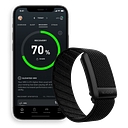
Brands AI recommends here
Named in 85% of answers
Oura Ring is best when you want reliable deep-sleep stage detection and a daily readiness score for overall wellness; tradeoff—it’s less focused on training-strain metrics for athletes.
Named in 84% of answers
Whoop is best for athletes who need continuous, training-centered recovery and strain scoring based on HRV and exertion; tradeoffs—monthly subscription is required and sleep-stage precision can lag behind Oura.
Named in 3% of answers
Named in 1% of answers
Source | Citation share |
|---|---|
 Whoop vs Oura Ring: Real-life data and comparison - Sportsmithhttps://www.sportsmith.co/articles/whoop-vs-oura-ring-real-life-data-analysis-and-comparisons/ | 3.8% |
 Whoop vs Oura: I tested each sleep tracker for two weeks — here's my winner | Tom's Guidehttps://www.tomsguide.com/wellness/sleep-tech/whoop-vs-oura-i-tested-each-sleep-tracker-for-two-weeks-heres-my-winner | 3.4% |
 Whoop vs. Oura for Athletes: Decoding Sleep & Recovery ...https://vertu.com/guides/whoop-vs-oura-for-athletes-decoding-sleep-recovery-metrics/ | 2.8% |
 WHOOP vs Oura Ring in 2025 – The Sleep and Recovery Showdown - Whoophttps://buywhoop.com/whoop-vs-oura-ring-in-2025-the-sleep-and-recovery-showdown/ | 2.7% |
 WHOOP vs Oura: Real-World Recovery Validation Tested | Trackverityhttps://www.trackverity.pro/blog/device-comparisons-versus-guides/whoop-vs-oura-real-world-recovery-validation | 2.7% |
Whoop Band vs. Oura Ring: Your Health Wearable Choice - VERTU® Official Sitehttps://vertu.com/guides/whoop-band-vs-oura-ring-your-health-wearable-choice/ | 2.6% |
 Oura Ring vs. Whoop: What's the best fitness tracker? | Mashablehttps://mashable.com/comparison/oura-ring-vs-whoop | 2.2% |
 I think Oura is more accurate at tracking my sleep. Whoop is ...https://www.reddit.com/r/whoop/comments/1h6mjr6/i_think_oura_is_more_accurate_at_tracking_my/ | 2.1% |
 Oura vs. WHOOP: Choosing the Right Wearable for Health Data Integrationhttps://www.thryve.health/blog/oura-vs-whoop-choosing-the-right-health-data-monitor-with-thryve | 2.1% |
 Whoop vs Oura (2026): Which Fitness Tracker Is Best? | Garage Gym Reviewshttps://www.garagegymreviews.com/whoop-vs-oura | 2.1% |
If your two priorities are **deep-sleep tracking and daily recovery**, I’d pick **Oura Ring** overall. | **Oura Ring** | **WHOOP** --- | --- | ---
If your two priorities are deep-sleep tracking and daily recovery, I’d pick Oura Ring overall.
| Oura Ring | WHOOP --- | --- | --- Deep sleep accuracy | 🏆 Better-supported | Very good Overall sleep staging | 🏆 Excellent validation | Good HRV / resting HR accuracy | 🏆 Slight edge | Very good Daily recovery score | 🏆 Excellent for general wellness | 🏆 Excellent for athletes/training Training/recovery coaching | Good | 🏆 Better Comfort for sleep | 🏆 Ring form factor | Wrist/arm wearable
The strongest head-to-head-ish evidence comes from independent polysomnography (PSG) validation. A 2024 study of 96 people and 421,045 sleep epochs found that Oura Gen 3's sleep staging showed good agreement with PSG, including time spent in deep sleep, with overall sleep-stage accuracy ranging from 75.5% to 90.6%.
WHOOP is also reasonably good. A PSG study of WHOOP 4.0 found it correctly classified about 69.6% of actual deep-sleep (N3) epochs, the best deep-sleep performance among the six wrist wearables tested in that study.
So neither device actually measures brain waves the way a sleep lab does; both infer sleep stages from signals such as movement, heart rate and HRV. For trends in deep sleep, they're useful; don't treat a reading like "42 minutes of deep sleep" as laboratory-grade.
This is a more nuanced comparison because "Recovery Score" isn't an objective physiological measurement with a gold-standard score. Each company calculates its own proprietary score.
Oura's Readiness score incorporates things such as resting heart rate, body temperature, sleep, movement, HRV and longer-term activity/sleep balance. Oura Support WHOOP's Recovery system puts particularly strong emphasis on overnight HRV, resting heart rate, sleep and recent strain.
Interestingly, a 2025 independent validation study covering 536 nights compared Oura Gen 3/Gen 4 and WHOOP 4.0 with ECG. Oura had the strongest agreement with ECG for both resting heart rate and HRV, while WHOOP was still reasonably accurate but somewhat behind Oura.
Choose Oura if:
Choose WHOOP if:
Bottom line: Oura wins for your specific question. If I were buying specifically for accurate deep-sleep trends + reliable daily recovery, I'd choose Oura Ring 4. If the priority were athletic performance and training optimization, I'd lean WHOOP.
One caveat: even Oura's impressive PSG results don't mean its deep-sleep number is clinically precise every night. Think of both devices as excellent trend trackers rather than substitutes for a sleep study.
This is a more nuanced comparison because "Recovery Score" isn't an objective physiological measurement with a gold-standard score. Each company calculates its own proprietary score.
Oura's Readiness score incorporates things such as resting heart rate, body temperature, sleep, movement, HRV and longer-term activity/sleep balance. support.ouraring.com WHOOP's Recovery system puts particularly strong emphasis on overnight HRV, resting heart rate, sleep and recent strain.
When comparing the **[Oura Ring Go to product viewer dialog for this…
When comparing the Oura Ring Go to product viewer dialog for this item. (Gen 3 / Horizon) and Whoop Go to product viewer dialog for this item. (Whoop 4.0 / newer iterations) for tracking deep sleep and daily recovery, independent validation studies and user consensus show that neither device is clinically precise at staging individual sleep phases (like deep vs. REM sleep) , but both excel at tracking overarching cardiovascular trends.
Consumer wearables estimate sleep stages using photoplethysmography (PPG) for heart rate/HRV and accelerometry for movement. While they can reliably tell when you fall asleep and wake up, breaking that down into specific minutes of deep sleep is an educated algorithmic guess. However, they approach recovery scoring differently.
Deep Sleep Cycles Accuracy
The Clinical Reality: Formal validation studies comparing consumer rings and bands to polysomnography (PSG—the clinical gold standard of an EEG lab test) reveal that consumer wearables frequently misclassify sleep stages. They tend to have moderate-to-high accuracy for total sleep duration, but lower precision when isolating exact minutes of deep (slow-wave) sleep or REM sleep.
Add to list Uses a finger-based PPG sensor. Because the finger has dense, high-quality capillary beds and the ring stays firmly snug against an artery, Oura Go to product viewer dialog for this item. is generally considered slightly more stable for nighttime pulse plethysmography than a wrist-worn band that might shift.
Add to list Uses a wrist-worn (or bicep-worn) optical sensor. While a tight wristband or Whoop Body bicep strap tracks heart rate well, the wrist location is more susceptible to slipping or ambient light interference during restless sleep, which can marginally skew sleep stage detection.
Add to listVerdict on Deep Sleep: Oura has a slight edge in signal stability due to the finger form factor, but neither should be trusted for the absolute minute-by-minute accuracy of deep sleep. Look at trends rather than absolute numbers.
Daily Recovery Scores
Recovery is where both devices invest their core computational power, though their philosophies differ:
Summary Comparison
| Add to list | Add to list |
|---|---|
| Form Factor Ring (Comfortable for sleep, intrusive for heavy lifting) | Form Factor Band / Strap (Comfortable, versatile placement via Whoop Body) |
| Deep Sleep Accuracy Moderate (Slightly more stable optical signal on the finger) | Deep Sleep Accuracy Moderate (Prone to minor shift errors if worn loosely on the wrist) |
| Recovery Focus Holistic health, illness detection (skin temp), daily readiness | Recovery Focus Athletic output, autonomic nervous system, daily strain balancing |
| Data Alignment Correlates well with subjective physical rest and fatigue levels | Data Alignment Correlates tightly with nervous system readiness and perceived alertness |
Add to listChoose Oura if your primary goal is general wellness, sleep tracking comfort, and holistic recovery tracking that factors in temperature and daily lifestyle balance.
Add to listChoose Whoop if you are an athlete or data-driven fitness enthusiast who wants to match daily physiological recovery directly against quantified cardiovascular strain.
If you'd like to narrow this down, let me know:
If your priorities are **deep-sleep tracking and daily recovery**, I’d choose **Oura Ring overall**—with one important caveat: neither device can measure sleep stages as accurately as a clinical polysomnography (PSG) test. ### Oura vs. Whoop Category | Oura Ring | Whoop
If your priorities are deep-sleep tracking and daily recovery, I’d choose Oura Ring overall—with one important caveat: neither device can measure sleep stages as accurately as a clinical polysomnography (PSG) test.
| Category | Oura Ring | Whoop |
|---|---|---|
| Deep sleep accuracy | Slight edge | Good, but less well validated |
| Overall sleep staging | Excellent for a consumer wearable | Good |
| Sleep duration / timing | Excellent | Excellent |
| Daily recovery score | Very good | Excellent |
| HRV tracking | Very good | Excellent |
| Resting HR | Excellent | Excellent |
| Best for | Sleep & overall wellness | Athletes/recovery optimization |
Deep sleep: Oura has the stronger evidence base. A 2024 validation study comparing Oura Gen 3 with PSG found no significant difference in estimated deep-sleep time, and sleep-stage accuracy ranged from 75.5% to 90.6%. PubMed ScienceDirect Another 2024 PSG study found Oura's sensitivity for detecting deep sleep was about 79.5%.
A direct older comparison found Oura and Whoop were fairly close: Oura correctly classified 62% of PSG deep-sleep epochs, while Whoop correctly classified 62% as well. However, that comparison used Oura Gen 2 and Whoop 3.0, so it isn't representative of today's algorithms.
Recovery: This is where I'd lean Whoop. Its entire system is built around recovery, with HRV, resting heart rate, sleep, respiratory rate, and strain feeding into its recovery model. Oura's Readiness score is also very good, but it's more of a broad wellness/readiness assessment.
One thing I'd emphasize: don't take either device's “deep sleep” number literally. Even good consumer wearables can misclassify individual sleep stages. The strongest evidence suggests they're much better at telling you when you slept and how long you slept than precisely identifying every minute of deep/REM/light sleep. A recent meta-analysis of Oura studies, for example, found its average deep-sleep estimate was not significantly different from PSG/actigraphy, but that doesn't mean every individual night's staging is clinically accurate.
Bottom line: Oura for sleep accuracy; Whoop for recovery/training analytics. If I had to pick just one for both, I'd take Oura.
Recovery: This is where I'd lean Whoop. Its entire system is built around recovery, with HRV, resting heart rate, sleep, respiratory rate, and strain feeding into its recovery model. Oura's Readiness score is also very good, but it's more of a broad wellness/readiness assessment.
When comparing the **[Oura Ring Go to product viewer dialog for this…
When comparing the Oura Ring Go to product viewer dialog for this item. and Whoop Go to product viewer dialog for this item. for tracking deep sleep cycles and daily recovery scores, independent validation studies and biometric testing show distinct advantages for each, largely driven by their physical placement on the body.
Summary Comparison Table
| Metric | Oura Ring Advantage | Whoop Advantage |
|---|---|---|
| Raw HRV / Pulse Signal | Higher accuracy due to stable finger-based photoplethysmography. | Good, but wrist slip/sweat can cause occasional signal dropout. |
| Deep Sleep Staging | Slightly closer to clinical baselines due to stable finger contact. | Prone to minor stage-misclassification algorithms. |
| Recovery Context | Includes skin temperature, nocturnal movement, and general holistic readiness. | Tailored directly to athletic strain, sleep debt, and exertion balance. |
To help narrow down which one fits you best, tell me:

If your priorities are **(1) accurate deep-sleep tracking and (2) a useful daily recovery score, I’d choose Oura over WHOOP overall**—with one important caveat: neither wearable can measure sleep stages as accurately as a clinical polysomnography (PSG) sleep study. ### 💤 Deep sleep: **Oura wins** The strongest…
If your priorities are (1) accurate deep-sleep tracking and (2) a useful daily recovery score, I’d choose Oura over WHOOP overall—with one important caveat: neither wearable can measure sleep stages as accurately as a clinical polysomnography (PSG) sleep study.
The strongest head-to-head evidence favors Oura for sleep-stage accuracy.
A 2024 validation study compared Oura Ring Gen 3 against multi-night PSG in 96 people and more than 421,000 sleep epochs. Oura showed:
WHOOP isn't bad. In a 2025 PSG study of WHOOP 4.0, it actually correctly classified 69.6% of true deep-sleep (N3) epochs, which was its best-performing sleep stage. However, it overestimated deep sleep by about 31.5 minutes on average in that study.
An older direct comparison also found Oura's multi-stage sleep agreement at 61% vs. 60% for WHOOP, although the devices and algorithms have changed since then.
Bottom line: If you're specifically interested in "How much deep sleep did I actually get?", I'd trust Oura slightly more, particularly for tracking trends over many nights.
This one is more complicated because "recovery score" isn't an objective measurement like blood oxygen or heart rate. It's a proprietary composite.
WHOOP puts considerably more emphasis on recovery, using things such as:
Its ecosystem is essentially built around answering "Am I recovered enough to train today?"
Oura's Readiness Score serves a similar purpose, incorporating HRV, resting heart rate, sleep, body temperature trends, activity and other signals.
So I'd characterize them this way:
| Oura Ring | WHOOP | |
|---|---|---|
| Deep sleep accuracy | 🟢 Better evidence | 🟡 Good, but can overestimate |
| Overall sleep tracking | 🟢 Excellent | 🟢 Very good |
| HRV/recovery tracking | 🟢 Excellent | 🟢 Excellent |
| Recovery/training guidance | 🟡 Good | 🟢 Better |
| Sleep-focused experience | 🟢 Best | 🟢 Very good |
| Training/strain ecosystem | 🟡 Good | 🟢 Best |
| Comfortable overnight | 🟢 Ring is unobtrusive | 🟡 Wrist/Whoop band |
| "What should I do today?" | 🟢 Good | 🟢 Excellent |
Choose Oura if:
You care most about sleep quality, deep sleep, sleep consistency, HRV and general wellness.
Choose WHOOP if:
You're an athlete or serious about training load, strain, recovery and deciding how hard to train each day.
If I had to pick one specifically for your two criteria: Oura. Its validation against PSG gives me more confidence in its sleep measurements, while its Readiness score is also quite capable. WHOOP becomes the better choice if the recovery/training component is substantially more important than sleep-stage accuracy.
One thing I'd emphasize: don't obsess over a single night's "deep sleep" number on either device. Consumer wearables infer sleep stages from movement and physiological signals; even the best-performing devices still make meaningful stage-classification errors. The most useful signal is the trend over weeks, not whether your device says you got 58 vs. 72 minutes of deep sleep on a particular night.
If you tell me whether you're primarily a fitness/training person, a sleep optimization person, or just want the most accurate overall health tracker, I can also give you a 2026 Oura vs. WHOOP comparison including sensors, HRV accuracy, battery, subscription cost, and Apple/Android compatibility.
Here are top web results for exploring this topic: [](https://www.cosmopolitan.com/health-fitness/a61975698/oura-ring-vs-whoop-tracker/)  Cosmopolitan·https://www.cosmopolitan.com I Tested the **WHOOP** vs. **Oura Ring** Simultaneously: Which…
Here are top web results for exploring this topic:
Cosmopolitan·https://www.cosmopolitan.com I Tested the WHOOP vs. Oura Ring Simultaneously: Which Is Better?If there's one thing that convinces you to invest in the WHOOP or the Oura Ring, let it be the sleep-tracking feature. Both monitor how sleep efficiency, nighttime breathing, how long you spent in eac
www.tryrook.io·https://www.tryrook.io/blog/oura-vs-whoop**Oura** vs Whoop : Health and Performance Comparison - ROOK Oura vs Whoop: Health and Performance Comparison. Mar 24. Written By Daniel Mas. Oura vs Whoop. Wearable technology continues to evolve beyond step counting. Devices like Oura Ring and Whoop focus on
AthleteData·https://www.athletedata.health**WHOOP** vs Oura vs Garmin (2026): Which Tracks Recovery Best?Oura leads in raw HRV and sleep tracking accuracy according to peer-reviewed studies comparing wearables to ECG and polysomnography. WHOOP offers the most integrated strain-to-recovery loop, making it
PCMag·https://www.pcmag.com**Oura Ring** 4 vs. Whoop 5.0: One of These Wearables Is ... - PCMag Activity and Exercise Tracking: Accurate, But Basic; Sleep and Stress Tracking: Prescriptive vs. Descriptive. The Whoop 5.0 and the Oura Ring 4 look quite different from each other at a glance. The Wh
Reddit·https://www.reddit.com I think Oura is more accurate at tracking my sleep. Whoop is better ...Pretty much the same experience . Whoop is really poor at sleep tracking compared to oura . For that reason recovery data is also far more accurate in oura vs whoop . For me I can be a poor sleeper an
Gene Food·https://www.mygenefood.com**Oura Ring** vs. Whoop Strap: Which Sleep Tracker is Best?What happens when you wear Oura Ring and Whoop Strap on the same night? Below is a sample of data from 5 nights where I wore the Whoop and Oura Ring on the same night. I tried this experiment for more
YouTube·https://www.youtube.com**WHOOP** vs Oura Ring : Which One Tracks Sleep ACCURATELY?You wore both Oura Ring and WHOOP to bed — and they disagreed by 45 minutes of deep sleep. Same body. Same night. Completely different numbers. Before you trust either device with your health decision
Sportsmith·https://www.sportsmith.co**Whoop** vs Oura Ring : Real-life data and comparison - Sportsmith Sleep. Sleep monitoring has exploded exponentially over the last few years. While athletes and practitioners have used · Heart rate variability. Practitioners commonly interpret heart rate variability
PubMed Central (PMC) (.gov)·https://pmc.ncbi.nlm.nih.gov A Validation of Six Wearable Devices for Estimating Sleep , Heart ...Heteroscedasticity manifested as the limits of agreement around the bias being wider for poorer-quality sleep (−19.0 to 227.7 min) than for better-quality sleep (−18.2 to 39.2 min). Compared with PSG
Simple Wearable Report·https://simplewearablereport.com**Oura Ring** vs Whoop : Which Tracks Sleep & Recovery Better in 2026?Whoop is the clear winner for fitness-focused users. Oura's activity tracking is fine for general wellness, but it's not a training tool. This isn't a knock on Oura — it's a ring, and it's optimized f
No sources cited
If your priorities are **deep-sleep accuracy and daily recovery**, I’d give the overall edge to **Oura**, with an important caveat: **neither device can measure sleep stages as accurately as a clinical polysomnography (PSG) sleep study.** | | **Oura Ring** | **WHOOP** | |---|---|---|
If your priorities are deep-sleep accuracy and daily recovery, I’d give the overall edge to Oura, with an important caveat: neither device can measure sleep stages as accurately as a clinical polysomnography (PSG) sleep study.
| Oura Ring | WHOOP | |
|---|---|---|
| Deep sleep tracking | 🥇 Better overall evidence | Very good, but less consistently validated |
| Sleep-stage accuracy | 🥇 Strong | Strong |
| HRV accuracy | 🥇 Better in recent validation | Very good |
| Resting HR accuracy | 🥇 Better | Good |
| Recovery/readiness score | 🥇 Best if you want general wellness/recovery | 🥇 Best if training/athletic performance is the focus |
| Comfort for sleeping | 🥇 Ring form factor | Wrist/arm band |
| Best for | Sleep + overall health | Training + recovery + strain |
The strongest head-to-head evidence isn't perfectly apples-to-apples because the devices and algorithms have changed over time. But Oura has particularly good validation against PSG.
A 2024 study of 96 people and more than 421,000 sleep epochs found that Oura Gen 3's estimates of time spent in deep sleep were not significantly different from PSG. Its overall sleep-stage accuracy ranged from 75.5% for light sleep to 90.6% for REM.
In an earlier study that tested Oura Gen 2 and WHOOP 3.0 simultaneously against PSG, both identified deep-sleep epochs at about 62%, while Oura had slightly better overall multi-stage agreement (61% vs. 60%).
More recently, a PSG study of WHOOP 4.0 found it correctly classified about 69.6% of actual deep-sleep (N3) epochs, which is quite respectable.
Bottom line: WHOOP is not bad at deep sleep, but Oura has the more convincing body of validation evidence, especially for estimating the amount of deep sleep.
This is more nuanced because a "Recovery Score" isn't a clinical measurement with a universally accepted gold standard. Both companies combine multiple signals into proprietary scores.
What's interesting is the quality of the underlying signals. A 2025 validation study involving 536 nights compared Oura Gen 3, Oura Gen 4 and WHOOP 4.0 against ECG. Oura Gen 4 had CCC 0.99 for HRV and 0.98 for resting HR, while WHOOP had 0.94 for HRV and 0.91 for resting HR. Oura therefore had the strongest agreement with the ECG reference in that study.
That doesn't automatically mean Oura's "Readiness" score is objectively more accurate than WHOOP's "Recovery" score—but it does mean Oura's physiological inputs are exceptionally well validated.
Choose Oura if:
Choose WHOOP if:
For your specific question: Oura wins, about 60/40.
Deep sleep: Oura 🥇
Underlying recovery measurements: Oura 🥇
Training-focused recovery coaching: WHOOP 🥇
Overall sleep + recovery: Oura 🥇
One thing I'd not do is obsess over whether Oura says you got 58 minutes of deep sleep versus WHOOP saying 64 minutes. Consumer wearables are much better at detecting sleep vs. wake and long-term trends than they are at precisely identifying individual sleep stages. The useful question is whether your deep sleep, HRV and resting HR are consistently changing relative to your own baseline.
If you tell me whether you're primarily focused on sleep/health, gym/weightlifting, running, or serious athletic training, I can tell you which one I'd choose for your particular use case.
When comparing the **[Oura Ring Go to product viewer dialog for this…
When comparing the Oura Ring Go to product viewer dialog for this item. and Whoop Go to product viewer dialog for this item. for deep sleep cycles and daily recovery accuracy, independent sleep-staging validation studies and biometric testing give a clear edge to the Oura Ring for sleep granularity, while Whoop excels slightly in heavy-load training context.
Tracking Deep Sleep Cycles
Clinical and comparative wear studies evaluating consumer wearables against polysomnography (the clinical "gold standard") consistently find that the Oura Ring edges out wrist-based competitors in 4-stage sleep classification (deep, REM, light, awake). Because it is worn on the finger, Oura Go to product viewer dialog for this item. benefits from a denser capillary bed and tighter physical contact that is less prone to the "signal slip" or micro-movements common with wrist bands. It tends to be more precise in identifying the exact onset and boundaries of deep sleep cycles.
Whoop also measures the four standard sleep stages , but wrist-based photoplethysmography (PPG) can occasionally misclassify deep vs. light sleep if the band shifts during the night . Users often note that Whoop's Go to product viewer dialog for this item. automated deep sleep metrics can feel a bit more generalized compared to Oura's Go to product viewer dialog for this item. localized finger telemetry.
Daily Recovery Scores
To help narrow down which device fits your routine better, let me know:
When comparing the **[Oura Ring Go to product viewer dialog for this…
When comparing the Oura Ring Go to product viewer dialog for this item. and Whoop Go to product viewer dialog for this item. for tracking sleep stages and daily recovery, Oura generally holds a slight edge in raw sleep/HRV data accuracy , while Whoop excels at contextualizing recovery through behavioral data.
Independent and comparative consumer tech evaluations show that both devices perform similarly (hovering around 60% accuracy for granular 4-stage sleep classification when compared to clinical polysomnography), but they utilize different hardware placements and algorithms.
Deep Sleep Tracking Accuracy
The finger form-factor allows Oura to read from the digital/palmar arteries, which are closer to the skin’s surface and less prone to the "slippage" or movement artifacts that affect wrist-worn devices . Studies measuring raw photoplethysmography (PPG) and heart rate variability (HRV) tend to show Oura having a slightly lower error margin . However, like all consumer wearables, it tends to overestimate deep sleep compared to a clinical sleep study.
Worn on the wrist (or bicep), Whoop tracks all four stages (wake, light, deep, REM) but relies on a wrist-based optical sensor that can be easily skewed if the strap rotates or shifts during restless sleep. Side-by-side user tests often show Whoop reporting slightly higher totals for deep or total sleep time compared to Oura , but the granular staging carries a slightly higher variance.
Daily Recovery Scores Accuracy
Feature & Accuracy Breakdown At-a-Glance
To help narrow down which device fits your routine best, do you lean more toward general health and longevity tracking (where Oura shines), or intense athletic training and load management (where Whoop excels)?
If your priorities are **(1) accurate deep-sleep tracking** and **(2) a useful daily recovery/readiness score**, I’d give the overall edge to **Oura**, with an important caveat: neither device can measure sleep stages as accurately as a clinical polysomnography (PSG) test. ### My verdict | | **Oura Ring** | **WHOOP** |
If your priorities are (1) accurate deep-sleep tracking and (2) a useful daily recovery/readiness score, I’d give the overall edge to Oura, with an important caveat: neither device can measure sleep stages as accurately as a clinical polysomnography (PSG) test.
| Oura Ring | WHOOP | |
|---|---|---|
| Deep sleep accuracy | 🟢 Better-supported | 🟢 Very good |
| Overall sleep staging | 🟢 Edge | 🟡 Good |
| Sleep/wake detection | 🟢 Excellent | 🟢 Excellent |
| Daily recovery score | 🟢 Excellent | 🟢 Excellent |
| Recovery for athletes/training | 🟡 Very good | 🟢 Edge |
| General wellness/sleep focus | 🟢 Best choice | 🟡 |
| Clinical-level sleep staging | ❌ Neither | ❌ Neither |
For deep sleep specifically, Oura has the stronger evidence base. A large 2024 validation study of the Oura Gen3 against PSG found that Oura's estimated deep-sleep time was not significantly different from PSG, with overall sleep-stage accuracy ranging from 75.5% to 90.6%. A 2025 meta-analysis likewise found Oura's average deep-sleep difference from PSG/actigraphy was only about 1.4 minutes, although individual-night errors can still be substantial.
WHOOP also performs well. In an independent PSG study, WHOOP had 68% sensitivity for slow-wave/deep sleep and 64% overall agreement across four sleep categories. In a more recent laboratory comparison of several wearables, WHOOP 4.0 actually identified PSG-defined deep-sleep epochs better than the other wrist devices tested, correctly classifying about 69.6% of deep-sleep epochs.
The catch is that WHOOP 5.0 doesn't yet have the same amount of independent PSG validation as Oura's newer-generation algorithms, so I wouldn't assume older WHOOP accuracy figures automatically apply to the 5.0.
This is less about which device is "accurate" and more about which algorithm better represents what you care about.
Oura Readiness incorporates things such as HRV, resting heart rate, body temperature, sleep, sleep balance, activity, and longer-term trends.
WHOOP Recovery emphasizes HRV, resting heart rate, respiratory rate, sleep quantity/stages, and other physiological signals, then compares them with your personal baseline.
So I'd characterize them this way:
One particularly important point: don't obsess over the absolute deep-sleep number. If Oura says you got 1h 42m and WHOOP says 1h 18m, neither should be treated as ground truth. Wearables infer sleep stages from movement and cardiovascular signals; they don't directly measure the brain activity used by PSG. The trend over weeks/months is considerably more useful than a single night's deep-sleep figure.
I'd choose Oura if deep sleep + general recovery are your main goals. Its newer sleep-staging validation is particularly strong, and its ring form factor is excellent for overnight measurement.
I'd choose WHOOP if you're primarily an athlete or highly active person and want recovery tightly integrated with training load/strain.
If you tell me your age, whether you exercise regularly, and whether your main goal is sleep quality, fitness/recovery, or longevity, I can tell you which one I'd buy for your particular use case.