Data as of Aug 25, 2026 · Based on 42 AI responses from ChatGPT Search and Google AI Mode · See how Parse measures this
 Garmin
Your brand can be here too.
Source | Citation share |
|---|---|
 The Best Sleep Trackers for an Optimal Slumber - WIREDhttps://www.wired.com/story/best-sleep-trackers/ | 1.5% |
 Best sleep trackers 2026 - BBC Good Foodhttps://www.bbcgoodfood.com/review/best-sleep-trackers-reviewed | 1.3% |
 Amazfit Helio Smart Ringhttps://www.google.com/search | 1.3% |
 Best Sleep Trackers of 2026: Expert-Approved Wearableshttps://www.sleepfoundation.org/best-sleep-trackers | 1.3% |
 Best sleep trackers 2026: Tested and rated options from our reviewshttps://www.wareable.com/health-and-wellbeing/best-sleep-trackers-and-monitors | 1.3% |
The Recovery Wearable Buyer's Guide 2026: Oura vs Whoop vs Eight Sleep vs Ultrahuman — RecoveryStackhttps://recoverystack.co/sleep/recovery-wearable-guide/ | 1.0% |
 The Best Sleep Trackers of 2026: Watches, Rings and Matshttps://www.cnet.com/health/sleep/best-sleep-tracker/ | 1.0% |
 A performance validation of six commercial wrist-worn wearable sleep-tracking devices for sleep stage scoring compared to polysomnography - PubMedhttps://pubmed.ncbi.nlm.nih.gov/40303381/ | 0.8% |
 The best sleep trackers of 2026: The top 9 I'd take to bedhttps://www.androidauthority.com/best-sleep-tracker-3573659/ | 0.8% |
If sleep + recovery accuracy is the priority, my pick is Oura Ring 4.
WHOOP is particularly compelling if you care about training load, recovery, HRV, sleep need, and whether you're ready to train rather than just sleep quality. Its sleep tracking has reasonable validation, although sleep-stage estimates are still imperfect.
A good choice if you also want smartwatch functionality, workouts, notifications, heart health features, etc. But I wouldn't buy it specifically for maximum sleep accuracy. Studies comparing consumer wearables with polysomnography show that even good devices have substantially weaker wake detection and only fair-to-moderate agreement for sleep staging.
Great if running/cycling/training is the main purpose and sleep/recovery is one component of a broader training ecosystem. I wouldn't choose it over Oura purely for sleep.
No consumer wearable actually measures sleep stages the way a clinical polysomnography (PSG) study does. They infer them from signals such as movement and cardiovascular measurements. Even the best devices can confuse quiet wakefulness with sleep and misclassify individual sleep stages.
So I'd prioritize accuracy of trends over obsessing about whether one particular night had 1h 17m vs. 1h 32m of deep sleep.
Bottom line:
If you tell me iPhone or Android, whether you exercise seriously, and whether you want to avoid a subscription, I can narrow it down to the single best choice for you.
When it comes to tracking sleep and recovery with high accuracy, the market generally splits into two categories: form-factor comfort (smart rings) and deep athlete-level analytics (dedicated bands with continuous coaching).
The top-performing wearables for sleep and recovery accuracy depend slightly on your preference for a ring or a wrist/bicep band:
To help narrow down the ideal pick for you, tell me:
If sleep + recovery accuracy is the priority—not smartwatch features—my pick is the Oura Ring 4.
Apple Watch Series 11 - $384.99 (Best Buy)
Very good general health tracking plus sleep, temperature, HRV, workouts, GPS and smartwatch functionality.
No required sleep/recovery subscription.
The major drawback is battery life—roughly 24 hours—which makes overnight charging more annoying.
I'd pick it over Oura if you're already heavily invested in the Apple ecosystem and don't want another device.
Don't put too much weight on a wearable telling you that you got 1h 17m of deep sleep versus 1h 04m. Consumer wearables infer sleep stages from movement and physiological signals; they don't directly measure brain activity like polysomnography does. Even the better devices can misclassify individual sleep stages.
For recovery, I'd pay more attention to multi-day trends in resting HR, HRV, sleep duration, temperature and how you actually feel than to a single proprietary "Recovery Score."
Best sleep: Oura Ring 4 Best recovery/training: WHOOP 5.0 Best all-in-one: Apple Watch Series 11 Best no-subscription approach: Apple Watch
If you tell me iPhone or Android, whether you exercise seriously, and whether you care more about sleep accuracy or training recovery, I can narrow it down to one.
When it comes to tracking sleep and recovery accurately , the "best" wearable depends on whether you prefer a screenless recovery band, a lightweight smart ring, or a fully featured smartwatch. Because fingers and wrists provide continuous blood flow data, different form factors excel at different things.
The top choices on the market break down as follows:
If you share your preferences on whether you hate wearing watches to bed or want a subscription-free device , I can help you narrow down the best specific model for your routine.
When it comes to tracking sleep and recovery accurately, the best wearable depends entirely on whether you prefer a screenless, jewelry-like form factor or a robust data-driven athletic band. Because the finger offers cleaner blood flow signals with less artifact/movement noise than the wrist, smart rings and specialized biometric bands currently lead the pack.
Top-tier options for tracking sleep and recovery with high precision include:
Best Overall for Sleep & Readiness: Widely considered the gold standard for daily sleep architecture (stages, efficiency, latency) and overnight biometrics like Heart Rate Variability (HRV) and skin temperature . It establishes a personalized baseline rather than relying on generic population averages and is comfortable enough for 24/7 wear. (Note: Requires a monthly membership fee for full data access).
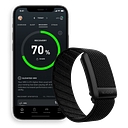
Best for Athletes & Recovery Coaching: A screenless woven wristband (or bicep sleeve) that focuses heavily on daily recovery scores . It explicitly analyzes how your sleep performance, physiological strain, and stressors interlock to tell you precisely how hard you can train each day. (Operates on a subscription model).
Best Subscription-Free Ring Alternative: A robust titanium smart ring that rivals Oura in nightly tracking—including HRV, SpO2, and respiratory metrics—while completely avoiding recurring subscription fees and offering multi-week battery life.
Best Non-Wrist Night Option for Garmin Users: A comfortable bicep/upper-arm band built specifically for users who want to leverage the Garmin Connect ecosystem's Body Battery and recovery metrics without wearing a bulky sports watch to bed.
Best Smartwatch Integration: If you are an iPhone user who doesn't mind sleeping with a watch on, the Series 11 Go to product viewer dialog for this item. offers exceptional sleep stage accuracy and respiratory tracking embedded directly into a full-featured smartwatch.
To help narrow down the ideal choice, let me know:
If sleep + recovery accuracy are the priorities, my pick is the Oura Ring 4.
$349.00
| Wearable | Sleep | Recovery | Best for |
|---|---|---|---|
| Oura Ring 4 | ⭐⭐⭐⭐⭐ | ⭐⭐⭐⭐⭐ | Best overall accuracy |
| WHOOP 5.0 | ⭐⭐⭐⭐½ | ⭐⭐⭐⭐⭐ | Athletes & training readiness |
| Apple Watch | ⭐⭐⭐⭐ | ⭐⭐⭐⭐ | Best smartwatch + health tracking |
| Garmin | ⭐⭐⭐⭐ | ⭐⭐⭐⭐½ | Serious endurance athletes |
Why Oura wins: Independent research comparing wearables with ECG found Oura Gen 4 had the strongest agreement for overnight resting heart rate and HRV among the devices tested. pmc.ncbi.nlm.nih.gov A separate PSG study found the Oura Ring performed particularly well at estimating sleep stages, with results that weren't significantly different from PSG for wake, light, deep, or REM sleep.
WHOOP is the better choice if your main question is “How recovered am I, and how hard should I train today?” Its sleep/recovery system is exceptionally focused on athletes, and WHOOP has published recent validation work against polysomnography.
Apple Watch is excellent if you also want a smartwatch, workouts, GPS, notifications, and broader health features. But the evidence suggests sleep-stage accuracy is only moderate overall; deep vs. light sleep remains a particular weakness.
One important caveat: no consumer wearable is a replacement for a sleep study. Even the best devices are considerably better at detecting sleep vs. wake and tracking trends over time than precisely identifying every sleep stage.
If you tell me your phone (iPhone/Android), whether you exercise regularly, and whether you care more about sleep accuracy or workout/recovery data, I can narrow it down to the best one for you.
When it comes to tracking sleep and recovery accurately , the best wearable depends heavily on whether you prefer a screenless ring, a dedicated training band, or a full-featured smartwatch. Accuracy for recovery relies primarily on precise Heart Rate Variability (HRV), resting heart rate (RHR) , and skin temperature , which are best captured when a device doesn't shift or slip during the night.
The top-rated contenders for sleep and recovery accuracy feature distinct strengths:
Widely considered the gold standard for passive sleep and readiness tracking . Because the finger provides cleaner blood flow signals and less motion artifact than the wrist, sleep staging and nighttime HRV measurements are exceptionally reliable . It translates data into daily Sleep and Readiness scores. (Note: Requires a monthly subscription for full metric access).
Purpose-built entirely around the strain-and-recovery loop . It lacks a screen and is designed specifically for athletes who want deep, actionable advice on training load versus recovery . Its overnight HRV tracking and sleep-need calculations are top-tier, though its app can occasionally be overly strict or harsh regarding minor sleep disruptions. (Note: Operates on a continuous membership model).
The premier choice if you want deep health and fitness analytics without a mandatory subscription . Features like Body Battery and Training Readiness accurately correlate your previous day's stress and workouts with your overnight sleep quality . However, some users find wristwatches bulkier and slightly less comfortable for 24/7 bed wear.
A strong alternative to Oura if you want robust, subscription-free tracking . It measures skin temperature, movement, and real-time HRV to formulate a unified recovery score while offering unique insights like circadian alignment and stimulant cut-off windows.
Excellent for mainstream smartphone integration and clinical-adjacent features like sleep apnea detection , though its daily "recovery/readiness" insight loop usually requires downloading third-party apps (like RISE or Athlytic) compared to the dedicated ecosystems of Oura or WHOOP.
If you'd like to narrow this down, let me know:
If your priority is accurate sleep + recovery tracking, my pick is Oura Ring.
$349.00
| Wearable | Sleep accuracy | Recovery | Best for |
|---|---|---|---|
| Oura Ring 4 | ⭐⭐⭐⭐⭐ | ⭐⭐⭐⭐⭐ | Best overall sleep/recovery |
| WHOOP 5.0 | ⭐⭐⭐⭐½ | ⭐⭐⭐⭐⭐ | Athletes & training |
| Apple Watch | ⭐⭐⭐⭐ | ⭐⭐⭐⭐ | Best all-purpose wearable |
| Garmin Venu 4 | ⭐⭐⭐½ | ⭐⭐⭐⭐ | Fitness + no subscription |
Why Oura wins: independent testing currently ranks the Oura Ring 4 as the top sleep tracker, particularly for sleep-stage estimation and overnight comfort. www.wareable.com Its finger placement also gives it a strong signal for overnight heart rate/HRV and temperature trends.
WHOOP is the better choice if "recovery" means training readiness. Its core strength is turning sleep, HRV, resting heart rate and activity into actionable strain/recovery guidance.
Apple Watch is surprisingly competitive. A 2026 report on a clinical sleep-lab comparison found the Apple Watch matched measured sleep duration extremely closely and performed strongly on sleep staging. 9to5mac.com It's particularly compelling if you already use an iPhone and don't want another subscription.
One important caveat: none of these devices actually measures sleep stages directly. They estimate them from signals such as movement and heart rate, and clinical studies show consumer wearables can still misclassify wake/light/deep/REM sleep. pubmed.ncbi.nlm.nih.gov So I'd trust the multi-week trends much more than a claim like "you got exactly 47 minutes of deep sleep."
If you tell me iPhone vs Android, whether you exercise seriously, and whether you want to avoid a monthly subscription, I can narrow it down to one.
When it comes to tracking sleep and recovery accurately , validation studies and expert testing show that no single consumer wearable matches a clinical sleep lab (polysomnography) perfectly. However, the finger provides cleaner photoplethysmography (PPG) signal capture for continuous nighttime heart rate variability (HRV) than the wrist, making smart rings or specialized recovery bands the gold standard for passive rest tracking.
The top contenders depend on whether you want a passive wellness ring, a screenless athletic recovery coach, or a traditional smartwatch ecosystem.
Quick Comparison Matrix
| Device | Best For | Subscription? | Battery Life | Comfort in Bed |
|---|---|---|---|---|
| Oura Ring 4 / 5 Go to product viewer dialog for this item. | Passive recovery & sleep stages | Yes (≈ $6/mo) | 6–9 days | Excellent (Highest) |
| WHOOP 5.0 | Daily strain & workout readiness | Yes (Bundled) | Up to 14 days | Very High |
| Garmin Cirqa Go to product viewer dialog for this item. | Recovery without ongoing fees | No | 10–11 days | Moderate-High |
| Apple Watch Series 11 Go to product viewer dialog for this item. | Smartwatch utility + health alerts | No | 1–2 days | Low-Moderate |
To help narrow down the best choice for you, let me know:

If your priority is accurate sleep + recovery tracking, my pick is the Oura Ring 4.
$349.00
| Wearable | Sleep accuracy | Recovery | Best for |
|---|---|---|---|
| Oura Ring 4 | ⭐⭐⭐⭐⭐ | ⭐⭐⭐⭐⭐ | Best overall |
| WHOOP 5.0 | ⭐⭐⭐⭐½ | ⭐⭐⭐⭐⭐ | Serious athletes |
| Apple Watch Series 11 | ⭐⭐⭐⭐ | ⭐⭐⭐⭐ | Best all-around smartwatch |
| Garmin Venu 4 | ⭐⭐⭐⭐ | ⭐⭐⭐⭐½ | Fitness + long battery |
Why Oura: Its finger-based sensors provide excellent overnight HR/HRV data, and independent research has found strong agreement with clinical polysomnography for sleep staging. It also combines sleep, HRV, resting heart rate, temperature trends and activity into its Readiness score.
WHOOP is the better choice if you're training hard. Its big advantage isn't necessarily more accurate sleep staging; it's the way it connects sleep, HRV, recovery and training strain to tell you how hard you should train.
Apple Watch makes more sense if you already want a smartwatch. The Series 11 has sleep scoring and extensive health/workout capabilities, but its overnight battery requirement makes it less effortless as a dedicated sleep tracker.
One important caveat: none of these actually measures sleep stages directly—they infer them from movement and physiological signals. So don't treat a single night's "deep sleep" number as ground truth; trends over several weeks are much more meaningful.
Bottom line:
If you tell me iPhone vs Android, whether you exercise seriously, and whether you want to pay a monthly subscription, I can narrow it down to one.