Data as of Aug 25, 2026 · Based on 299 AI responses from ChatGPT Search and Google AI Mode · See how Parse measures this
For tech-savvy homeowners: use Enphase Enlighten if you need fast, per-panel real-time data and APIs for custom integrations; choose the 

Brands AI recommends here
Named in 59% of answers
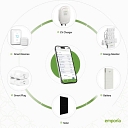
Best as the central automation hub to link inverter apps and energy monitors into smart-home routines; caveat: acts as a bridge—many OEM apps still require pairing or third-party tools to integrate fully.
Named in 53% of answers
Named in 46% of answers
Named in 43% of answers
Source | Citation share |
|---|---|
 Best Solar Monitoring Systems For 2025https://www.solarreviews.com/blog/best-solar-monitoring-systems | 4.4% |
 Top 10 Solar Monitoring Apps for Sundance Solar Customershttps://www.sundancepower.com/solar-investment-guide/top-10-solar-monitoring-apps-for-sundance-solar-customers/ | 3.1% |
 An Overview of Solar System Monitoring Apps - Plug It In Solarhttps://plugitinsolar.com/faq/an-overview-of-solar-system-monitoring-apps/ | 2.7% |
5 Solar Energy Apps That Help You Track, Save, and Optimize Usagehttps://solarflez.com/solar-energy-apps/ | 2.7% |
Solar Energy Apps for Homeownershttps://blog.solarclue.com/blog/solar-energy-apps-for-homeowners/ | 2.1% |
Best Solar Panel Monitoring Apps to Track Your Energy Production - PratsDigitalhttps://pratsdigital.in/solar-panel-monitoring-apps/ | 1.8% |
 How To Monitor Solar Panel Output: Complete 2025 Guide + Best Toolshttps://solartechonline.com/blog/how-to-monitor-solar-panel-output/ | 1.7% |
Smart Home Solar Panels: Complete Guide & Best Systems 2025https://solartechonline.com/blog/smart-home-solar-panels-guide/ | 1.6% |
 Home Assistant - Wikipediahttps://en.wikipedia.org/wiki/Home_Assistant | 1.5% |
 mySolarEdge: Monitoring App for System Owners | SolarEdge UShttps://www.solaredge.com/us/products/software-tools/mysolaredge | 1.5% |
For a **tech-savvy homeowner**, I’d rank the major solar-monitoring ecosystems like this: Platform | Real-time / detail | Smart-home integration | Best for --- | --- | --- | ---
For a tech-savvy homeowner, I’d rank the major solar-monitoring ecosystems like this:
| Platform | Real-time / detail | Smart-home integration | Best for |
|---|---|---|---|
| Enphase Enlighten | ⭐⭐⭐⭐⭐ | ⭐⭐⭐⭐⭐ | Panel-level visibility + Home Assistant |
| SolarEdge | ⭐⭐⭐⭐½ | ⭐⭐⭐⭐⭐ | Detailed inverter/optimizer data + automation |
| Tesla app / Tesla Energy | ⭐⭐⭐⭐ | ⭐⭐⭐⭐⭐ | Solar + Powerwall + EV ecosystem |
| Sense | ⭐⭐⭐⭐ | ⭐⭐⭐⭐ | Whole-home energy intelligence, regardless of solar brand |
Enphase Energy's Enlighten ecosystem is particularly compelling if you have Enphase microinverters. Its API exposes production, consumption, battery data, device-level monitoring and live-status information; the live API can provide power flows for solar, grid, consumption and batteries.
The bigger advantage is local Home Assistant integration through the Enphase Envoy. Home Assistant can pull current production and historical data directly from the Envoy, rather than relying exclusively on cloud polling.
Pick it if: you want to build dashboards, automations, energy-aware HVAC/EV charging, or other DIY integrations.
SolarEdge's monitoring platform is excellent if your system uses SolarEdge optimizers. Home Assistant can expose real-time site power, today's energy, lifetime energy and battery information.
There's also a SolarEdge Local Home Assistant integration for compatible inverter models, which is attractive if you want to minimize dependence on cloud services. Home Assistant SolarEdge is also substantially upgrading its developer API in 2026; its new API is intended to provide production, consumption, storage and diagnostic data, while the legacy V1 Monitoring API is scheduled for deprecation on November 1, 2026.
Pick it if: you care about inverter/optimizer diagnostics and sophisticated Home Assistant automations.
The Tesla app is arguably the nicest choice if your home already revolves around Solar + Powerwall + Tesla EV. Tesla Home can coordinate the battery, solar, Wall Connector and smart breakers, with energy decisions visible through the Tesla app.
For Home Assistant, Powerwall has a native integration with sensors for battery percentage, power, load, grid status and energy flows. Powerwall 3 has somewhat fewer locally available sensors than Powerwall 2 because its local API is more restricted.
Pick it if: your priority is whole-home energy optimization rather than extracting maximum panel-level telemetry.
I'd consider Sense when you want to understand where the electricity is going, rather than merely how much the solar system produces. It can complement Enphase, SolarEdge or Tesla by providing whole-home consumption intelligence.
If you're choosing solar hardware partly on its software/integration capabilities, I'd lean:
Enphase + Home Assistant → best enthusiast/developer setup SolarEdge + Home Assistant → excellent for diagnostics and automation Tesla Solar + Powerwall → best turnkey ecosystem Any of the above + Sense → best if appliance-level energy intelligence matters
One important distinction: the monitoring app is largely determined by the solar hardware you install. You generally can't just choose Enlighten versus MySolarEdge after the fact—the inverter/microinverter ecosystem dictates it.
For a genuinely tech-heavy smart home, Enphase + a local Envoy + Home Assistant would be my first choice because it combines granular solar data with a relatively strong path to local automation.
For a tech-savvy homeowner looking for lightning-fast refresh rates, deep analytics, and robust smart home interoperability (especially with local control platforms like Home Assistant), the choice usually comes down to hardware-native ecosystems versus hardware-agnostic energy monitors. 1. Enphase Enlighten App -…
For a tech-savvy homeowner looking for lightning-fast refresh rates, deep analytics, and robust smart home interoperability (especially with local control platforms like Home Assistant), the choice usually comes down to hardware-native ecosystems versus hardware-agnostic energy monitors.
If you'd like, tell me:
I can give you a more tailored integration blueprint.
For a **tech-savvy homeowner**, I’d rank the major solar-monitoring ecosystems less by how pretty the phone app is and more by **data granularity, API access, local connectivity, and smart-home integration**. Platform | Real-time data | Granularity | Smart-home integration | Best for --- | --- | --- | --- | ---
For a tech-savvy homeowner, I’d rank the major solar-monitoring ecosystems less by how pretty the phone app is and more by data granularity, API access, local connectivity, and smart-home integration.
| Platform | Real-time data | Granularity | Smart-home integration | Best for |
|---|---|---|---|---|
| Enphase Enlighten | ⭐⭐⭐⭐⭐ | Panel-level | ⭐⭐⭐⭐⭐ | Home Assistant + detailed monitoring |
| SolarEdge mySolarEdge | ⭐⭐⭐⭐½ | Panel/optimizer-level | ⭐⭐⭐⭐ | DIY dashboards and automations |
| Tesla app | ⭐⭐⭐⭐½ | System-level | ⭐⭐⭐⭐ | Powerwall + EV + simple energy flows |
| SMA / Sunny Portal | ⭐⭐⭐⭐ | Inverter/system | ⭐⭐⭐⭐⭐* | Local, open-ish automation setups |
| Sense Energy Monitor | ⭐⭐⭐⭐ | Whole-home/device-level | ⭐⭐⭐⭐⭐ | Combining solar + household loads |
Enphase Energy's Enlighten ecosystem is probably my first choice if you're building a serious smart-home setup.
The big advantage is granularity: Enphase microinverters can give you production at the individual-panel level. Its current API also exposes production, consumption, battery and device-level data, while the Live Status API can provide near-real-time PV, grid, consumption and battery information.
Even better, home-assistant.io can communicate directly with the Envoy, giving you local solar-production data rather than making every automation dependent on the manufacturer's cloud.
Why I'd pick it: You can build dashboards such as:
Solar → Home → Battery → Grid
and trigger automations such as "solar production > 4 kW for 10 minutes → start EV charging."
SolarEdge is a very close second.
Its monitoring platform provides inverter/optimizer-level information, and the official API exposes production, consumption, storage and inverter data. SolarEdge is also transitioning its older Monitoring API to its newer V2 API, with the V1 API scheduled for deprecation on November 1, 2026.
Home Assistant has an official SolarEdge integration that exposes current power, daily/lifetime energy and battery state of charge.
There is also a SolarEdge Local Home Assistant integration for compatible inverters, which is particularly attractive if you want local data. However, SolarEdge warns that firmware updates have disabled the local API on some models, so you'd want to verify compatibility before buying around this capability.
Why I'd pick it: Great if you're comfortable with APIs, Home Assistant, Grafana, Node-RED or your own scripts.
Tesla's app is arguably the nicest choice if your house is already centered around Powerwall + Tesla solar + Tesla EV.
Its weakness for a data enthusiast is granularity: you're generally looking at system-level rather than individual-panel production. Its strength is the integrated view of solar, home consumption, battery, grid and vehicle charging.
I'd choose Tesla if you value whole-house energy management more than forensic analysis of individual panels.
If you're starting from scratch and Home Assistant/local automation matters, I'd favor:
1. Enphase + Envoy + Home Assistant Best combination of panel-level visibility, local data and extensibility.
2. SolarEdge + compatible inverter + Home Assistant Excellent alternative, particularly if you like APIs and custom dashboards.
3. Tesla + Powerwall Best if battery/EV integration and polished UX matter more than granular solar telemetry.
One important caveat: the monitoring app is largely determined by the inverter/microinverter hardware you buy. You generally can't install Enlighten on a SolarEdge system or mySolarEdge on an Enphase system. So for a new installation, I'd treat the monitoring/integration ecosystem as part of the hardware-selection decision, not as an afterthought.
For the particularly tech-savvy homeowner, Enphase is my overall pick, especially if you're willing to run Home Assistant. Its combination of panel-level data, a documented API, live-status capability and local Envoy integration gives you considerably more to work with than a typical consumer solar app.
For a tech-savvy homeowner looking for sub-second/real-time precision and deep smart home integration (e.g., Home Assistant, Node-RED, or MQTT), proprietary inverter apps alone rarely tell the whole story. While native apps provide great diagnostic data, true smart-home automation usually requires combining **top-tier…
For a tech-savvy homeowner looking for sub-second/real-time precision and deep smart home integration (e.g., Home Assistant, Node-RED, or MQTT), proprietary inverter apps alone rarely tell the whole story. While native apps provide great diagnostic data, true smart-home automation usually requires combining top-tier inverter ecosystems with independent energy monitors.
Enphase Enlighten
SolarEdge (mySolarEdge)
Fronius (Fronius Solar.web)
If your inverter's native update rate is too slow (some poll only every 5–15 minutes) or lacks circuit-level granularity, tech-savvy homeowners bypass the inverter app entirely for automation and lean on standalone whole-home monitors:
Emporia Vue (Gen 3 / Vue Pro)
Summary Recommendation
To help narrow this down, tell me:
For a tech-savvy homeowner, the definition of "best" usually means sub-second/real-time data, local control (no dependency on flaky cloud APIs), and robust integration into custom automation platforms like Home Assistant.[](https://solar-assistant.io/)…
For a tech-savvy homeowner, the definition of "best" usually means sub-second/real-time data, local control (no dependency on flaky cloud APIs), and robust integration into custom automation platforms like Home Assistant.
The top-tier solar monitoring solutions tailored for technical enthusiasts break down as follows:
mySolarEdge app gives decent production graphs, but official cloud data can lag.solaredge-modbus-multi ). This pulls raw registers directly into a local dashboard for instant power-flow mapping.If you'd like to narrow this down, tell me:
For a **tech-savvy homeowner**, I’d prioritize not just the quality of the manufacturer’s app, but also **data granularity, local/API access, and how easily the data can feed Home Assistant or another automation platform**. ### My ranking | Platform/app | Real-time data | Granularity | Smart-home integration | Best…
For a tech-savvy homeowner, I’d prioritize not just the quality of the manufacturer’s app, but also data granularity, local/API access, and how easily the data can feed Home Assistant or another automation platform.
| Platform/app | Real-time data | Granularity | Smart-home integration | Best for |
|---|---|---|---|---|
| Enphase Enlighten | ⭐⭐⭐⭐⭐ | Panel/microinverter level | ⭐⭐⭐⭐⭐ | Maximum visibility + Home Assistant |
| SolarEdge mySolarEdge | ⭐⭐⭐⭐½ | Module/optimizer level | ⭐⭐⭐⭐⭐ | Detailed diagnostics + automation |
| Tesla app | ⭐⭐⭐⭐⭐ | System/component level | ⭐⭐⭐⭐ | Solar + battery + EV ecosystem |
| SMA Sunny Portal | ⭐⭐⭐⭐ | Inverter/system level | ⭐⭐⭐⭐ | Local-data enthusiasts |
Enlighten is probably my first choice if you're building a smart-home-oriented solar system. Enphase's IQ Gateway/Envoy can expose production and consumption data locally, and the Home Assistant integration polls the local REST API approximately every 60 seconds. With appropriate metering, you can bring production, consumption and inverter information into Home Assistant.
Enphase also has a developer API capable of system-level production/consumption, battery and device-level data, with a live-status endpoint for real-time PV, grid, consumption and battery power.
Why I'd pick it: you can go from the polished homeowner app all the way down to APIs and local data for custom dashboards and automations.
One caveat: Enphase's current developer API has usage limits; the free Watt plan provides 1,000 API calls/month, while higher tiers add considerably more access.
SolarEdge's monitoring is excellent if you want to know which module/inverter is doing what. Its Home Assistant integration provides real-time site sensors—including current power and energy—and can also pull module-level statistics. Batteries add state-of-charge and charge/discharge sensors.
This makes SolarEdge particularly attractive for someone who wants automations such as:
"If solar production exceeds 5 kW, start the water heater."
or
"Alert me if a particular module's production drops abnormally."
Downside: Home Assistant's official SolarEdge integration relies substantially on SolarEdge's API, whereas Enphase can provide a more locally oriented path through the IQ Gateway.
The Tesla app is arguably the nicest consumer-facing experience. It provides live power-flow information for solar, home consumption, grid and Powerwall, plus historical graphs. Tesla even supports local monitoring when internet connectivity is lost, provided the phone and Powerwall remain on the same local network.
It's particularly compelling if your home has solar + Powerwall + Tesla EV. Tesla now integrates vehicle charging, Powerwall, solar and controllable loads into its broader Tesla Home ecosystem.
And Home Assistant has an official Powerwall integration with sensors for battery percentage, power, load, grid status and other metrics. Powerwall 3 has somewhat more limited local data than Powerwall 2.
The tradeoff: Tesla's native monitoring is excellent at the whole-system level, but isn't as granular as Enphase's microinverter/panel-oriented data.
SMA is worth considering if you're the sort of homeowner who wants to avoid depending on a cloud service. Home Assistant has an official SMA Solar integration that can poll SMA inverters, energy meters and battery inverters directly.
I'd rank it below Enphase/SolarEdge for the polished homeowner experience, but above them in some scenarios where local networking and DIY access are your overriding priorities.
If you're buying a new system, I'd actually choose based on the data architecture, rather than the phone app:
Best for maximum data + automation:
Enphase → Home Assistant
Best for module-level troubleshooting:
SolarEdge → Home Assistant
Best turnkey solar + battery + EV ecosystem:
Tesla → Tesla app + Home Assistant
Best for DIY/local-network experimentation:
SMA → Home Assistant
Home Assistant is the common denominator that turns these from "solar monitoring apps" into an actual home-energy control system. You can combine solar production with HVAC, EV charging, batteries, water heaters, thermostats and smart plugs and then automate based on actual power flows. Home Assistant currently has integrations for Enphase, SolarEdge, SMA, Tesla Powerwall and many other energy devices.
My pick for a technically inclined homeowner starting from scratch: Enphase + IQ Gateway + CT metering + Home Assistant. It gives you an unusually good combination of polished monitoring, granular inverter data, local access and an extensible automation layer.
For a tech-savvy homeowner, I’d prioritize **API access, local data, update frequency, and Home Assistant compatibility** over how polished the phone app looks. The catch is that most manufacturer apps are tied to the inverter/battery ecosystem you own.…
For a tech-savvy homeowner, I’d prioritize API access, local data, update frequency, and Home Assistant compatibility over how polished the phone app looks. The catch is that most manufacturer apps are tied to the inverter/battery ecosystem you own.
| Platform | Real-time data | Smart-home integration | Best for |
|---|---|---|---|
| Enphase Enlighten | ⭐⭐⭐⭐⭐ | ⭐⭐⭐⭐⭐ | Best overall for flexible/DIY integration |
| SolarEdge Monitoring | ⭐⭐⭐⭐½ | ⭐⭐⭐⭐⭐ | Panel-level visibility + Home Assistant |
| Tesla app / Powerwall | ⭐⭐⭐⭐⭐ | ⭐⭐⭐⭐½ | Best if you have Tesla Solar/Powerwall |
| Home Assistant + native integration | ⭐⭐⭐⭐⭐ | ⭐⭐⭐⭐⭐ | Best for serious automation |
| Sense / Emporia | ⭐⭐⭐⭐ | ⭐⭐⭐⭐ | Whole-home energy monitoring across brands |
If you're building dashboards, automations, or custom integrations, Enphase is particularly attractive. Its current Monitoring API exposes production, consumption, battery data, device-level information, and live status. The live-status endpoint can provide real-time PV production, grid import/export, consumption and battery charge/discharge for up to five minutes.
There is also a local Enphase Envoy integration for Home Assistant, which can avoid relying entirely on the cloud. With CTs installed, you can get substantially more granular data.
Why I'd choose it: excellent combination of microinverter-level visibility, APIs and Home Assistant support.
SolarEdge is excellent if you want to see what's happening at the inverter/string/module level. Its Home Assistant integration provides real-time site power, today's/lifetime energy, and battery information, while its module-level functionality can expose production statistics useful for spotting underperforming panels.
There's also a SolarEdge Local Home Assistant integration for compatible inverters, although recent firmware has disabled the local API on some models, so I'd verify compatibility before choosing hardware specifically for this purpose.
Why I'd choose it: fantastic for troubleshooting and identifying individual-panel problems.
If you're using Tesla Solar + Powerwall, the Tesla app is hard to beat for a unified consumer experience. It provides solar production, household consumption, Powerwall behavior and energy-flow information, while Tesla Home adds automated energy optimization and controllable loads.
For Home Assistant, the native Powerwall integration exposes sensors for battery charge, power, load, capacity and grid state. Powerwall 3 has some local-API limitations compared with Powerwall 2.
Why I'd choose it: excellent if you want the solar, battery, EV and home-energy ecosystem to work together with minimal tinkering.
If by "integration" you mean "I want solar production to trigger things around my house," I'd actually make Home Assistant the centerpiece rather than relying on any manufacturer's app.
For example:
Home Assistant already has mature integrations for SolarEdge, Enphase and Tesla, and can combine their energy data with your lights, HVAC, EV charger, smart plugs, etc.
If you're choosing the solar hardware too:
One important distinction: "real-time" doesn't necessarily mean the same thing across systems. Cloud APIs can have significant polling limits/latency, while a local inverter/gateway connection can give you much faster updates. For a serious smart-home setup, I'd therefore favor hardware with a documented local API, Modbus, or an officially supported Home Assistant integration rather than choosing solely on the quality of the manufacturer's phone app.
If you tell me which inverter/battery you have (or are considering), I can narrow this down to the best monitoring stack and show you exactly what data you can get into Home Assistant.
For a tech-savvy homeowner who cares about sub-second telemetry, local-first control, and deep automation, standard manufacturer cloud apps often feel too restrictive. The "best" choice depends on whether you want a polished ecosystem or complete, hackable ownership over your data. 1. The Ultimate Power-User Choice:…
For a tech-savvy homeowner who cares about sub-second telemetry, local-first control, and deep automation, standard manufacturer cloud apps often feel too restrictive. The "best" choice depends on whether you want a polished ecosystem or complete, hackable ownership over your data.
If you want local control, zero cloud lag, and native smart home integration, SolarAssistant running on a Raspberry Pi or mini-PC is widely considered the gold standard for enthusiasts.
If you are locked into a mainstream microinverter or optimizer setup, Enphase and SolarEdge provide the most refined proprietary apps with decent expansion capabilities.
If your inverter's native app lacks good consumption tracking or smart home hooks, tech-savvy homeowners frequently bypass the solar app entirely for energy tracking by installing an Emporia Vue energy monitor.
Comparison Matrix for Tech-Savviness
| Feature / Metric | SolarAssistant + Home Assistant | Enphase Enlighten | mySolarEdge | Emporia Vue (ESPHome) |
|---|---|---|---|---|
| Data Refresh Rate | ≈ 2 seconds | 5-15 minutes | 5-15 minutes | ≈ 1-2 seconds |
| Local vs. Cloud | Local-first (Works offline) | Cloud-dependent | Cloud-dependent | Local (via ESPHome) |
| Panel-Level Granularity | Dependent on inverter | Excellent | Excellent | No (Whole-string/circuit) |
| Smart Home Depth | Limitless (via Home Assistant) | Moderate (Partner appliances) | Moderate (Proprietary ecosystem) | Excellent (via Home Assistant) |
To help narrow down the ideal architecture for you, tell me:
For a tech-savvy homeowner looking for sub-second real-time data, complete local control, and robust smart home integration, standard manufacturer cloud apps (like SolarEdge or Enphase Enlighten) often fall short due to cloud latency, closed APIs, and restricted data access. The best setups for a tech-savvy approach…
For a tech-savvy homeowner looking for sub-second real-time data, complete local control, and robust smart home integration, standard manufacturer cloud apps (like SolarEdge or Enphase Enlighten) often fall short due to cloud latency, closed APIs, and restricted data access.
The best setups for a tech-savvy approach bypass or heavily augment proprietary vendor portals. The top choices fall into dedicated hardware/software hybrid monitoring and native smart-home-first platforms:
If you'd like to narrow this down, let me know:
For a **tech-savvy homeowner**, I’d prioritize not just a pretty solar app, but **data granularity, API/local access, and compatibility with Home Assistant or other automation platforms**. | Platform | Real-time visibility | Smart-home integration | Data/API depth | Best for | |---|---|---|---|---|
For a tech-savvy homeowner, I’d prioritize not just a pretty solar app, but data granularity, API/local access, and compatibility with Home Assistant or other automation platforms.
| Platform | Real-time visibility | Smart-home integration | Data/API depth | Best for |
|---|---|---|---|---|
| Enphase Enlighten | ⭐⭐⭐⭐⭐ | ⭐⭐⭐⭐⭐ | ⭐⭐⭐⭐⭐ | Enphase systems + DIY automation |
| SolarEdge | ⭐⭐⭐⭐ | ⭐⭐⭐⭐ | ⭐⭐⭐⭐ | SolarEdge owners wanting detailed system data |
| Tesla app | ⭐⭐⭐⭐⭐ | ⭐⭐⭐⭐ | ⭐⭐⭐⭐ | Tesla Solar + Powerwall households |
| Home Assistant | ⭐⭐⭐⭐⭐* | ⭐⭐⭐⭐⭐ | ⭐⭐⭐⭐⭐ | Maximum customization |
| Sense / Emporia | ⭐⭐⭐⭐⭐ | ⭐⭐⭐⭐⭐ | ⭐⭐⭐⭐ | Whole-home energy intelligence |
*With suitable local hardware/integration; the underlying inverter manufacturer's app may still be better for diagnostics.
If you're using Enphase microinverters, Enlighten is probably my first choice. It offers system-, site-, and device-level production data, and Enphase's current API exposes production, consumption, battery telemetry, and microinverter-level information. The homeowner API even has a free Watt tier.
The big advantage for a tinkerer is that you can feed that data into Home Assistant, Grafana, your own dashboards, or custom automation rather than being locked into the phone app.
Best if: you want per-panel visibility and plan to build your own energy dashboard.
Technically, this isn't a solar-monitoring app; it's the smart-home layer I'd put on top of your solar system.
It can combine solar generation with thermostats, EV charging, batteries, smart plugs, HVAC, and utility pricing. That's where things get interesting—for example, you can automate an EV charger or water heater based on surplus solar rather than merely watching production.
For SolarEdge specifically, Home Assistant exposes real-time site power, today's/lifetime energy, and battery state-of-charge/power.
Best if: you're comfortable with Raspberry Pi/mini-PC software, APIs, MQTT, dashboards, and automations.
SolarEdge's native monitoring is excellent for owners of SolarEdge hardware, particularly if you want inverter/string/module-level information. Home Assistant has an official SolarEdge integration, although its cloud API data is limited to 15-minute updates and the integration has a 300-request/day API limit.
That's an important distinction: "real-time" in the manufacturer's app isn't necessarily the same thing as real-time data available to your smart-home automation.
Best if: you have SolarEdge equipment and care about panel/inverter diagnostics.
If you're in the Tesla ecosystem, the Tesla app is particularly compelling because it brings solar, Powerwall, household consumption, grid interaction and EV charging together.
It's less attractive than Enphase + Home Assistant if your primary objective is building an open, deeply customizable energy-data platform, but it's hard to beat for a cohesive consumer experience.
Best if: you have Powerwall/Tesla Solar and want everything in one ecosystem.
These are interesting when your question is less "how much are my panels producing?" and more "where is every watt in my house going?"
They can add whole-home consumption monitoring to the inverter's solar data, which is particularly useful for automation and identifying large loads.
For someone genuinely tech-savvy, I'd rank the approaches:
1. Enphase + Home Assistant → 🏆 best combination of granular data + automation
2. SolarEdge + Home Assistant → excellent, but cloud polling is a limitation
3. Tesla + Home Assistant → great if you're already invested in Tesla
4. Manufacturer app alone → easiest, but leaves a lot of automation potential unused
The key distinction is that the best "app" and the best smart-home architecture aren't necessarily the same thing. If you're building a sophisticated setup, I'd use the manufacturer's app for equipment diagnostics and Home Assistant as the central energy dashboard/automation engine.
If you're deciding on a new solar installation, I'd actually choose the inverter/battery ecosystem partly based on its API and local-data capabilities, not just panel efficiency or the installer’s preferred hardware. Enphase's current API availability is a particularly strong point for that reason.