Data as of Aug 25, 2026 · Based on 327 AI responses from ChatGPT Search and Google AI Mode · See how Parse measures this
For an industrial designer, begin with The Design of Everyday Things to learn core human-centered design and usability. Read Change by Design to apply design thinking to business challenges and Creative Confidence for hands-on inspiration. Pair Norman’s book with practical toolkits (e.g., 
Named in 61% of answers
Named in 20% of answers
Named in 19% of answers
Named in 15% of answers
Source | Citation share |
|---|---|
 18 Design Thinking Books to Read in 2025 | AND Academyhttps://www.andacademy.com/resources/blog/ui-ux-design/design-thinking-books/ | 4.9% |
 10 Must read books for industrial designers - RTFhttps://www.re-thinkingthefuture.com/architectural-community/a9124-10-must-read-books-for-industrial-designers/ | 4.9% |
 Design Thinking books?https://www.reddit.com/r/IndustrialDesign/comments/t4872x/design_thinking_books/ | 4.5% |
 d.school Reading List: Best Design Thinking Books | Stanford d.schoolhttps://dschool.stanford.edu/innovate/shop/dschool-reading-list-books | 4.0% |
 Product design books: 10 names for design thinkers : DesignWantedhttps://designwanted.com/10-product-design-books/ | 3.8% |
 Best Design Thinking Books for 2025: IDEOU's Expert Recommendations – IDEO Uhttps://www.ideou.com/blogs/inspiration/ideou-design-thinking-book-recommendations | 3.7% |
 Reading List for Industrial Designers | by Melda Kaptan Yukselhttps://meldakaptanyuksel.medium.com/reading-list-for-industrial-designers-b5eed4499b37 | 2.3% |
Industrial Design Books | Recommendations for new designershttps://www.reddit.com/r/IndustrialDesign/comments/8nrjhe/industrial_design_books_recommendations_for_new/ | 2.3% |
What’s the first book I should read to learn industrial design? - Reddithttps://www.reddit.com/r/IndustrialDesign/comments/1cuk1gx/whats_the_first_book_i_should_read_to_learn/ | 1.8% |
 19 Must-Read Design Thinking Books in 2026https://www.eleken.co/blog-posts/design-thinking-books | 1.8% |
For an Industrial Designer, "design thinking" isn't just a corporate workshop buzzword—it is the foundational methodology of problem-solving, empathy, and physical-digital prototyping. While general design thinking books focus heavily on business strategy or software UX, the true must-reads for an ID bridge human…
For an Industrial Designer, "design thinking" isn't just a corporate workshop buzzword—it is the foundational methodology of problem-solving, empathy, and physical-digital prototyping. While general design thinking books focus heavily on business strategy or software UX, the true must-reads for an ID bridge human behavior, physical form, manufacturing constraints, and systemic innovation.
Here are the essential must-read books curated specifically for an industrial designer's mindset:
If you'd like to narrow this down, let me know:
I can tailor further recommendations to your specific career stage.
No sources cited
Absolutely. For an **Industrial Designer**, I’d go beyond books that simply teach the “5 stages of design thinking.” The most valuable reading combines **human behavior, observation, ideation, prototyping, product experience, systems thinking, and the realities of manufacturing/business**. Stanford’s d.school and IDEO…
Absolutely. For an Industrial Designer, I’d go beyond books that simply teach the “5 stages of design thinking.” The most valuable reading combines human behavior, observation, ideation, prototyping, product experience, systems thinking, and the realities of manufacturing/business.
Stanford’s d.school and IDEO both emphasize that design thinking is best learned through practice, but their recommended reading lists are a good foundation.
Start here.
This is probably the single most important book for an industrial/product designer. Norman explains why products become intuitive—or frustrating—through concepts such as affordances, signifiers, feedback, constraints, mappings, and mental models. The revised edition also brings the ideas into modern technology.
Why it matters for ID: It trains you to see products from the user's perspective rather than from the designer's.
Read for: usability, ergonomics, interaction, human psychology.
The classic introduction to IDEO-style design thinking.
Brown connects empathy, observation, ideation, prototyping, storytelling, and collaboration with real-world innovation. IDEO itself still lists it among its core design-thinking resources.
Why it matters for ID: It helps you move from “How should I design this object?” to “What problem or opportunity should I be designing for?”
Read for: human-centered design, innovation, multidisciplinary teamwork.
If Change by Design gives you the IDEO practitioner's perspective, Cross gives you more of the intellectual foundation of design practice.
Stanford's d.school includes it on its recommended reading list.
Why it matters for ID: It helps explain what distinguishes design reasoning from purely scientific or analytical problem-solving.
Read for: design cognition, problem framing, designerly thinking.
A particularly good book if you struggle with creative blocks, fear of bad ideas, or overthinking concepts.
It comes directly from the IDEO tradition and focuses on developing the confidence to experiment and make ideas tangible. IDEO includes it among its recommended design-thinking books.
Read for: ideation, experimentation, creative mindset, collaboration.
This is more of a behind-the-scenes look at IDEO's approach to innovation.
It's useful because you get stories of multidisciplinary teams working through ambiguous product problems rather than simply being given a theoretical process. IDEO's own reading list recommends it.
Read for: observation, brainstorming, rapid prototyping, team dynamics.
Think of this as a reference book for your design brain.
It covers principles drawn from psychology, perception, ergonomics, usability, aesthetics, and visual communication. It is also included in established design-thinking curricula.
Why it's especially good for ID: You can pick it up during a project and immediately apply a principle to a physical product.
Read for: perception, hierarchy, affordances, consistency, aesthetics, human factors.
Don't let the fact that it's heavily associated with digital products put you off.
The underlying idea—compress a design problem into a structured period of prototyping and testing before investing heavily—is extremely relevant to physical product development.
For an industrial designer: adapt the process to foam models, cardboard prototypes, 3D prints, appearance models, mockups, and user testing.
Once you've understood usability, read this.
Norman explores why people don't simply want products that work. They also form emotional relationships with objects based on appearance, sensory experience, meaning, memory, and interaction.
Why it matters for ID: This is where design thinking starts connecting with form, CMF, brand, desirability, and product personality.
This is the one I'd recommend when you're ready to think beyond the individual product.
Stanford's d.school includes it in its design/company reading list.
Industrial designers increasingly work on products embedded in larger systems—services, supply chains, ecosystems, repair networks, interfaces, business models, etc.
Read for: systems thinking, unintended consequences, feedback loops, complexity.
This is the hands-on workbook of the list.
IDEO describes it as a practical guide containing methods, worksheets, and case studies for human-centered design.
Read for: interviews, observation, synthesis, ideation, prototyping, testing.
Rather than reading them randomly, I'd build your library like this:
| Skill | Book |
|---|---|
| 👤 Understand people | The Design of Everyday Things |
| 🧠 Understand design thinking | Design Thinking — Nigel Cross |
| 🔍 Find opportunities | The Field Guide to Human-Centered Design |
| 💡 Generate concepts | Creative Confidence |
| 🛠 Prototype & experiment | Sprint |
| 🎯 Understand innovation | Change by Design |
| 👁 Perception & principles | Universal Principles of Design |
| ❤️ Product emotion | Emotional Design |
| 🏭 Think beyond the product | Thinking in Systems |
| 🧑🤝🧑 Learn real design practice | The Art of Innovation |
I'd make it:
1. The Design of Everyday Things ↓ 2. Change by Design ↓ 3. The Field Guide to Human-Centered Design ↓ 4. Universal Principles of Design ↓ 5. Thinking in Systems
That gives you a surprisingly complete foundation: human behavior → design process → research → design principles → systems.
And there's an important distinction here: design thinking isn't the same thing as being a good industrial designer. IDEO describes design thinking as a set of mindsets and methods for exploring problems, generating ideas, prototyping, and learning through iteration; the actual craft of industrial design still requires strong skills in form development, materials, manufacturing, ergonomics, visualization, engineering collaboration, and making.
So if your goal is to become exceptionally good at industrial/product design, I'd pair the books above with a second reading track specifically for form, materials & manufacturing, ergonomics, sketching, product architecture, and design history. That would be a different—and arguably more important—book list.
For an Industrial Designer, "design thinking" isn't just a corporate buzzword—it is deeply rooted in physical prototyping, user empathy, and material problem-solving. While many business-centric books focus on high-level strategy, the best reads for an ID bridge the gap between human psychology, tangible form-making,…
For an Industrial Designer, "design thinking" isn't just a corporate buzzword—it is deeply rooted in physical prototyping, user empathy, and material problem-solving. While many business-centric books focus on high-level strategy, the best reads for an ID bridge the gap between human psychology, tangible form-making, and systemic innovation.
Here is a curated list of must-read books tailored specifically to the mindset and workflow of an Industrial Designer:
The Design of Everyday Things by Don Norman
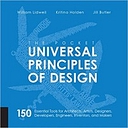
Universal Principles of Design by William Lidwell, Kritina Holden, and Jill Butler
Creative Confidence: Unleashing the Creative Potential Within Us All by Tom Kelley and David Kelley
Understanding Industrial Design: Principles for UX and Interaction Design by Simon King and Kuen Chang
Sketching: Drawing Techniques for Product Designers by Koos Eissen and Roselien Steur
Change by Design: How Design Thinking Transforms Organizations and Inspires Innovation by Tim Brown
If you'd like, let me know:
I can narrow down or add more targeted recommendations based on your current focus.
If you’re an **industrial designer**, I’d go beyond the usual “design thinking” books. The most valuable reading combines **human-centered design, research, ideation, product behavior, systems thinking, manufacturing, and design philosophy**. The Stanford d.school’s own reading list includes several of…
If you’re an industrial designer, I’d go beyond the usual “design thinking” books. The most valuable reading combines human-centered design, research, ideation, product behavior, systems thinking, manufacturing, and design philosophy.
The Stanford d.school’s own reading list includes several of these—particularly Change by Design, Design Thinking, Thinking in Systems, Exposing the Magic of Design, and Creative Confidence.
Start here.
This is probably the single most important book for an industrial designer. Norman connects cognitive psychology to physical products: affordances, signifiers, feedback, mapping, constraints, discoverability, and error.
It teaches you to ask:
“Why did the user do that?” rather than “Why didn't the user understand?” The revised edition remains a foundational human-centered design text.
Best for: product usability, ergonomics, human behavior, interaction.
A more intellectually rigorous treatment of how designers actually think.
Cross examines the distinctive ways designers approach problems, including framing ambiguous problems, generating solutions, using drawings/models, and reasoning through incomplete information.
Stanford's d.school specifically includes it in its Innovation Process reading list.
Best for: becoming better at thinking like a designer, rather than merely following a design-thinking process.
The classic introduction to design thinking as an innovation practice.
Brown explains IDEO's approach to combining empathy, experimentation, collaboration, prototyping, and business strategy. The World Design Organization also recommends it as a key design-thinking book.
Best for: understanding how design thinking operates beyond the individual product designer.
Read it after Norman.
This is less of a book you read cover-to-cover and more of a toolbox you repeatedly return to.
It gives you structured methods for:
Don Norman himself recommends Kumar's book as an excellent treatment of design-research methods.
Best for: turning design thinking into an actual working process.
Think of this as your design reference manual.
It covers principles ranging from the 80/20 rule and affordances to chunking, hierarchy, consistency, figure-ground relationships, and storytelling. The current edition contains 125 principles with visual examples.
Best for: having a large vocabulary of principles to draw upon during concept development and critique.
After you've learned how to make a product work, learn why people might love it.
Norman explores three levels of interaction:
This is particularly valuable for industrial designers because physical products operate simultaneously at all three levels.
Best for: aesthetics + behavior + emotional connection.
This is the book I'd put on every industrial designer's shelf even though it's not a conventional “design thinking” manual.
Papanek challenges designers to think about social responsibility, sustainability, accessibility, consumption, and who actually benefits from design. It has remained a major influence since its original 1971 publication.
Best for: developing judgment about whether something should be designed, not merely how.
A very practical book about overcoming the psychological barriers that prevent people from generating and pursuing ideas.
It's especially useful if you work in an organization where you have to sell ideas, facilitate workshops, collaborate with engineers/marketing, or get non-designers involved in innovation.
IDEO includes it among its recommended design-thinking books.
Best for: creativity, collaboration, facilitation, innovation culture.
This one isn't technically an industrial-design book—and that's precisely why I'd recommend it.
Industrial designers increasingly work on products embedded in services, supply chains, ecosystems, behaviors, policies, software, and environmental systems.
Meadows teaches you to stop looking at a product as an isolated object and start seeing relationships, feedback loops, incentives, delays, and unintended consequences.
Stanford's d.school includes it under its design-in-company recommendations.
Best for: systems thinking and tackling complex problems.
This is particularly good for industrial/product designers.
The authors analyze 100 products to help you recognize patterns behind successful and unsuccessful design decisions. The stated goal is to develop critical analysis and transfer those observations into your own work.
Best for: learning to see design.
I'd make it:
That gives you a surprisingly complete foundation:
Human behavior → design cognition → research methods → emotional experience → design ethics.
Then add Thinking in Systems when you're ready to move from designing products to designing systems.
I'd actually build your bookshelf around six different competencies, rather than reading 20 books about “design thinking”:
| Competency | Book |
|---|---|
| 👤 Understand people | The Design of Everyday Things |
| 🧠 Think like a designer | Design Thinking |
| 🔎 Research & discover | 101 Design Methods |
| 💡 Generate & evaluate ideas | Creative Confidence |
| 🧩 Understand design principles | Universal Principles of Design |
| 🌎 Understand consequences | Design for the Real World |
| ❤️ Create desirable products | Emotional Design |
| 🌐 Think beyond the product | Thinking in Systems |
| 🔬 Develop critical product judgment | Deconstructing Product Design |
One important distinction: don't confuse design thinking with industrial design itself. Design thinking gives you a way of approaching ambiguous problems; it doesn't teach you everything an industrial designer needs to know about form development, sketching, ergonomics, materials, manufacturing, CMF, mechanisms, prototyping, engineering collaboration, or production.
If you're specifically trying to become excellent at physical product design, I'd add a second reading track focused on those skills.
This one isn't technically an industrial-design book—and that's precisely why I'd recommend it.
Industrial designers increasingly work on products embedded in services, supply chains, ecosystems, behaviors, policies, software, and environmental systems.
Meadows teaches you to stop looking at a product as an isolated object and start seeing relationships, feedback loops, incentives, delays, and unintended consequences.
Stanford's d.school includes it under its design-in-company recommendations.
Best for: systems thinking and tackling complex problems.
This is particularly good for industrial/product designers.
The authors analyze 100 products to help you recognize patterns behind successful and unsuccessful design decisions. The stated goal is to develop critical analysis and transfer those observations into your own work.
Best for: learning to see design.
I'd make it:
Here are top web results for exploring this topic: [](https://www.ideou.com/blogs/inspiration/ideou-design-thinking-book-recommendations) IDEO U·https://www.ideou.com 28 **Must**-**Read Design Thinking Books** to Inspire **Innovation** in 2025 2. Designing Your Work Life, by Bill Burnett & Dave Evans. In this sequel…
Here are top web results for exploring this topic:
IDEO U·https://www.ideou.com 28 Must-Read Design Thinking Books to Inspire Innovation in 2025 2. Designing Your Work Life, by Bill Burnett & Dave Evans. In this sequel to Designing Your Life, Burnett and Evans bring their design thinking principles to the workplace, offering practical tools fo
Stanford d.school·https://dschool.stanford.edu d.school Reading List: Best Design Thinking Books d.school Reading List. • Recommended books about design — for everyone! The best way to learn about design is to do it, but there are some books that help contextualize what we do. If you want to deep
Reddit·https://www.reddit.com**Design Thinking books** ? : r/IndustrialDesign - Reddit Don Normans the design of everyday things is a good one. My favorite design book of all time. Probably the best one. You have applied it's methods to many of my applications. THE_CENTURION. •. 5y ago.
Rethinking The Future·https://www.re-thinkingthefuture.com 10 Must read books for industrial designers - Rethinking The Future The Design of Everyday Things | Donald A. Norman | Industrial Design Books. The book was written by designer Don Norman and published in 1988. Don A. Norman is a famous psychologist and pioneer in stu
Medium·https://medium.com The 8 Classic Books Every Vanguard Design Thinker Should Read The Fifth Discipline by Peter Senge. This is probably the most “classic” book. In my view, three of the most important aspects of design thinking are in this book: Learning ability. The core of design
Quora·https://www.quora.com Which are the must read books for Design Thinking Method? - Quora Experience is helping companies become a design-led org. · 8y. There are quite a few books in design thinking a must have for design thinkers. Sharing the ones that has already not been listed: Design LibGuides·https://massart.libguides.com**Industrial Design**: Books & Other Resources - Library - LibGuides Recommended Books on Design Thinking & Innovation. Design Thinking: Understanding How Designers Think and Work by Nigel Cross Focusing on what designers do when they design, Design Thinking ; Recommen
Designorate·https://www.designorate.com**Design Thinking Books** You Must Read (updated) - Designorate In this small yet informative book, Design Thinking, Nigel Cross explores how designers think and reach creative ideas in the design field and the nature of design from the perspective of idea formati
Goodreads·https://www.goodreads.com**Design Thinking**, Industrial Design, Design Management (8 books)Design Thinking, Industrial Design, Design Management. 8 books — This list was created and voted on by Goodreads members. Books related on Industrial Design. This list includes industrial design in al
DesignWanted·https://designwanted.com 10 product design books to shape your design thinking Product Design Books – 10 names for Design Thinkers: The Design of Everyday Things – Don Norman; The Laws of Simplicity – John Maeda; Universal Principles of Design – William Lidwell, Kritina Holden,
If you’re an **industrial designer**, I’d go beyond books that simply teach the “Empathize → Define → Ideate → Prototype → Test” formula. The best reading builds your ability to **observe people, frame problems, generate concepts, make decisions, prototype, and understand why objects work—or fail.** Stanford’s…
If you’re an industrial designer, I’d go beyond books that simply teach the “Empathize → Define → Ideate → Prototype → Test” formula. The best reading builds your ability to observe people, frame problems, generate concepts, make decisions, prototype, and understand why objects work—or fail.
Stanford’s d.school and IDEO’s own reading resources overlap quite a bit with the list below.
Start here. Probably the single most important book for an industrial/product designer. It teaches you to think about affordances, signifiers, feedback, mental models, constraints, and human error. The revised edition remains a cornerstone of human-centered design.
You'll learn: How people actually interact with physical objects—and why seemingly obvious products can be confusing. 2. Change by Design — Tim Brown
The classic introduction to modern design thinking from the former IDEO CEO. It connects human needs, technical feasibility, and business viability.
You'll learn: How to move from an ambiguous problem to research, concepts, prototypes, testing, and innovation. 3. Design Thinking — Nigel Cross
More intellectually rigorous than Change by Design. Cross examines how designers actually think and work, rather than treating design thinking as a corporate innovation recipe. Stanford's d.school specifically recommends it.
You'll learn: Design cognition, problem framing, reasoning, creativity, and the distinctive ways designers solve problems. 4. Creative Confidence — Tom Kelley & David Kelley
A very accessible bridge between design mindset and actual practice. IDEO recommends it alongside Change by Design.
You'll learn: How to become more comfortable sketching, brainstorming, experimenting, failing, and presenting unfinished ideas. 5. The Art of Innovation — Tom Kelley
If Change by Design explains what design thinking is, The Art of Innovation gives you more of the IDEO culture and practice behind it. Stanford includes it in its innovation-process reading list.
You'll learn: Observation, brainstorming, prototyping, multidisciplinary collaboration, and innovation culture. 6. Universal Principles of Design — William Lidwell, Kritina Holden & Jill Butler
Think of this as a design reference book rather than something you read cover-to-cover. It gives you a huge vocabulary of principles drawn from psychology, perception, usability, ergonomics, architecture, and visual design.
You'll learn: Why certain forms, interfaces, layouts, interactions, and visual hierarchies work. 7. Emotional Design — Don Norman
Essential once you've understood usability. Norman explores the relationship between emotion, aesthetics, behavior, and product experience.
You'll learn: Why people sometimes prefer beautiful, playful, or emotionally meaningful products even when another product is technically more functional. 8. Exposing the Magic of Design — Jon Kolko
A particularly useful book for designers moving toward professional practice. Stanford's d.school recommends it under synthesis.
You'll learn: How designers turn messy qualitative research into insights, frameworks, concepts, and design direction. 9. Thinking in Systems — Donella Meadows
This one isn't specifically an industrial-design book—and that's precisely why I'd recommend it. Stanford's d.school includes it in its design-in-company reading list.
You'll learn: How products exist within larger systems of users, businesses, infrastructure, incentives, environments, and unintended consequences. 10. Less and More: The Design Ethos of Dieter Rams — Klaus Klemp & Keiko Ueki-Polet
For an industrial designer, you need some books that teach by showing exceptional objects, not just explaining methodology. Rams is indispensable for understanding restraint, consistency, hierarchy, material/form relationships, and designing a coherent product family.
You'll learn: How disciplined decisions accumulate into a design language.
I'd organize the books by the skill they develop:
| Skill | Book |
|---|---|
| Human behavior | The Design of Everyday Things |
| Design thinking | Change by Design |
| Designer cognition | Design Thinking — Nigel Cross |
| Creativity | Creative Confidence |
| Innovation practice | The Art of Innovation |
| Design principles | Universal Principles of Design |
| Emotion & aesthetics | Emotional Design |
| Research → insight | Exposing the Magic of Design |
| Systems thinking | Thinking in Systems |
| Industrial-design taste | Less and More |
If you don't want to buy ten books, get these five:
1. The Design of Everyday Things ↓ 2. Design Thinking — Nigel Cross ↓ 3. Change by Design ↓ 4. Creative Confidence ↓ 5. Less and More
That sequence is particularly good because it moves from understanding people → understanding how designers think → understanding the design-thinking process → developing your creative practice → developing design judgment/taste.
One important caveat: don't let "design thinking" become synonymous with sticky notes and brainstorming workshops. IDEO itself describes contemporary design thinking as an iterative practice of exploring challenges, generating ideas, prototyping, and learning—and notes that human-centered design and design thinking aren't quite the same thing.
For an industrial designer, the real goal is to combine that methodology with sketching, form development, materials, manufacturing, ergonomics, mechanisms, visual language, prototyping, and an exceptionally good eye for objects.
If you're building a serious industrial-design education rather than just looking for design-thinking books, I'd add a second reading track specifically for form, materials, ergonomics, manufacturing, design history, and product-design case studies.
For an **Industrial Designer**, the best design-thinking books are not only about the popular “empathize–define–ideate–prototype–test” framework. The strongest books connect design thinking to **human behavior, product strategy, making, systems thinking, and the realities of designing physical objects**.…
For an Industrial Designer, the best design-thinking books are not only about the popular “empathize–define–ideate–prototype–test” framework. The strongest books connect design thinking to human behavior, product strategy, making, systems thinking, and the realities of designing physical objects.
Here is a curated reading path:
Why read it: The essential starting point for industrial designers. Norman explains why products succeed or fail based on affordances, feedback, constraints, and human psychology. It will change how you look at everyday objects.
Key lessons:
Why read it: Probably the most recognizable introduction to IDEO-style design thinking. It explains how empathy, experimentation, prototyping, and collaboration can drive innovation beyond aesthetics.
Best for: Understanding how industrial design connects with business, engineering, and organizational innovation.
Why read it: A more academic look at what makes designers different thinkers. Cross examines how designers use abductive reasoning, intuition, and iterative exploration.
Best for: Design students and professionals who want to understand the intellectual foundations of the discipline.
Why read it: Industrial designers often need to discover hidden user needs. This book helps develop stronger observation, interviews, contextual inquiry, and research skills.
Best for: Moving beyond “designing what looks cool” toward evidence-based design.
Why read it: Norman explores why people love certain products beyond functionality: appearance, memory, pleasure, and identity.
Useful for:
Why read it: A behind-the-scenes look at IDEO’s creative process, including brainstorming, teamwork, rapid prototyping, and user observation.
Best for: Learning how professional design teams operate.
Why read it: Focuses on building confidence in experimentation and creative problem solving.
Best for: Designers who feel stuck, overly perfectionist, or hesitant to prototype early.
Why read it: A practical toolkit for applying design thinking to ambiguous problems, with exercises and frameworks.
Best for: Senior designers moving toward design leadership.
Why read it: A classic critique of design driven only by consumption. It challenges designers to consider ethics, sustainability, accessibility, and social impact.
Best for: Developing a deeper design philosophy.
Why read it: A reference guide covering psychology, perception, usability, and visual principles useful across product design.
Best for: Keeping on your desk during projects.
A strong industrial designer should also pair these with more craft-focused ID books (sketching, materials, manufacturing, form development, and ergonomics), because design thinking is only one part of the discipline.
- Design of Everyday Things (The) by Don Norman: This foundational classic teaches the core principles of user-centered design, affordances, and cognitive psychology in interacting with physical…
Would you like me to tailor this list further by focusing on a specific sub-discipline, such as prototyping and materials, sketching and visualization , or strategic product management?


For an **Industrial Designer**, the best design thinking books are not just about the “double diamond” process or brainstorming—they should help you build **observation skills, human-centered reasoning, prototyping habits, systems thinking, and a deeper understanding of products and users**. The Stanford d.school and…
For an Industrial Designer, the best design thinking books are not just about the “double diamond” process or brainstorming—they should help you build observation skills, human-centered reasoning, prototyping habits, systems thinking, and a deeper understanding of products and users. The Stanford d.school and IDEO reading lists emphasize many of the classics below.
Why read it: Probably the single most important book for an industrial designer. Norman explains why products succeed or fail through concepts like affordances, feedback, constraints, mapping, and user psychology. wdo.orgwww.ideou.com
You’ll improve:
Why read it: The classic introduction to modern design thinking from the CEO of IDEO. It covers empathy, ideation, prototyping, and experimentation as a way of solving complex problems. wdo.orgwww.ideou.com
You’ll improve:
Why read it: A practical guide to developing the mindset of an innovator. It is especially useful if you struggle with idea generation or presenting unfinished concepts. dschool.stanford.eduwww.ideou.com
You’ll improve:
Why read it: A behind-the-scenes look at IDEO’s methods: observation, brainstorming, prototyping, and teamwork. dschool.stanford.eduwww.ideou.com
You’ll improve:
Why read it: More academic and analytical. Cross explains how designers actually think differently from scientists and engineers. dschool.stanford.eduwww.marshall.edu
You’ll improve:
Why read it: A foundational critique of design focused only on consumption. It challenges designers to consider social impact, sustainability, and responsibility. www.designersandbooks.com
You’ll improve:
Why read it: Explores why people love certain objects beyond pure function: appearance, memories, pleasure, and emotional connection. dschool.stanford.eduwww.designersandbooks.comwww.andacademy.comwww.marshall.edu
You’ll improve:
Why read it: A compact reference covering psychology, perception, ergonomics, hierarchy, aesthetics, and usability. dschool.stanford.eduwww.marshall.edu
You’ll improve:
Why read it: Connects psychology research to practical design decisions. dschool.stanford.eduwww.marshall.edu
You’ll improve:
Why read it: Industrial designers increasingly work on systems—not just objects. This book helps you understand complexity, unintended consequences, and interconnected problems. dschool.stanford.edu
You’ll improve:
Why read it: A key sustainability text that challenges the “make-use-dispose” model.
You’ll improve:
That combination gives an industrial designer a strong foundation: human behavior + process + creativity + ethics + systems thinking.
A good next step after these would be books specifically on sketching, ergonomics, materials, manufacturing, and product development, because design thinking becomes much more powerful when paired with making skills.
- **The Design of Everyday Things** by Don Norman – The absolute bible for understanding user-centered design, affordances, and cognitive ergonomics, making it foundational for physical and product…
Would you like me to tailor these recommendations further based on your experience level, or are you looking for books that focus more on sketching and prototyping versus strategy and innovation?