
How often does AI cite a brand's own website?
Often. Of 1,060,513 page citations tied to ranked brand recommendations, 288,629, or 27.22%, pointed to the recommended brand's own website.
By Dimitry Apollonsky · July 17, 2026 · 9 min read
Contents
- 27.22% of citation links pointed to the brand's own website
- Third-party pages supplied 72.78% of the citation links
- ChatGPT Search cited the brand's website 2.61 times as often
- Recommendation rank changed the owned-citation rate by only 2.28 points
- Professional-services recommendations used owned pages most often
- LinkedIn had the most brand-owned citation links
- Two in three brand-owned citations went deeper than the homepage
- We counted only ranked brands with a known website
- What marketers should do
- Get the data
- Sources
- Related research
In one observed cut of the Parse mirror, we analyzed 1,060,513 links between ranked brand recommendations and 522,737 cited pages across 172,809 AI answers to 16,081 organic prompts, covering 61,605 brands on ChatGPT Search and Google AI Mode from May 24 through July 16, 2026.
27.22% of citation links pointed to the brand's own website
A brand-owned citation is a cited page on the same registered domain as the recommended brand's primary website. This includes a documentation or regional subdomain. Of 1,060,513 eligible links between ranked brand recommendations and cited pages, 288,629 were brand-owned. The exact rate was 27.2160%.

Takeaway
Third-party pages supplied 72.78% of the citation links
Third-party pages supplied 771,884 of the 1,060,513 eligible citation links, or 72.7840%. Brand-owned pages supplied the remaining 288,629, or 27.2160%.
A brand's own site is a meaningful part of the evidence mix, but it is not the whole source strategy. Marketers should maintain accurate product and documentation pages while also auditing the independent pages AI cites about the brand.
Takeaway
ChatGPT Search cited the brand's website 2.61 times as often
One combined owned-citation rate hides a large engine difference. Audit both engines before deciding that a brand's website is or is not part of the evidence behind its recommendations. The difference is descriptive because the engines cite different source sets.
Takeaway
Recommendation rank changed the owned-citation rate by only 2.28 points
The brand-owned rate was 26.0826% for brands ranked #1, 28.3579% at #2, 27.8651% at #3, 27.0618% at #4 to #5, and 27.6991% at #6 or lower. The full range was 2.2753 percentage points.
An owned citation is not reserved for the winner. Who owns the source and where the brand ranked answer different questions, so a citation audit should record both instead of treating a link to the brand's own site as proof of a top placement.
Professional-services recommendations used owned pages most often
Among the displayed industry groups, Professional Services had 10,885 brand-owned links among 27,411 eligible links, or 39.7103%. Education was at 32.3953% and Artificial Intelligence at 30.3785%. Consumer Goods was at 16.9674% and Consumer Electronics at 10.5798%. Every displayed group had more than 10,000 eligible links.
The 3.75-to-1 range between Professional Services and Consumer Electronics changes the baseline a team should expect. Use the category baseline before labeling a brand's owned-citation rate high or low. These groups cover the prompts that had a main industry assigned in this observed cut.
LinkedIn had the most brand-owned citation links
Among brands with at least 500 eligible links, 
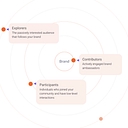

Volume and share identify different work. A high owned-link count shows where a brand's site already supplies substantial evidence. A high share shows dependence on that site. Review both before choosing whether to improve owned pages or broaden independent coverage.
| LinkedIn | 9,834 | 2,341 | 23.805 |
| Soar | 2,726 | 1,316 | 48.276 |
| Bright Data | 3,356 | 1,188 | 35.399 |
 AiDash AiDash | 2,922 | 1,071 | 36.653 |
| Sheltera | 1,612 | 1,013 | 62.841 |
 ClickUp ClickUp | 3,995 | 962 | 24.08 |
 Datadog Datadog | 5,197 | 952 | 18.318 |
 Dynatrace Dynatrace | 4,012 | 939 | 23.405 |
 New Relic New Relic | 2,135 | 857 | 40.141 |
| OpenObserve | 1,890 | 741 | 39.206 |
Two in three brand-owned citations went deeper than the homepage
Deeper pages received 195,080 of the 288,629 brand-owned citation links, or 67.5885%. Homepages received 93,549, or 32.4115%. The deeper-page group contained 103,721 distinct pages, compared with 27,805 homepages.
The opportunity with owned content sits at the page level. Keep the homepage accurate, but audit the product, documentation, guide, and other deeper URLs that AI actually cites. We sorted pages by URL depth only; we did not judge what kind of content each page holds.
Takeaway
We counted only ranked brands with a known website
The current engines produced 1,372,702 brand-to-page citation links in all. We excluded 11,772 without a page URL, 300,413 without a direct ranked brand mention in the same answer, and four without a known primary website domain. That left 1,060,513 links as the base for every rate here.
Exact-domain matching produced a 25.9856% owned rate. Adding documentation and other subdomains on the same registered domain produced the 27.2160% headline. Matching any known domain for the brand produced 28.0042%. The narrow spread shows that the conclusion does not depend on one ownership rule. This method tests who owns the source, not whether the page supports every claim or caused the recommendation.
| Primary registered domain | 288,629 | 27.216 |
| No known primary website domain | 4 | |
| No direct ranked brand mention | 300,413 | |
| No cited page URL | 11,772 | |
| Included citation links | 1,060,513 | |
| Exact primary domain | 275,581 | 25.986 |
| Brand-to-page citation links from the current engines | 1,372,702 | |
| Any known brand domain | 296,988 | 28.004 |
What marketers should do
The observed cut shows that brand-owned pages supply more than one in four citations attached to ranked recommendations, while third-party pages supply nearly three in four. The engine, industry, brand, and page-depth cuts show why one overall score is not enough.
Track three things for every important recommendation: the brand's rank, who owns the cited domain, and the exact cited page. Review
Get the data
Sources
- Semrush: 126 million AI search prompts · accessed 2026-07-17
- Ahrefs: Do AI assistants link when mentioning brands? · accessed 2026-07-17
- Semrush: Why 62% of AI citations don't lead to brand mentions · accessed 2026-07-17
- Evaluating verifiability in generative search engines · accessed 2026-07-17